Your drivers try to drive economically, yet fuel bills keep rising? Many fleet managers struggle with this problem. That is why we have put together a list of the 5 most fuel-hungry things drivers do behind the wheel. In this article you will learn:
- which behaviours in a fleet most often waste fuel,
- how to win drivers over to eco-driving (in a way that lasts),
- what you can start controlling today, and where the Navifleet app will help.
How do fuel-hungry behaviours affect fleet costs?
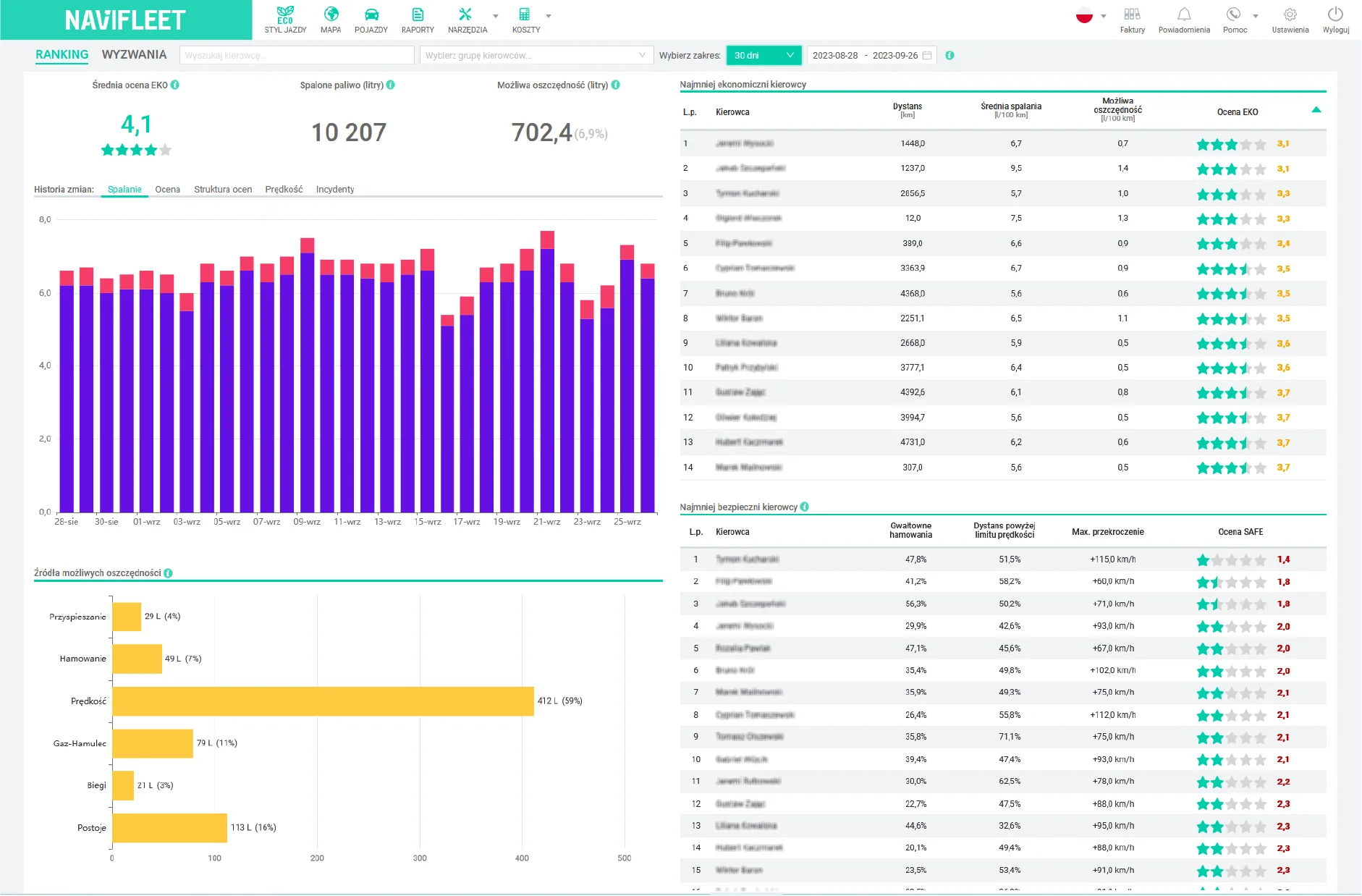
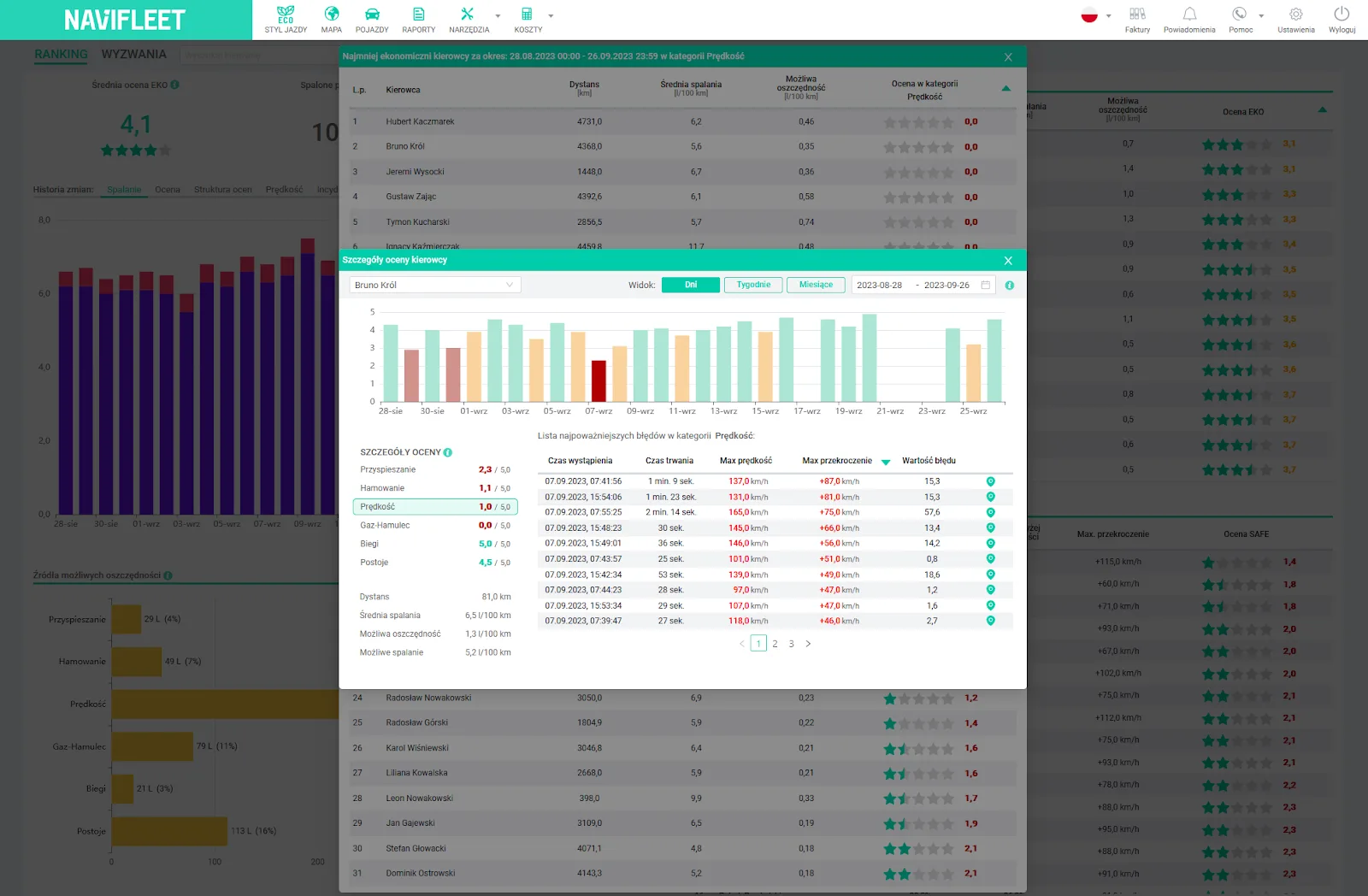
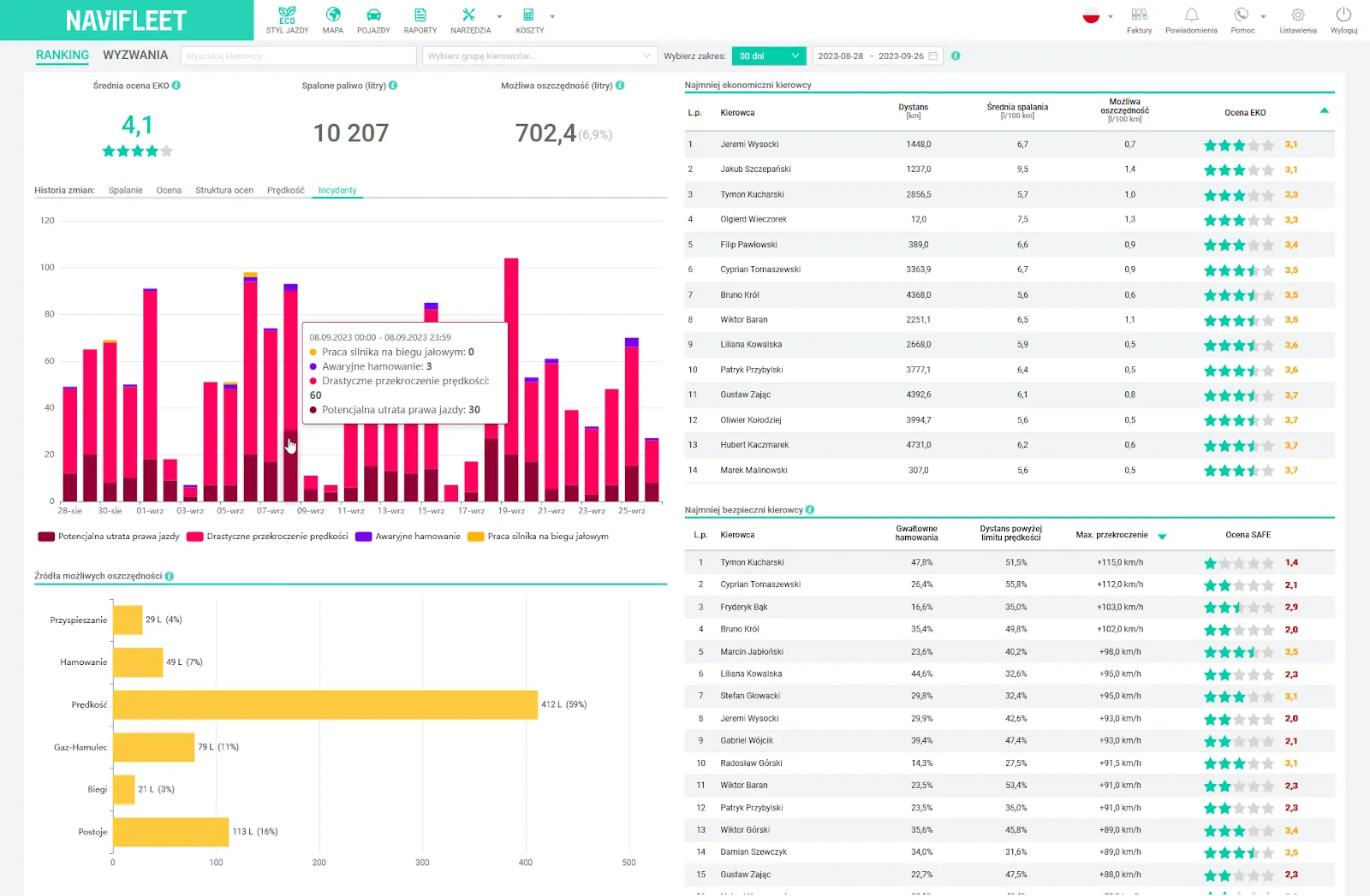
Our data shows that in a fleet of 70 vehicles covering 156,660 km a month, the potential saving directly linked to drivers' fuel-hungry behaviour is 702 litres. This means that bad driver habits generate a loss of PLN 4,914 gross (assuming a fuel price of PLN 7). Below you will find a specific list of behaviours that lead to wasted fuel.
Here are the 5 fuel-hungry driver behaviours we encounter most often
1. Engine running while stationary
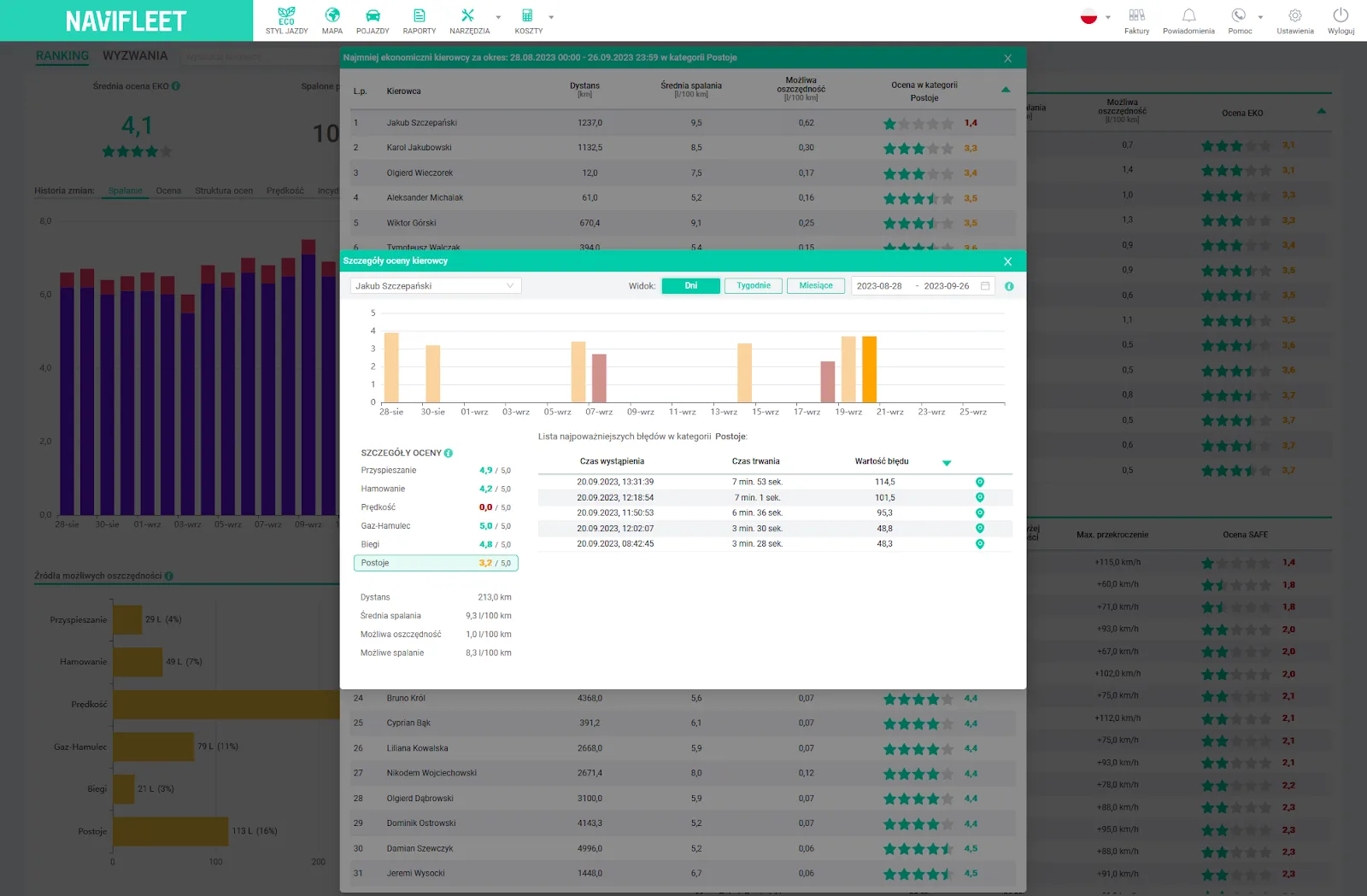
Not switching off the engine is one of the most fuel-hungry behaviours. Drivers routinely leave the engine running longer than necessary, even when the vehicle is stationary, for example when parked or waiting at a red light.
It may seem a trifle, but it has a big impact on fuel consumption. Data from our app clearly shows that this behaviour can lead to an increase in fuel consumption of up to 4 litres a month in the same car on the same route.
What you can do: If high fuel bills worry you, it is worth reminding drivers from time to time how much fuel is wasted during longer stops, such as waiting for a passenger or for unloading.
2. Aggressive driving style
A lot of fuel in a fleet is wasted because drivers drive too aggressively. Aggressive driving consists of a series of undesirable habits, such as harsh acceleration, hard braking, speeding and failing to read the road ahead.
Harsh acceleration
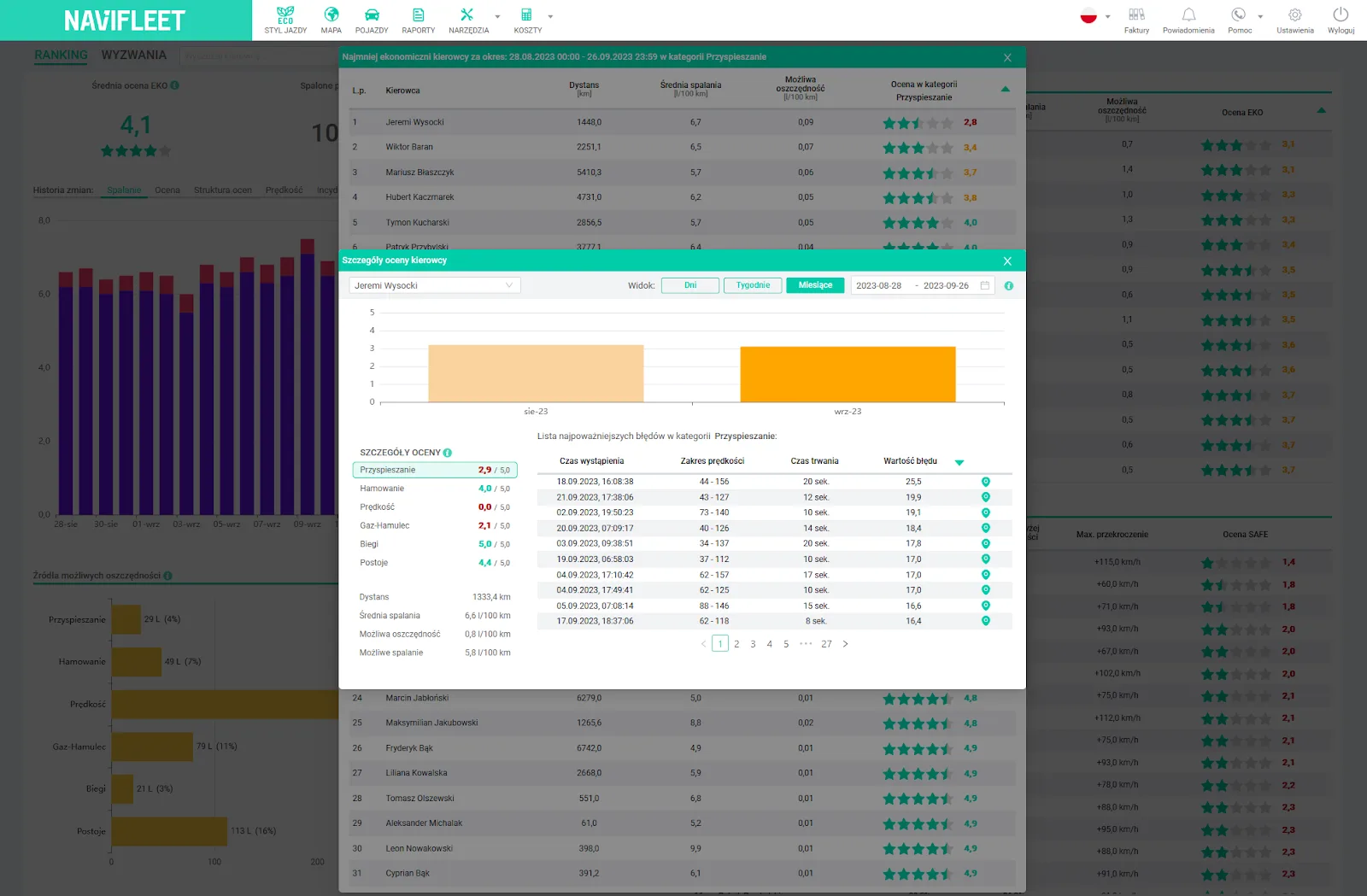
During harsh acceleration the engine has to draw considerably more fuel to deliver the required power and speed. This is an additional load on the engine and drivetrain components such as the clutch, gearbox and driveshafts, which can also lead to more frequent faults.
Hard braking
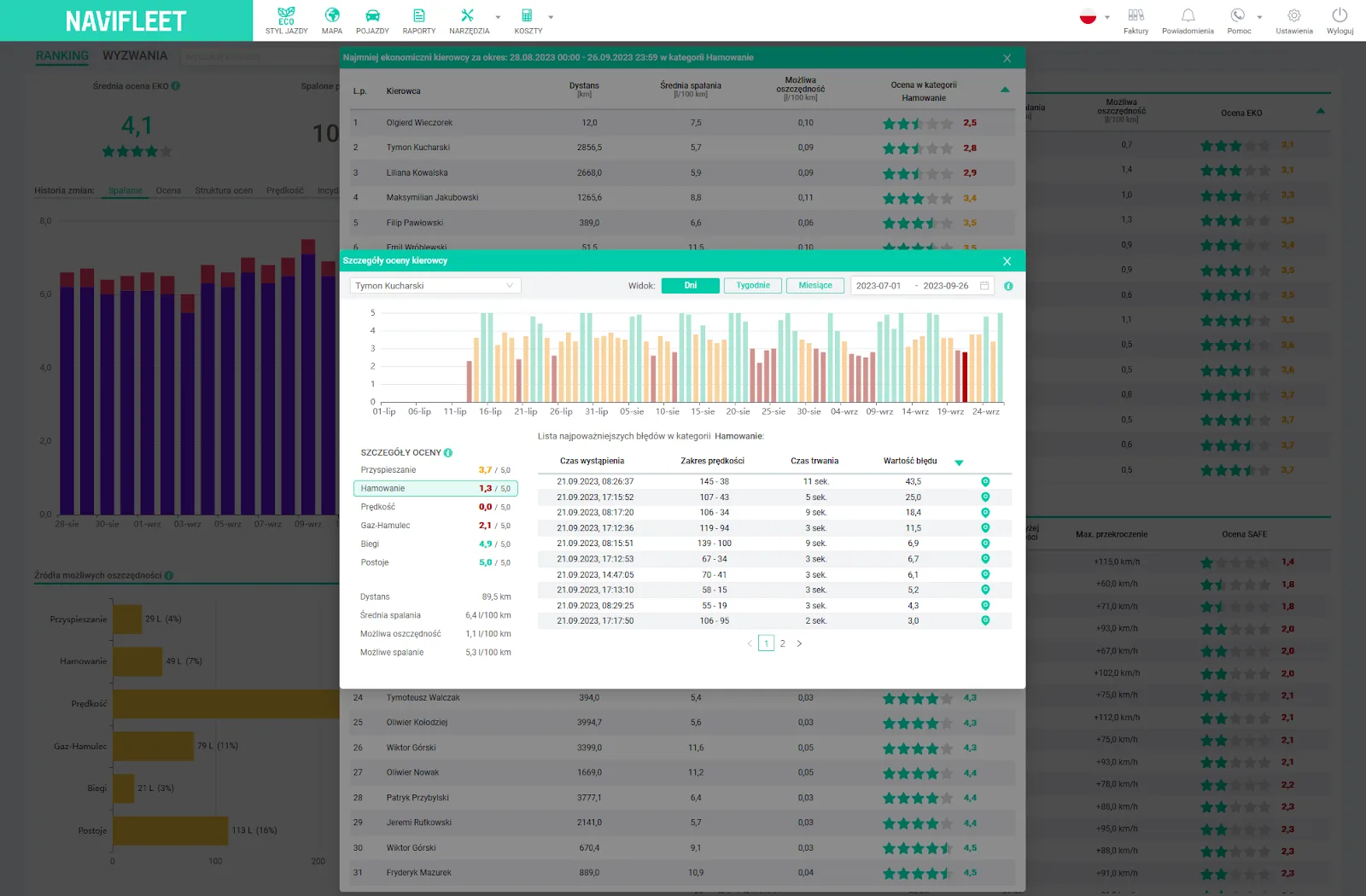
Drivers who brake hard waste the vehicle's kinetic energy, which could have been used to maintain speed. To get going again, the engine has to generate extra power, which in turn requires more fuel. This type of braking can also lead to faster wear of brake pads and discs, as well as increased tyre wear. Engine braking and reading the road ahead are recommended.
Speeding
By speeding, drivers not only break traffic rules but also use more fuel because of the increased air resistance to overcome. What is more, it is not always worth driving at the maximum permitted speed, e.g. driving on the motorway at 120/130 km/h is more economical than driving at 140 km/h. In addition, speeding increases the risk of accidents and lengthens the braking distance, and can therefore have serious consequences for the safety of the driver and other road users.
Driving at high revs
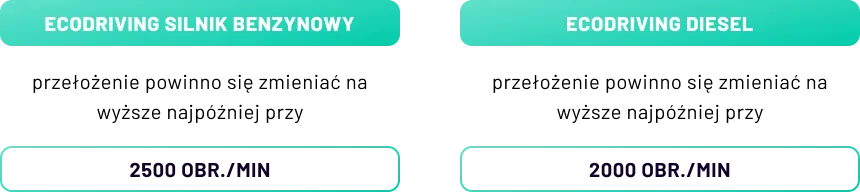
The least fuel is used in a specific engine speed range, which can differ between vehicles. Keeping the engine at high revs makes fuel consumption rise significantly. In addition, driving at high revs can lead to excessive gearbox wear and accelerate the wear of engine components.
How to drive economically?
Eco-driving, i.e. economical driving, has a significant effect on fuel savings and emission reduction. So how should you drive to save fuel?
The basic principle of eco-driving is smoothness. This means avoiding sudden, harsh manoeuvres at the wheel. Pull away gently and accelerate gradually. Likewise, instead of braking hard, it is better to start slowing down earlier, using engine braking. Correct gear changes are another key aspect of economical driving.
Maintaining a constant speed is important. It not only saves fuel but also contributes to road safety. Using cruise control when driving on flat terrain can be extremely helpful in keeping speed and engine revs at an optimal level. On hilly terrain, maintaining a constant speed will mean higher fuel consumption.
3. Poor route planning
It is worth stressing that aggressive driving often goes hand in hand with poor route planning. Failing to plan the travel time for a given route properly leads to dangerous situations in which drivers are forced to try to "make up" lost time during the journey. This scenario translates into frequent braking, acceleration and speeding, which in turn leads to additional fuel consumption.
Poor planning can also result in unnecessarily longer distances or journey times. A longer route means extra kilometres to cover, which in turn increases fuel consumption. In addition, choosing routes with heavy traffic or frequent congestion can result in frequent braking and acceleration, which puts additional strain on the engine and increases fuel consumption.
What you can do: Using GPS and route optimisation tools helps avoid congested areas and predicts the best travel time, which translates into significantly lower fuel costs.
4. No regular servicing
Poor vehicle maintenance, such as infrequent engine oil changes, a lack of regular servicing or ignoring the need to monitor tyre pressure, can lead to damage and degradation of vehicle components. As a result, the engine runs less efficiently, which means higher fuel consumption. Long-term neglect of vehicle maintenance can even lead to serious mechanical failures.
Basic vehicle maintenance tasks include regular engine oil changes, checking tyre condition and pressure, replacing air filters and servicing. Carrying out these tasks in line with the manufacturer's recommendations and at the specified intervals is key to keeping vehicles in optimal technical condition.
5. Overloaded vehicles
When a vehicle is overloaded, the engine has to work harder, which increases fuel consumption. The extra load also makes braking and accelerating harder, which can generate greater fuel losses, especially when driving in the city or on hilly terrain.
Load limits are set on the basis of the vehicle manufacturer's guidelines and the law. Exceeding these limits can lead not only to higher fuel consumption but also to damage to the suspension and other vehicle components.
Can a fleet manager influence a change in driver behaviour?
One way is to promote economical driving through driver training in smoother driving technique, including defensive driving courses. While this type of training can help reduce fuel consumption, we know from experience that its effects are short-lived.
Eliminating the behaviours that lead to excessive fuel consumption is a process that, without the support of technology, can be time-consuming and will not necessarily bring the expected results, such as lower fuel bills. To improve driving style permanently and cut fuel consumption by hundreds of litres a month, we implement the Driving style analysis module in fleets. It is a key element in building a lasting change in driver behaviour. Implementing a fleet monitoring system allows a precise understanding of drivers' habits and the identification of specific areas that need improvement.
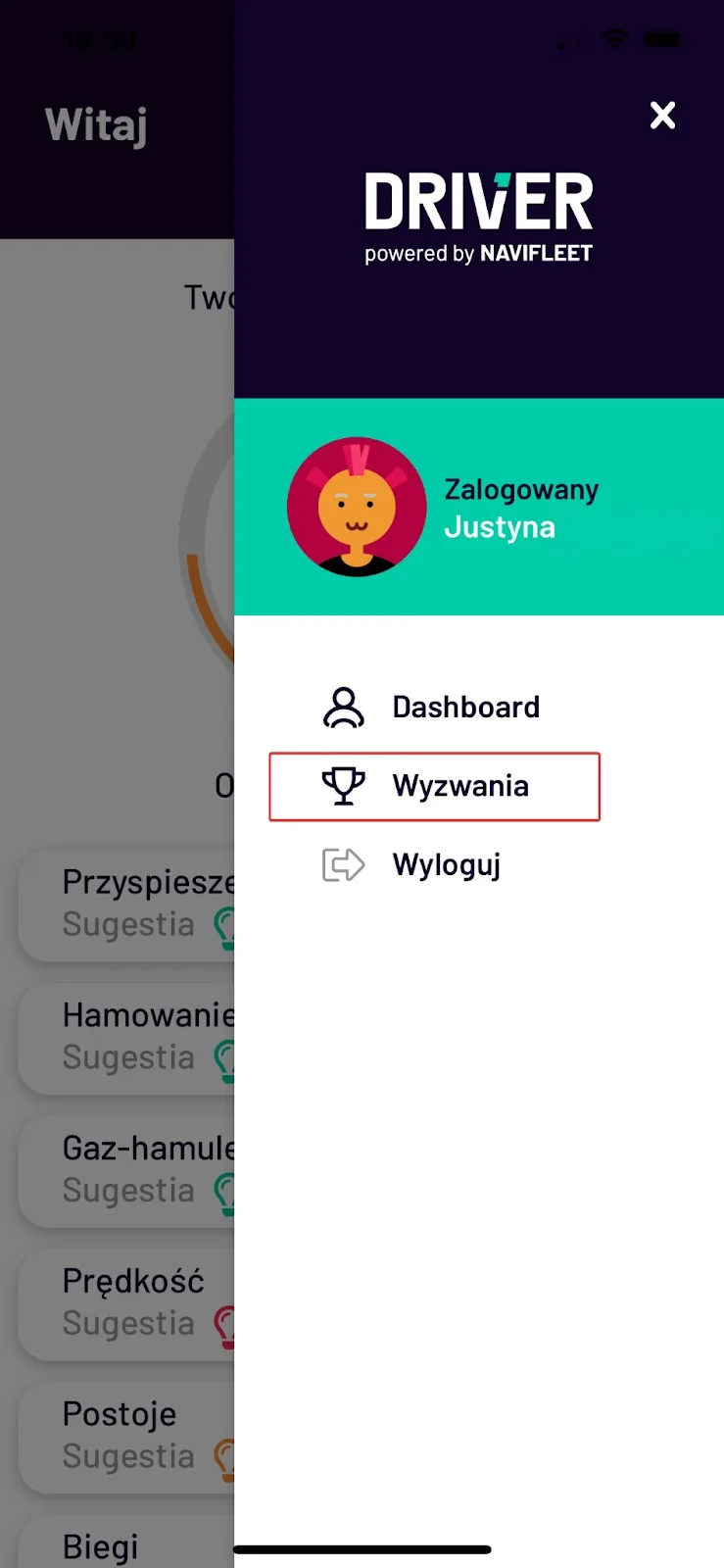
The Navifleet app monitors drivers' driving style without invading their privacy. This means the fleet manager has an accurate insight into how the vehicle is used, without surveillance of employees. The app monitors driver behaviours such as hard braking, acceleration or driving in the wrong gear, which accelerate vehicle wear.
Based on the data, the algorithm identifies drivers who drive uneconomically or pose a danger on the road. While using the app, drivers have constant access to useful tips and an analysis of the mistakes they make. The virtual driving instructor takes care of drivers' education and driving style, while the fleet manager can check how much fuel consumption is falling.
Gamification is another way to eliminate fuel-hungry behaviours. Creating competitions and challenges in the Navifleet app and rewarding the best results in improving driving style is a way to provide extra motivation and build healthy competition within the team.