Worried that fuel theft is happening in your fleet? It is hard to detect, because the fuel card statement that arrives once or twice a month contains several hundred line items. Without a fuel card, or with various refuelling sources, fuel control is even harder. That is why we have prepared this article, in which you will learn:
- which methods of fuel theft are the most common,
- when to start suspecting theft in your fleet,
- how to detect theft in practice, using Navifleet as an example.
Method 1: Siphoning fuel from the tank
Siphoning fuel from the tank is one of the most common ways employees steal fuel. It involves using an ordinary hose to draw fuel out of the tank through the filler neck. Thieves often do this at night or in places where they remain unseen.
Why is siphoning hard to detect in a fleet?
Fuel theft in fleets is a widespread phenomenon, partly because it is hard to detect. Obtaining enough evidence to confront a dishonest employee can be even harder. Detecting fuel siphoning in a fleet is difficult because of:
- No physical traces: Siphoning fuel from a vehicle leaves no physical traces that point to theft.
- Variable fuel consumption: Vehicle fuel consumption can vary depending on various factors (fleet activity, the vehicle's technical condition, driving style), which makes it harder to determine whether abuse has occurred.
- Inaccurate sensor readings: Some fleet managers have fuel consumption monitoring in their fleet and still do not know about fuel theft. Why? Some systems do not detect small fuel losses and provide estimated rather than actual data. This means that not every fuel control system really works.
- No alerts: A fleet manager without a fuel control system receives no information about theft. The only way to detect this kind of irregularity is a detailed analysis of all invoices, compared against the consumption of each vehicle and driver separately. Manual analysis, however, is time-consuming, error-prone and does not allow all thefts to be detected, only extreme deviations from the norm.
- Spot checks: Fleet managers may struggle to monitor fuel levels in their vehicles regularly, especially if they have a large fleet and no telematics. They have to rely on data provided by drivers, which is often wrong. This gives the perpetrator a better chance of manipulating the information they pass on and going unnoticed.
- Fleet size: If a company has a large vehicle fleet but no fuel control system, the fleet manager cannot focus attention on every individual vehicle and check every refuelling transaction.
- No witnesses: Fuel theft can take place anywhere: in the car park at work, outside the house, on the roadside. Anywhere the employer's cameras do not reach and there are no witnesses.
- Carpooling: Fleet vehicles may be used by different drivers. This makes it harder to track and detect fuel theft, especially if there are many shifts during the day.
Method 2: Filling a jerrycan or another car
Unauthorised refuelling is another commonly used method of fuel theft in vehicle fleets. It occurs when unauthorised persons or fleet employees fill the tank of a personal vehicle or jerrycans.
Why is unauthorised refuelling hard to detect in a fleet?
Situations that often lead to unauthorised refuelling include a lack of effective access control procedures at refuelling points, poorly managed fuel cards or a lack of strict supervision of refuelling operations. Regardless of the control system in place in the fleet, unauthorised refuelling can be hard to detect because of:
- No access to accurate data: Fleets are usually not equipped with fuel monitoring systems that provide accurate data on the amount of fuel in the tank. This makes it harder to determine whether the fuel purchased actually went into the tank.
- Odometer manipulation: Drivers routinely report false or mixed-up mileage, which makes it harder for the fleet manager to keep control. In addition, some use tricks to confuse the counter and hide the actual amount of fuel added. For example, they may start refuelling and quickly stop, which can cause inaccurate metering.
- Involvement of petrol station staff: Although petrol stations do not accept payment with a vehicle-assigned fuel card for filling a jerrycan or a car not assigned to the fleet, thefts of this type still happen. When a driver and a petrol station employee cooperate in this way, the fleet manager has almost no chance of detecting the theft.
- Regularity of abuse: Regular purchases of extra fuel can lead to a situation where the fleet manager misjudges the fleet's normal fuel consumption and does not feel alarmed by the situation.
Method 3: Fuel card abuse
In this case, employees use fuel cards for unauthorised refuelling. This method is particularly dangerous because it not only generates financial losses but may also involve contractual consequences from the fuel card provider.
An additional safeguard is monitoring the spending limits on individual fuel cards and using unique PINs or biometric authorisation to prevent unauthorised use. With these measures, fleets can limit fuel card abuse, which translates into savings and financial security for the company.
When choosing a fuel card, it is also worth opting for a provider that takes contractual responsibility for controlling refuelling, to make sure that a “mate at the station” will not be helping with fuel card theft.
Why is fuel card abuse hard to detect in a fleet?
Despite the range of safeguards fuel providers offer, detecting abuse can be difficult because of:
- Variable fuel quantities: Fuel card abusers may add small amounts of fuel on various occasions, which makes it harder to compare data and detect abuse.
- Use of multiple cards: Perpetrators may use many different fuel cards, which makes abuse harder to detect, especially if there is no unified monitoring system.
- No card access control: If access control for fuel cards is insufficient, it is hard to monitor the refuelling of specific vehicles or drivers.
- No physical traces: Fuel card abuse leaves no physical traces that could easily be noticed, such as damaged fuel tanks or leaks.
Method 4: Fuel theft using RFID identifiers
Manipulating RFID identification is a modern form of fuel theft. Activities associated with this method often include employees swapping cards, using the inactive cards of former employees, or unwritten arrangements whereby one card is kept in the car and another is used for refuelling. Preventing driver identification helps employees steal fuel without consequences.
Methods of fuel fraud with RFID identifiers:
- Sharing identifiers: Employees may dishonestly swap RFID identifiers, making it impossible to effectively link the driver to the car and the refuelling.
- Using inactive identifiers: If RFID identifiers are not properly deactivated after an employee leaves the company or changes position, they may continue to be used by dishonest employees or third parties.
- No monitoring: If the company does not monitor fuel transactions in real time, there may be delays in detecting irregularities. Dishonest employees can exploit this gap in security.
Why is theft using an RFID identifier hard to detect in a fleet?
With fraud involving driver identifiers, a bigger problem than detecting the fuel theft itself is:
- Difficulty identifying the perpetrator: When the driver of a given car at a given time cannot be identified, it is impossible to prove additional refuelling.
- A conspiracy of silence among employees: If employees are cheating on fuel using identifiers, there is usually a conspiracy of silence in the fleet, which makes investigating the matter significantly harder.
Method 5: Refuelling the company car and abusing private journeys
Using a company car privately is a popular benefit, which comes with an allowance of private kilometres for the employee. Often the fleet manager does not know how much of the private kilometre allowance is being used. In fleets without this benefit, on the other hand, the fleet manager has no guarantee that the cars, and therefore the fuel, are used only for business purposes.
The most common driver abuses related to private use of company cars:
- Refuelling the car on days off and during sick leave.
- Refuelling the car on a Friday: to use it over the weekend. We have heard many stories of employees who filled up the company car with company money and went on trips abroad.
- Carpooling fraud: Pool cars in companies without driver identification are an easy target for fraudsters. You can refuel the car at will, take over a car with a full tank but claim the tank was empty. Nobody faces consequences because of weak control of fuel flow.
- Recording non-existent sales trips: Dishonest employees, especially those in sales, may record non-existent trips to customers to hide the fact that they use the company car for private purposes. The alleged meetings often turn out to have been a phone call or even an email.
Do sales reps steal fuel?
The answer is: usually not. Looking at our customers' fleets, we see that siphoning or fuel theft using RFID identifiers is relatively rare in sales fleets. At the same time, in those very fleets we spend a lot of time on controlling fuel flow. Why?
In sales fleets, we put private kilometres under the microscope. Often the fleet manager does not know how many private kilometres the cars cover and how much it costs the company. In companies with kilometre limits, on the other hand, a fleet manager without the support of a fleet management application does not know when the limits are exceeded and risks excess mileage charges from the leasing company.
Why is it hard to detect company cars being used for private journeys?
The difficulty in detecting company cars being refuelled for private purposes in a fleet stems from several factors:
- Difficulty verifying journeys: Determining whether private journeys are taking place is difficult, because increased fuel consumption does not have to be related to private journeys and may be caused, for example, by driving style, not switching the engine off, other types of theft, a fuel leak or a combination of these factors. Without GPS tracking it is hard to state unequivocally that additional journeys took place.
- Fleet size: If a company has a large vehicle fleet but no fuel control system, the fleet manager cannot focus attention on every individual vehicle and check every refuelling transaction.
- Concern for employee privacy: We often encounter concern among boards and employees about their privacy, which is why many companies do not even consider monitoring private journeys. The most popular “solution” to the problem then becomes giving official permission for private journeys. Not everyone knows, however, that private kilometres can be controlled without spying on drivers.
- No board support: The fleet manager often wants to introduce restrictions on employees' private journeys but does not get the board's support. For benefit cars, the only solution is controlling kilometre limits.
- Relying on drivers' declarations: If drivers record their journeys through, for example, a list of customer meetings, it is very easy for them to invent additional journeys. If the fleet manager has no way of verifying these declarations, they are forced to trust them.
When should you start suspecting fuel theft in your fleet?
You can start suspecting fuel theft in a vehicle fleet when certain worrying signals or inconsistencies appear in fuel consumption and cost data.
- A sudden rise in fuel costs: If you suddenly notice a significant increase in the company's fuel spending even though there is no increased demand for journeys, this may be a sign of fuel theft.
- A mismatch between kilometres driven and fuel consumption: If drivers report short distances but fuel consumption is significantly higher, this may suggest that fuel is being used contrary to company policy.
- Missing refuelling documentation: If refuelling documentation is missing or incorrectly completed, this may suggest that refuelling is not being monitored closely.
How to fight fuel theft in a fleet
Examples of internal fuel theft by employees are numerous and varied. They may include regularly refuelling private vehicles with fleet fuel cards, filling jerrycans for personal use or even selling fuel to third parties.
Without a fuel control application, the fleet manager is in a difficult position. They can try to compare invoices with mileage, but this is time-consuming, error-prone and will not detect all fuel theft, only significant deviations from the norm.
The Navifleet application enables continuous monitoring of fuel consumption in fleet vehicles. The fleet manager can track how much fuel each vehicle uses in real time and analyse consumption based on historical data. The system also lets you set alerts and inform the manager about abuse without the need to search for it manually, which would be time-consuming, especially with a large fleet.
How Navifleet solves the problem of fuel theft in a fleet
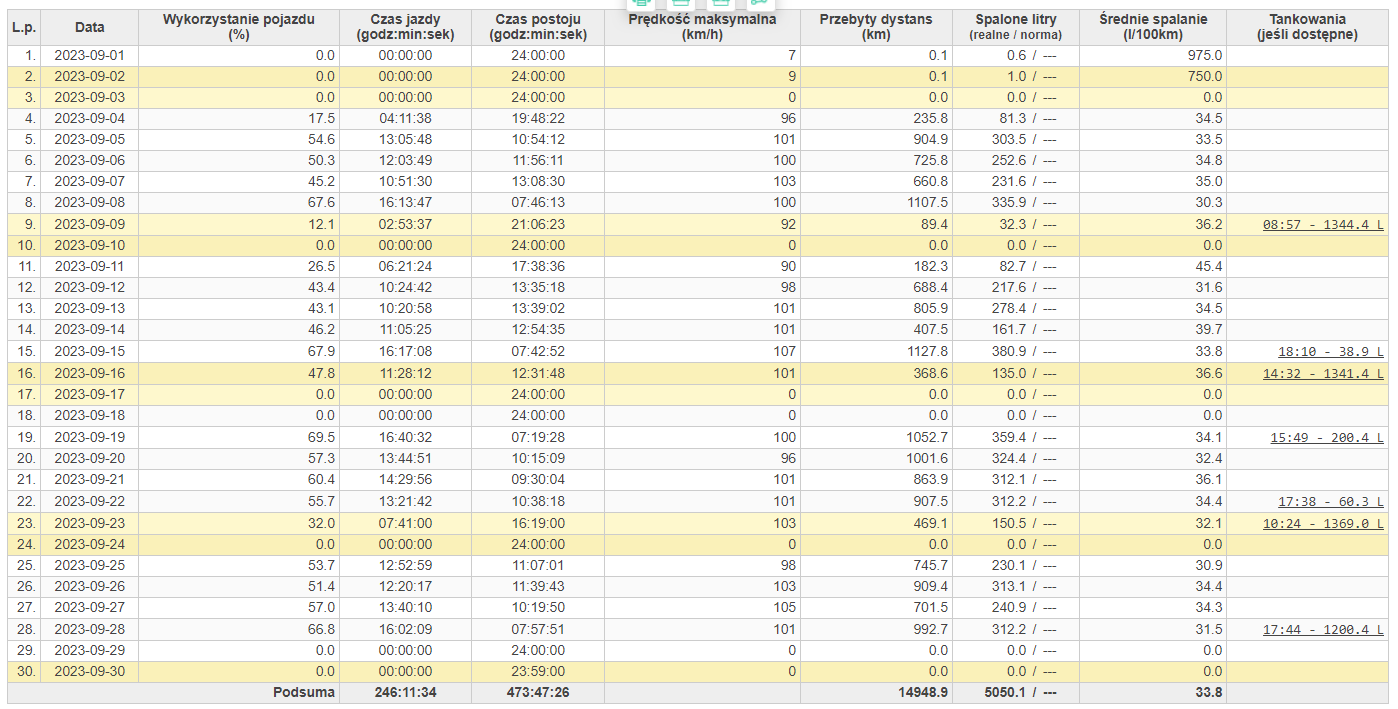
List of refuelling on days off
The application is easy to use: simply select the relevant transaction statement and import it into the system. Once the data is imported, you can generate a transaction statement report that flags potential violations, such as refuelling on days off, refuelling another vehicle or filling jerrycans. This is key information for identifying problems.
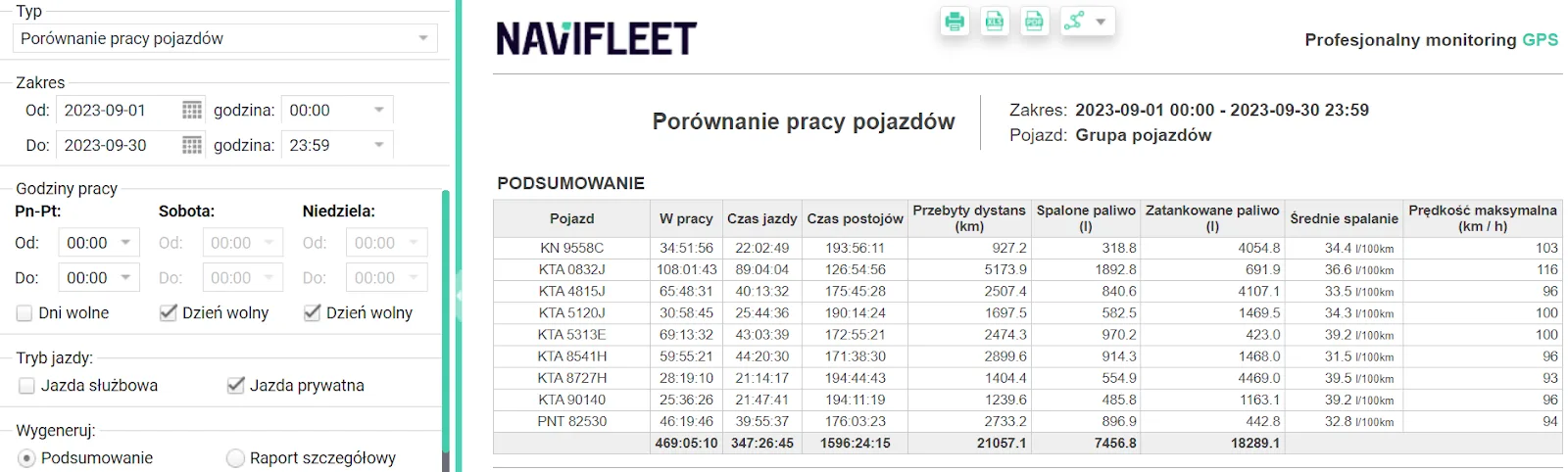
Amount of fuel stolen
GPS tracking also provides hard evidence of fuel theft, including the location and the amount of fuel stolen. This makes it possible to identify the driver and the car and draw consequences. Confronting employees allows abuse to be eliminated quickly and permanently.
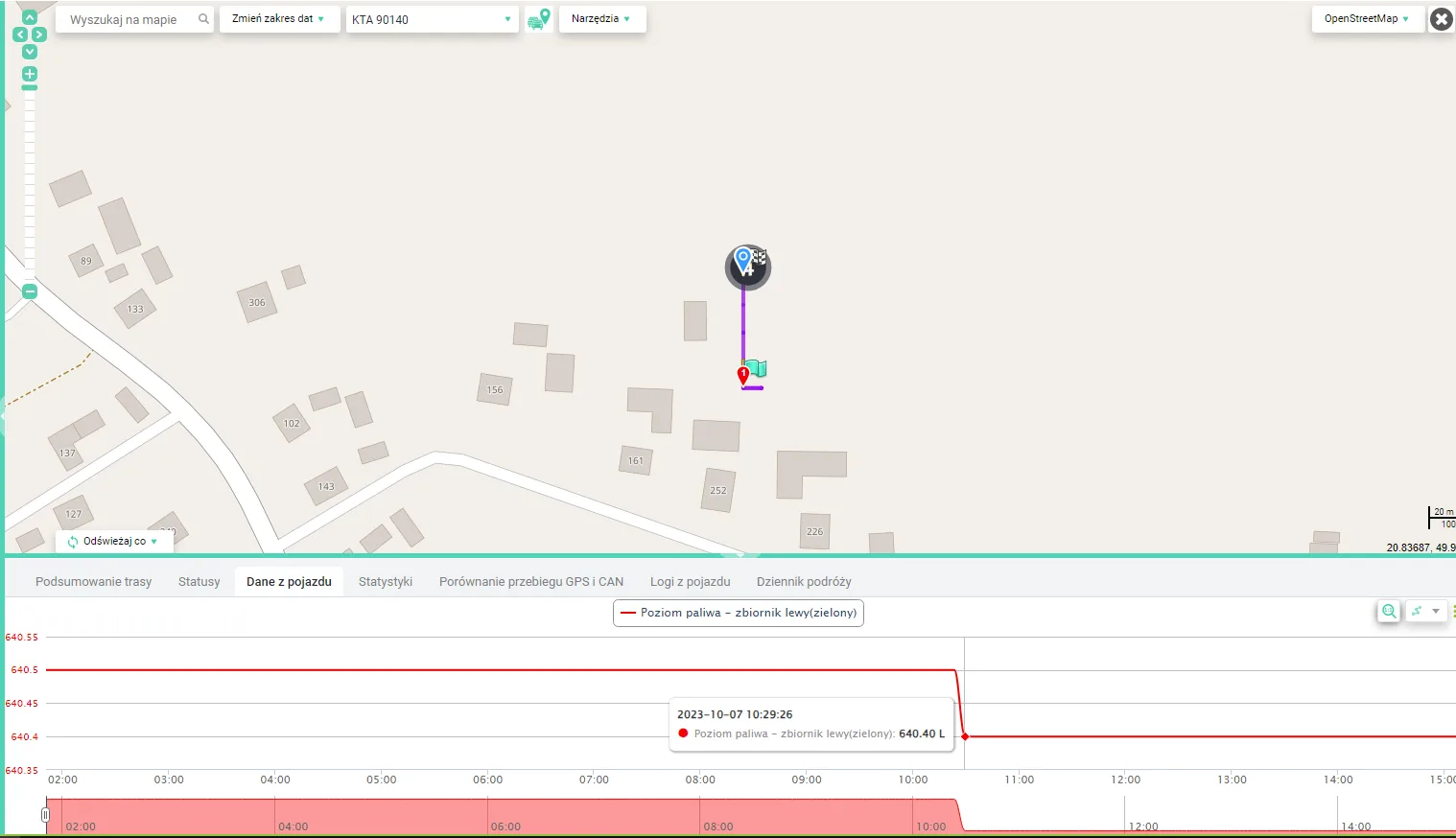
Actual, not estimated, fuel consumption
Traditional fuel reporting methods can lead to errors and inaccurate data. That is why our platform offers reporting of actual fuel consumption, allowing more accurate control and analysis of fuel loss in the context of the route travelled and actual consumption.

On the one hand, the fuel level tells us whether the fuel bought at the station went into the tank in full; on the other, we find out whether all the fuel added was burned by the engine. This is the key to success in fuel control, because the three values obtained, i.e. litres of fuel added according to the invoice, litres of fuel added according to telematics, and fuel burned since the previous refuelling, should match each other.
What is more, our application connects directly to the CAN bus and precisely determines the amount of fuel added and used, instead of offering estimated values.