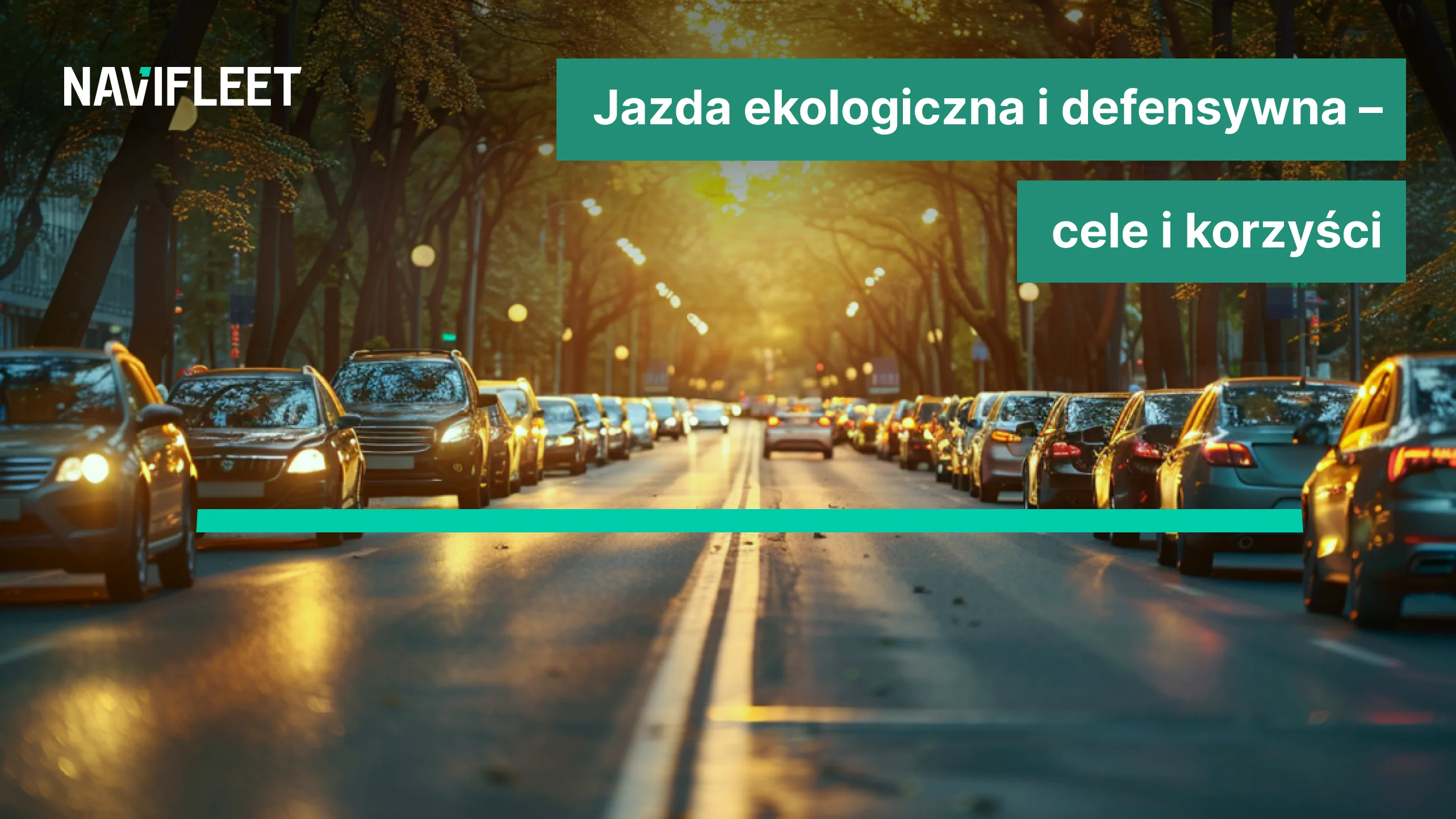
At the outset it is worth stressing that eco-driving and defensive driving have much in common, but there are also significant differences between them. These differences lie primarily in their different aims.
Eco-driving aims to limit environmental impact by reducing fuel consumption through the right driving technique. For this reason, an equals sign can be placed between eco-driving and economical driving. Besides reducing fuel consumption, we also reduce environmental pollution and vehicle running costs through lower wear of tyres and brake system components, that is, lower particulate emissions.
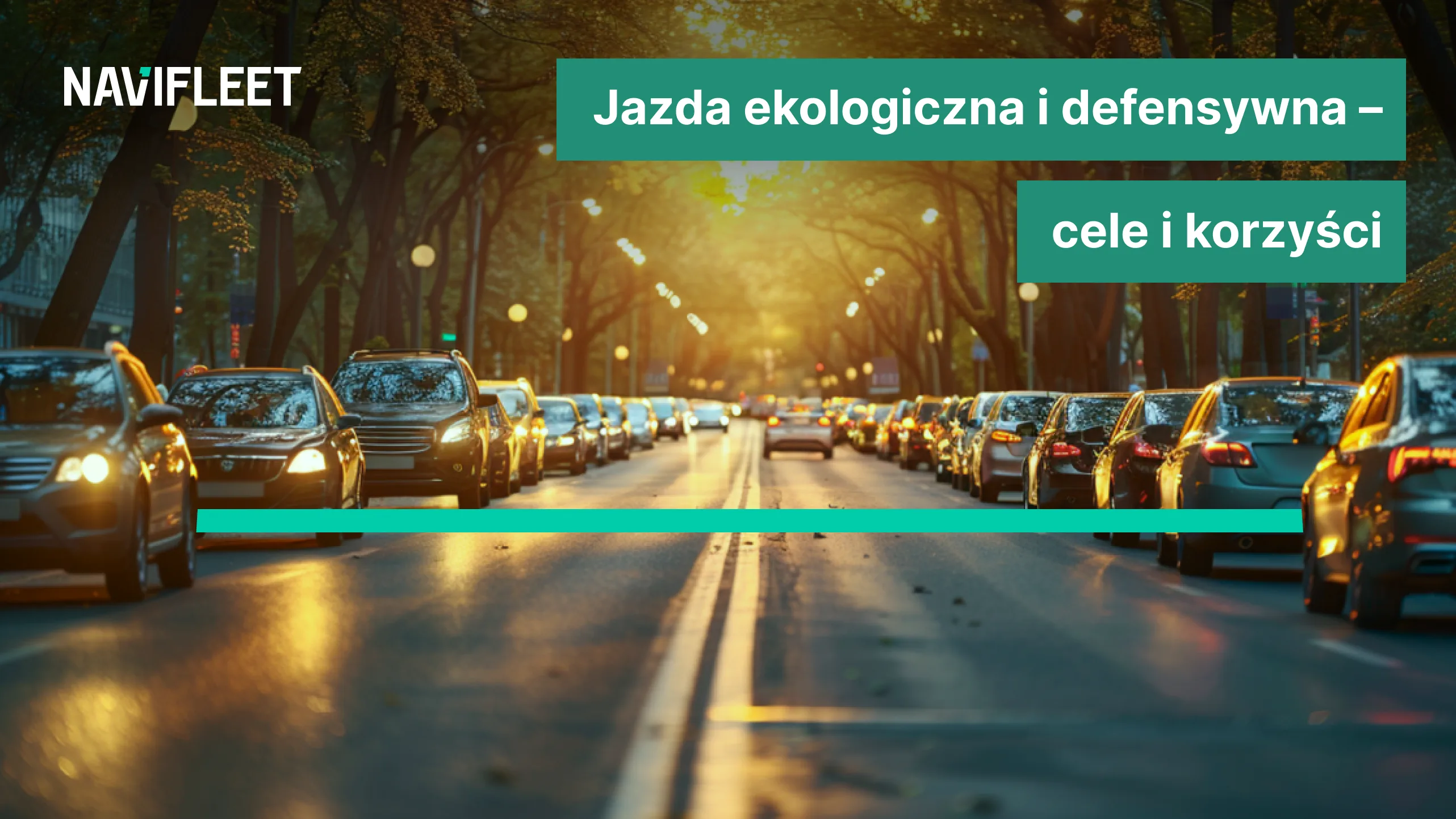
The aim of defensive driving is to consciously avoid hazards on the road and to drive in a way that minimises the risk of a collision or accident. One result is smoother driving, which also means more economical driving.
Certainly every fleet manager analysing costs would like company fleet users to drive economically, ecologically and safely. Usually, however, users care above all about time, under the pressure of which they carry out their duties. As a result, they usually drive in a way completely contrary to the principles of eco and defensive driving: fast, nervously, often dangerously.
How can this be changed? How do you get users to apply the principles of eco-driving and defensive driving?
Let's look at the advantages of defensive driving and eco-driving, of which there are many. The most important include:
Limiting environmental impact: lower fuel consumption and CO2 emissions.
To grasp the scale of the phenomenon, it is worth citing some example figures. A petrol car using around 7.5 l/100 km that covers 20,000 km a year emits almost 3.5 tonnes of CO₂. Driving according to eco-driving principles reduces fuel consumption by 5–10%, depending on driving style and road conditions. As a result, with an annual fleet emission of, say, 100 tonnes of CO₂, the savings can be as much as 5–10 tonnes of CO₂, which translates into real benefits for the environment. Also important is the reduction in particulate emissions from vehicle wear parts such as brake pads and tyres, and the reduction in pollution associated with vehicle repairs.
Reducing vehicle running costs: lower consumption of fuel and wear parts, fewer unplanned repairs and lower insurance costs.
Driving in line with eco-driving principles, as well as defensive driving, by reducing the number of abrupt manoeuvres such as braking, accelerating and sharp turns, not only saves fuel but also directly reduces vehicle wear and the associated costs. In addition, gentler driving significantly reduces the risk of road incidents, thereby helping to lower fleet insurance costs.
Increasing user safety: developing correct habits and reducing the risk of collisions and accidents. More aware and better trained drivers, the users of company cars, will drive more safely. Experience shows that eco-driving and defensive driving do not significantly lengthen the journey time over a given stretch of road, but significantly increase the chances of reaching the destination safely and therefore effectively.
Improving the predictability of fleet operations: fewer vehicle breakdowns and a lower claims rate.
Driving in line with eco and defensive driving principles puts far less strain on many vehicle components and also significantly reduces the risk of accidents. As a result, it limits disruptions to fleet operations caused by vehicle downtime due to road incidents or breakdowns.
As you can see, the effects are beneficial and desirable in every respect, but how do you convince users to apply these principles?
Below I present, step by step, how to implement eco and defensive driving effectively in a company and which actions bring the best results.
Driver education and training
For users to apply the principles of eco-driving and defensive driving, they must know them in theory, acquire practical skills and be aware of the benefits achieved. Even the best technologies supporting economical driving will be of little use without proper employee training. Training should include, among other things:
- theoretical issues: basic principles such as smooth driving, avoiding harsh acceleration and braking, maintaining optimal speed, looking far ahead and anticipating situations early,
- practical sessions: track training with an instructor, during which drivers have the opportunity to practise defensive and eco-driving techniques. The instructor will point out mistakes and indicate how to improve driving technique.
- E-learning programmes: For drivers who cannot attend in-person training, it is worth implementing online courses. They are particularly important for raising drivers' awareness.
Driving style monitoring
When implementing eco and defensive driving, it is essential to use driving style monitoring tools. Users should receive ongoing feedback on their driving style in order to improve their habits. Telematics makes it possible to inform the user of every incorrect or dangerous manoeuvre, for example harsh braking or excessive speed in a bend.
Route optimisation and journey planning
Eco-driving and defensive driving are not only about driving style but also about route optimisation. Modern tools supporting route planning, such as telematics systems, enable detailed planning and monitoring of routes, supporting both the fleet manager and the user. Among other things, they make it possible to:
- Choose the most economical and safest routes: Avoiding traffic jams and routes with heavy traffic affects fuel consumption and safety. Route selection takes place in real time, taking into account the time of day, current road conditions and any disruptions.
- Reduce idle time: Better route planning helps avoid long stops at traffic lights or in jams, which reduces fuel consumption.
- Adjust departure times: Choosing the right departure times to avoid peak traffic also contributes to lower fuel costs and improved safety.
To hold constructive meetings and conversations with company car users, the fleet manager can use telematics systems for:
Analysing driving style data:
- Number of harsh accelerations and braking events: reducing them indicates a smoother driving style, which benefits economy and safety.
- Maintaining a moderate speed: reduces fuel consumption by around 5–15% compared with dynamic driving.
- Idling time: long idling burns fuel needlessly, so it is worth striving to reduce it.
Creating reports and rankings:
- Regular reporting of results makes it possible to motivate drivers to improve their driving technique and reward the leaders.
Personalising feedback:
- Individual conversations with drivers about their results help identify areas for improvement and propose specific solutions.
Creating incentive programmes:
For the implementation to bring the expected results, driver engagement is essential. Introducing a reward system for efficient driving can significantly boost motivation. Examples: In reward and gamification systems, the key is to set clear goals and indicators the fleet manager can track. Example indicators include the number of harsh accelerations or braking events, average speed, and driving time in urban vs. motorway traffic. When introducing gamification, a points system can be considered, e.g. awarding points for every day of driving in line with eco-driving principles, which employees can exchange for rewards.
- Material or financial rewards: For the best results in economical and safe driving, bonuses, shopping vouchers or material prizes can be awarded.
- Certificates of recognition: Awarding diplomas or titles such as “Driver of the month” reinforces positive competition.
- Gamification: Creating a competition platform where drivers collect points for following eco and defensive driving principles can bring very positive results.
Implementing technologies that support eco-driving and defensive driving
Advanced technologies can make implementing eco and defensive driving principles much easier. Fleet managers should consider investing in:
- Telematics systems: They enable driving style to be monitored and analysed, and provide drivers with real-time guidance.
- Mobile apps: Apps that help drivers track their results and compare them with other fleet users.
- GPS navigation with eco-routing: Selecting routes with the lowest fuel consumption.
Keeping the fleet in good technical condition
A necessary condition for the effectiveness of eco and defensive driving is the proper technical condition of vehicles. The fleet manager should ensure: Regular vehicle servicing: The proper condition of the engine, tyres, brakes and other key components affects driving economy and safety.
Summary
Implementing eco-driving requires a strategic approach that combines education, technology and driver motivation. Achieving long-term benefits such as lower CO₂ emissions, lower operating costs and greater road safety is possible through the use of modern systems for continuous, systematic monitoring of progress. For fleet managers, implementing eco-driving principles is both a challenge and an opportunity to increase the company's operational efficiency.
 Luba Kurek
Board member of the Polish Association of Fleet Managers; Head of Administration and Fleet Manager at PHZ Baltona S.A.
Luba Kurek is an experienced fleet management specialist who has worked in the automotive industry and motorsport for many years. At PHZ Baltona S.A. she heads the Fleet Management and Administration Department and sets the direction for the fleet's development. She is the author of numerous industry articles in which she shares her knowledge and insights.