This article covers Polish regulations and market practice. The principles apply elsewhere, but check the rules in your country.
The viaTOLL system has been replaced by eTOLL. In many companies, the transition was a period of chaos and uncertainty. Learning how to operate and settle e-TOLL charges, choosing the optimal solution (an eTOLL tracker or the app) and educating drivers required a great deal of work and time. The arrival of the new toll collection system and this whole laborious process did, however, bring an additional benefit that changed fleet management in many companies.
We are talking about a multifunctional telematics system that can accompany e-TOLL operation and support the fleet manager and logistician in their daily duties. When ordering devices for e-TOLL, we can obtain at low cost a tool that streamlines processes in our fleet and the whole business.
What is the e-TOLL system?
e-TOLL is a system maintained and supervised by the Head of the National Revenue Administration. It was created to collect tolls for driving on sections of roads in Poland managed by the General Directorate for National Roads and Motorways. It replaced the viaTOLL system mentioned above.
The e-TOLL toll collection system is required for all motor vehicles and vehicle combinations with a gross vehicle weight above 3.5 tonnes, as well as for buses regardless of their gross vehicle weight.
On 1 December 2021, toll gates disappeared from state-run motorway sections. In this way e-TOLL became a payment tool not only for drivers of heavy goods vehicles, but also of passenger cars with a gross weight below 3.5 tonnes (in this case it is not mandatory).
For light vehicles, the electronic method of paying motorway tolls in the e-TOLL system was made available on the A2 Konin – Stryków and A4 Wrocław – Sośnica motorway sections.
Ways of using the e-TOLL system
The e-TOLL toll collection system can be used in several ways:
- using GPS trackers fitted in the vehicle,
- via the dedicated e-TOLL app.
The choice of solution is determined by the user's needs and preferences. The Ministry of Finance has also provided an alternative in the form of a motorway e-ticket, which can be bought at petrol stations near toll sections or online.
We described the ways of paying e-TOLL charges for toll roads HERE.
The eTOLL tracker
There are two types of GPS device on the market dedicated to the e-TOLL system: ZSL and OBU.
The ZSL device
A ZSL (External Location System) tracker transmits location data and vehicle operating parameters read from the CAN bus. It is fitted directly to the vehicle's electrical system (under the dashboard, near the air vents, the passenger-side glovebox, the radio or the steering wheel).
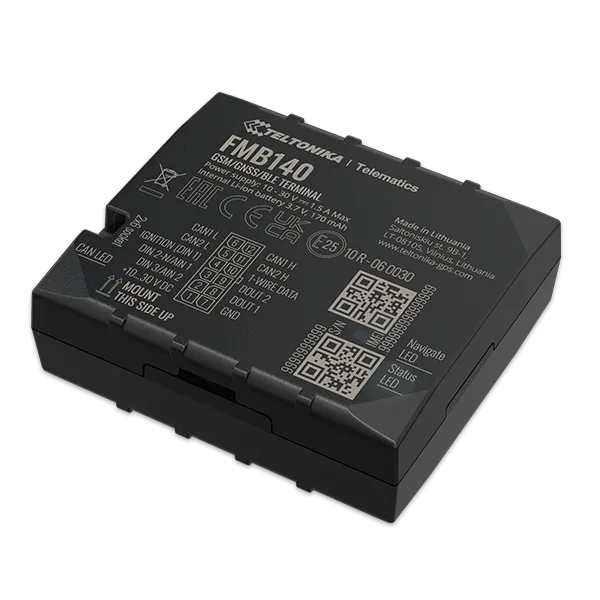
Source: teltonika-gps.com
The OBU device
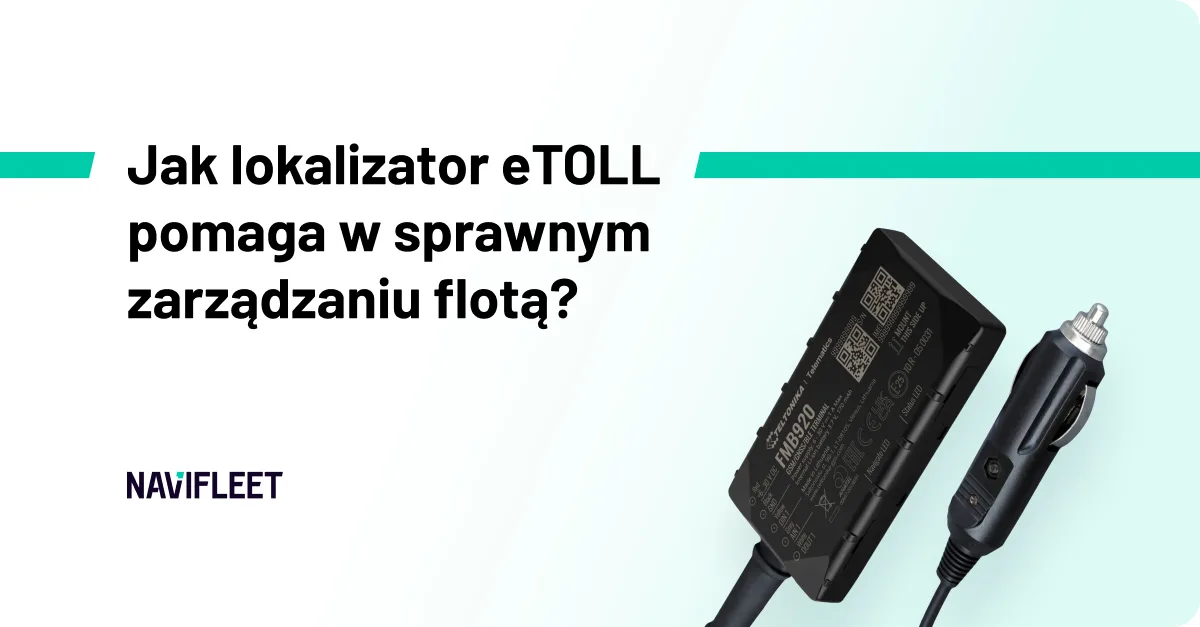
An OBU-type GPS tracker is an on-board unit that also transmits geolocation data in line with the guidelines of the National Revenue Administration (KAS). It can be powered from the cigarette lighter socket or the OBD II socket.
Both types of device are fitted with SIM cards that allow location data to be sent. To use a GPS tracker to pay eTOLL charges, both the device (OBU and ZSL) and the operator must be approved for the system by KAS.
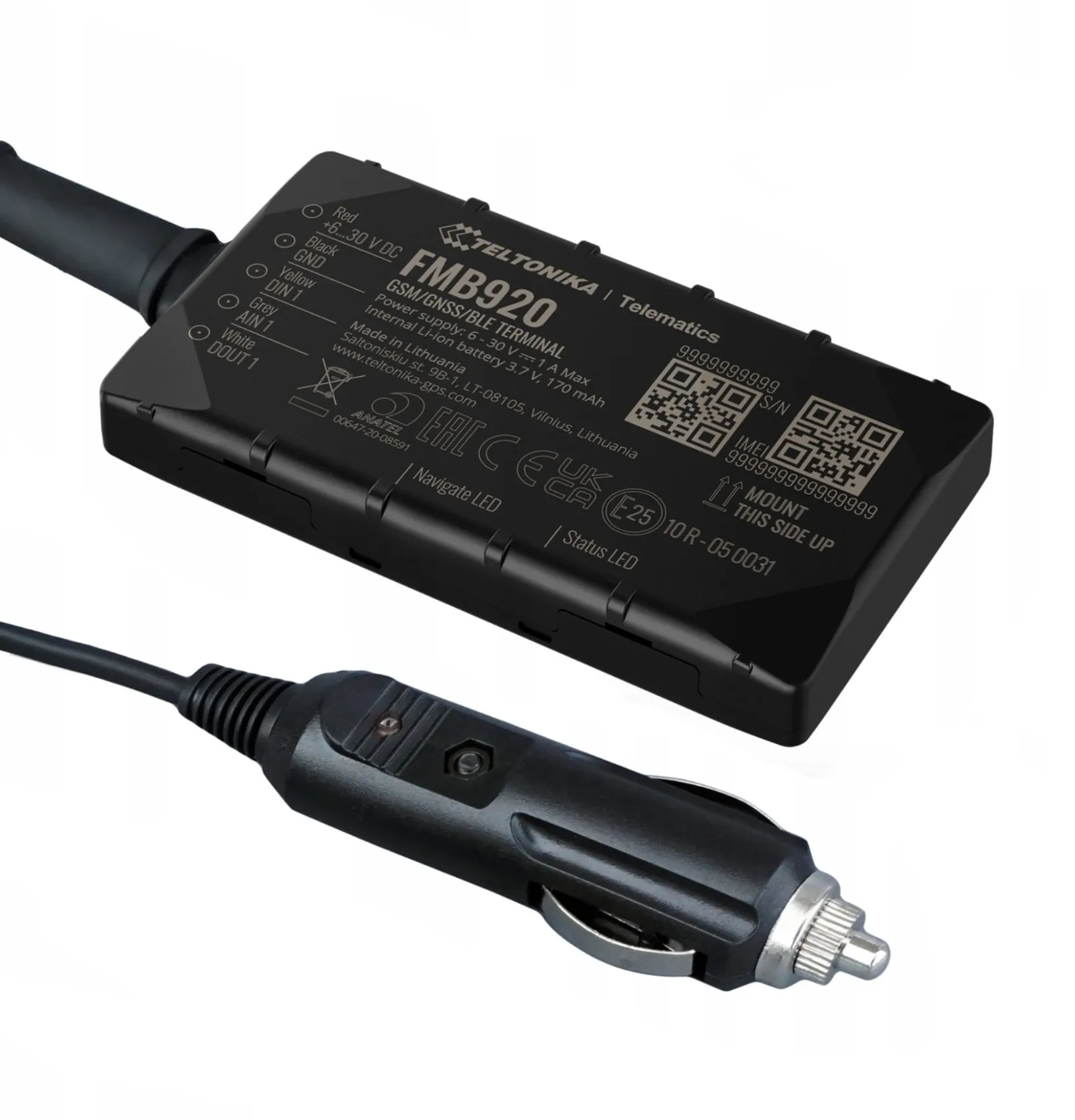
Source: teltonika-gps.com
GPS tracker, the Navifleet app and the e-TOLL system
With hindsight it is safe to say that using e-TOLL with a GPS device gives the user the greatest convenience and, above all, many additional possibilities.
After setting up an account and registering in the IKK customer portal, GPS trackers let us enjoy hands-free use of eTOLL. Along with the ZSL or OBU device for eTOLL, the user gets access to the Navifleet app, in which they can check the following parameters during the journey:
- the status of the connection to the vehicle's power supply,
- battery charge level,
- time since the last location sent by the device,
- GSM signal quality,
- GPS signal quality.
In addition, you can easily verify what data has been registered in the e-TOLL system, and specifically which route was sent by the GPS device.
The Navifleet app with a GPS tracker – more than just the e-TOLL system
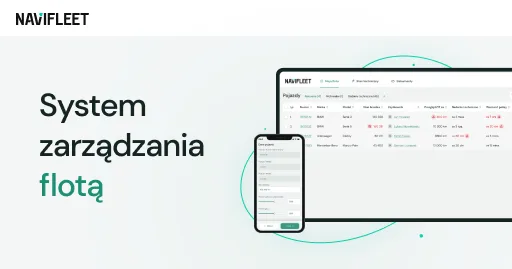
A GPS tracker combined with the Navifleet app is a comprehensive fleet management tool. It is a modular solution that can be tailored to your needs. The overriding task of a telematics system in a fleet is to streamline processes and support the fleet manager in their daily duties. The example features below confirm this.
Virtual service book
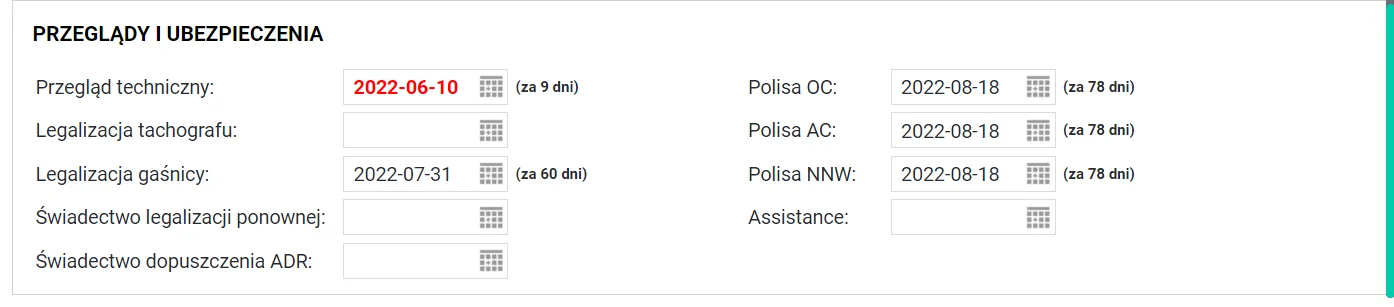
A telematics system can serve as a virtual service book for vehicles. All the most important dates for vehicle operation can be collected in the telematics app. These include dates of inspections, oil changes and expiring insurance.
This solution works automatically. As a result, the fleet manager or logistician does not have to worry about dates or keep spreadsheets in Excel. The app sends a notification of upcoming deadlines the appropriate number of days in advance (e.g. for an inspection falling due, the user receives a notification 30, 14, 7 and 3 days before and on the last day of validity).
Fuel control
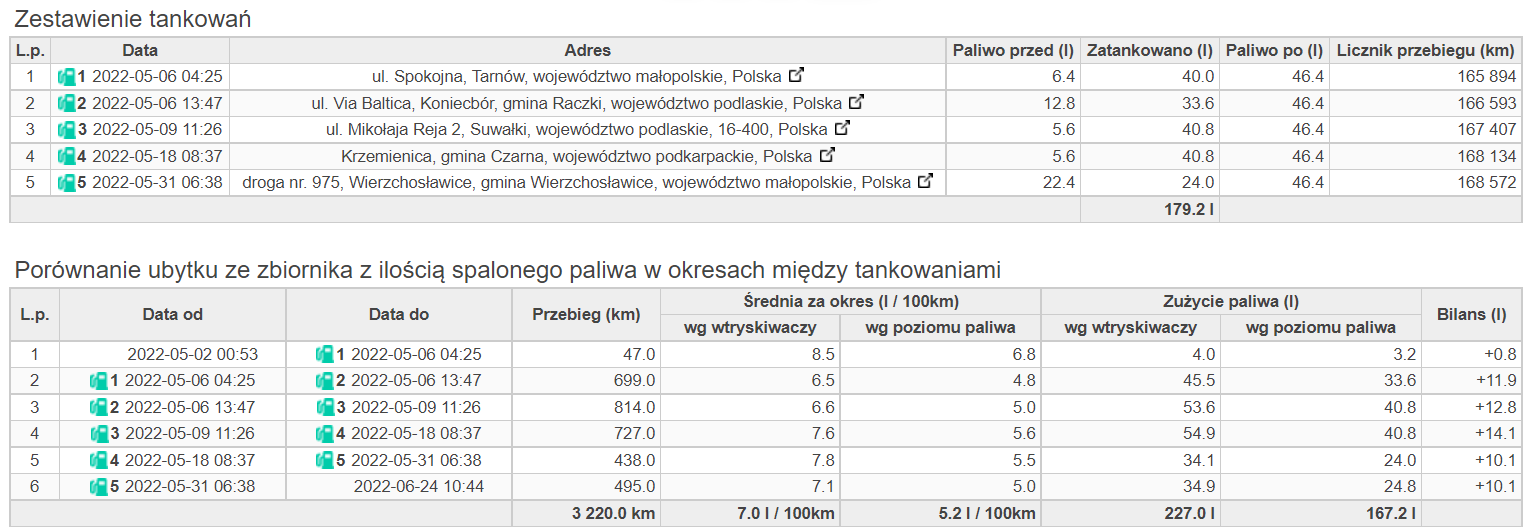
Telematics is also an excellent tool for automating the control of refuelling and fuel consumption. Fuel cards can be imported into the system. As a result, the app collects data on the amount of fuel put into the vehicle, consumption and the value of the invoice from the station.
In this way we eliminate the tedious process of manually recording invoices and can easily catch any irregularities. We do not have to worry about constantly reminding drivers to deliver invoices on time and note down the vehicle's odometer reading. This solution works perfectly both in transport and in light fleets.
Remote tachograph and route manager for transport
The Navifleet system is a tool for the logistician that allows individual routes to be planned and optimised precisely. Data on current tolls on given road sections, permitted tonnage and real-time traffic jams is gathered in one place. In this way the number of badly estimated trips, detours and, as a result, missed delivery deadlines can be reduced. In addition, the system keeps records of empty and loaded trips.
The Navifleet app with e-TOLL also gives control over drivers' working time. Using the remote tachograph feature, the logistician can check with a single click how much driving time drivers have left and how many reduced rest periods they have already taken.
Automatic downloading of DDD files (according to a set schedule) allows drivers' working time to be settled efficiently. The Navifleet app works with accounting programs. Importing DDD files into such programs reduces the time needed to settle drivers' accounts by up to 80%.
Driving style analysis and private mode for light fleets
Can the subscription for GPS devices for e-TOLL cost PLN 0? It is possible thanks to advanced telematics that analyses drivers' driving style. This feature meets the needs of modern fleets and combines the ability to generate savings, reduce the fleet's accident rate and cut exhaust emissions.
Reducing fleet costs is one of the biggest challenges for companies with extensive mobile assets. Unfortunately, it cannot be done without additional tools. Navifleet has a ready solution.
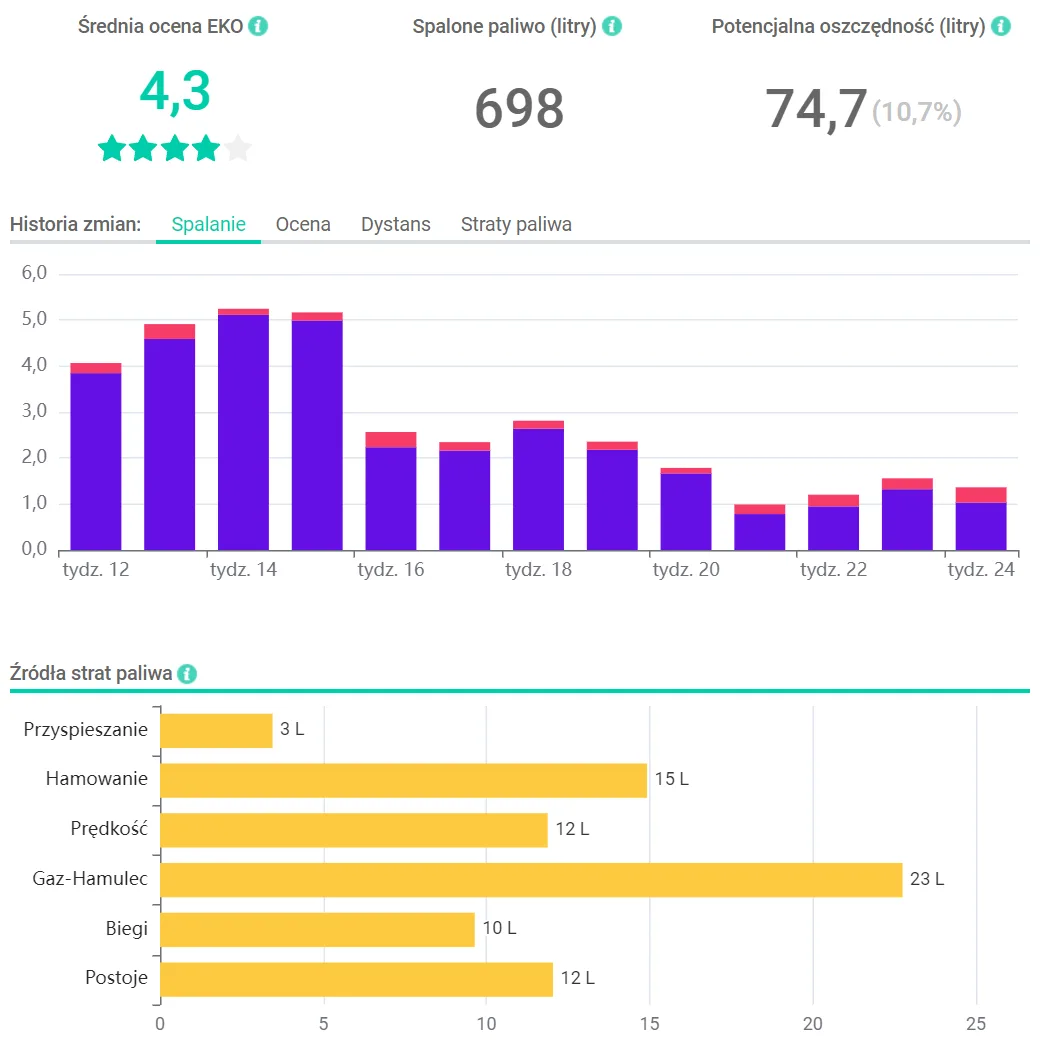
Our telematics is equipped with an advanced system for scoring drivers while driving. The GPS devices collect a range of real-time data on vehicle speed, braking, acceleration and idling with the engine running.
Technology that supports drivers
Based on the above data, the employee is given a score. In the mobile app, every driver has access to a list of the mistakes they have made and personalised suggestions that help them eliminate bad behaviour behind the wheel.
This solution can safely be called a virtual instructor in safe, economical and eco-friendly driving. In this way drivers train every time they drive a company vehicle.
Summaries for the fleet manager
Meanwhile, the fleet manager has insight into data covering scores, fuel consumption and the mistakes drivers make. In the rankings they can identify the least safe and least economical drivers, and charts show how the fuel consumption of the whole fleet or individual drivers is changing and which behaviours use the most fuel. Analysing the current situation in the fleet takes no more than a few minutes, and the savings you can generate reach tens of per cent.
Challenges for drivers
If the situation requires it, the fleet manager can create challenges in which drivers compete to improve their score in a selected category. Healthy competition and an attractive prize are something that will additionally motivate employees.
Settling private journeys
The fleet policy of many companies allows sales representatives, service technicians or fitters to use company vehicles for private purposes as well. For the fleet manager this is a hard nut to crack. On the one hand, they must have control over the vehicles and the kilometres driven privately, and on the other hand they must not intrude on employees' privacy. Telematics services have found a solution in this area too.
Once granted the appropriate permissions, the driver can set in the mobile app the mode in which they are currently travelling (business or private). When private mode is selected, the journey is anonymised, meaning the fleet manager cannot see exactly where the vehicle is going. At the same time, telematics makes it possible to generate reports comparing the distance travelled privately and on business.
Allocating vehicles in times of crisis
This is particularly useful in the recent period, when we are dealing with the problem of availability of new vehicles. Fleet managers often have to move mobile assets between employees so that those who need them most are provided with the tools to do their job.
You can read about how telematics supports the fleet manager in this process HERE.
From the e-TOLL system to advanced telematics
The introduction of the e-TOLL system was an impulse for many companies to invest in tracking devices and sign a contract with a chosen operator (with a subscription fee). Some of them decided to extend the contract to include advanced access to telematics data. Today, processes in those fleets run more smoothly, and the savings generated by driving style analysis technology offset most of the costs of maintaining the vehicles.