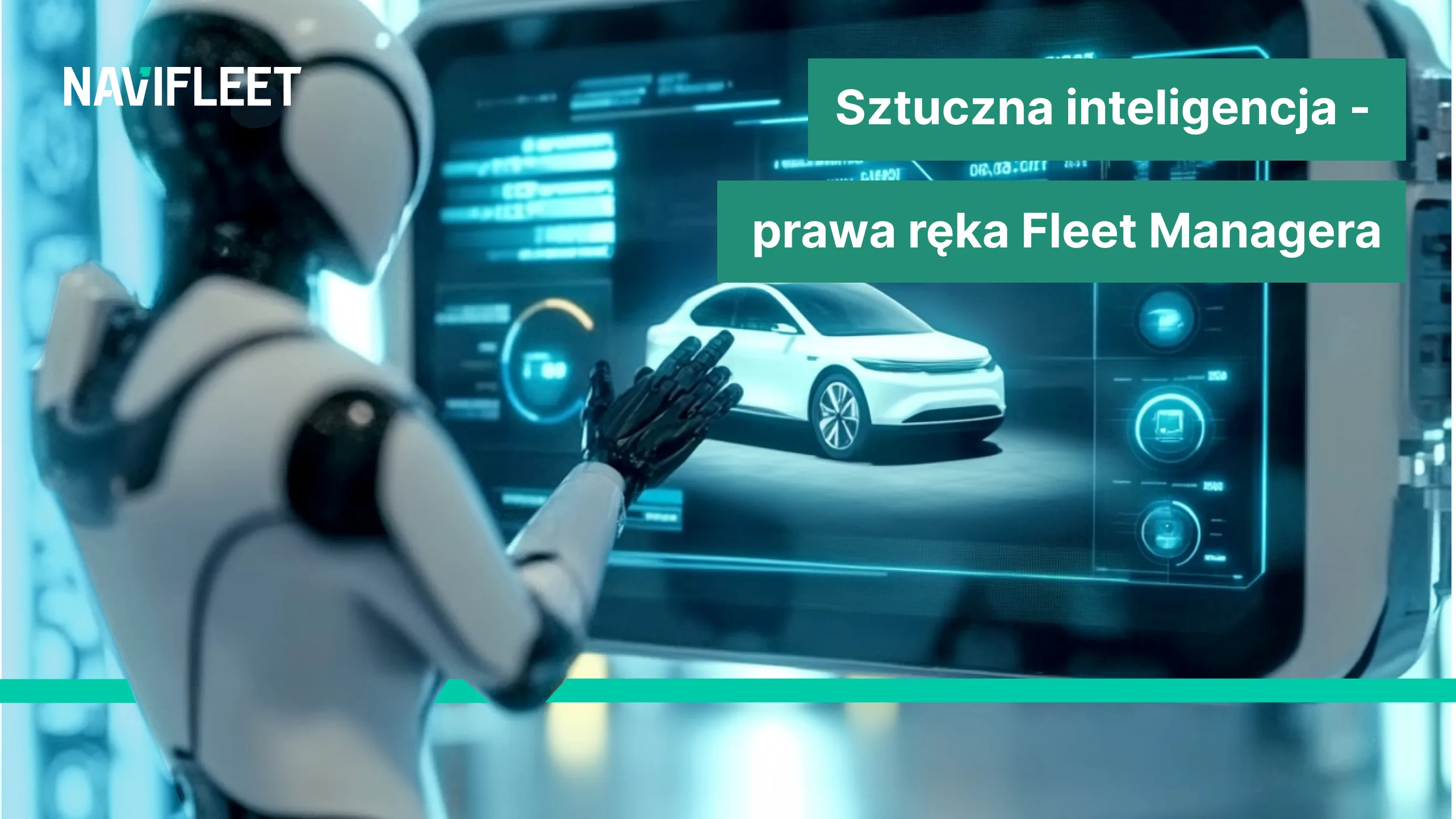
In the age of digitalisation and rapid technological development, artificial intelligence (AI) is becoming an indispensable tool supporting various aspects of fleet management. AI offers advanced capabilities for analysing data, generating reports, predicting trends and suggesting preventive measures that can significantly improve the operational efficiency and safety of a fleet.
So let's put forward the following propositions and verify whether artificial intelligence (AI) can support us in each of them.
The case
AI supports the fleet manager's work through process automation and data analysis
Artificial intelligence can significantly streamline a fleet manager's work by automating many routine processes and providing advanced data analysis. With AI, the fleet manager can focus on the strategic aspects of management instead of wasting time on manual information processing.
Process automation: AI can automatically monitor the technical condition of vehicles, remind you of service dates, manage servicing schedules and control fuel consumption. AI-equipped telematics systems can track vehicle locations in real time, analyse routes and identify inefficient journeys.
Data analysis: AI can process huge amounts of data from various sources, such as GPS systems, telematics, service reports and fuel consumption data. Using advanced algorithms, AI can identify patterns and anomalies that may indicate potential problems with the fleet. For example, AI can analyse data on drivers' driving style, identify harsh acceleration, harsh braking and speeding, which allows individual guidance to be given and safety improved.
AI generates detailed reports on fleet costs, operational efficiency and safety
One of the key aspects of fleet management is monitoring operating costs, vehicle utilisation and safety. AI can generate detailed reports that give the fleet manager the information needed to make informed decisions.
Cost reports: AI can analyse the costs of fuel, servicing, repairs, insurance and other vehicle-related expenses. Based on this data, AI can generate reports showing which vehicles generate excessive costs and require optimisation. For example, AI can identify vehicles with high fuel consumption and suggest eco-driving training for their drivers.
Operational efficiency reports: AI can monitor vehicle working time, analyse routes and identify idle periods. This allows the fleet manager to plan routes better, optimise vehicle utilisation and reduce operating costs. Operational efficiency reports can also point to vehicles that are used sporadically and could be withdrawn from the fleet.
Safety reports: AI can analyse data on accidents, collisions, traffic offences and drivers' driving style. Based on this data, AI can generate reports showing which vehicles and drivers are most at risk. Safety reports can also indicate the need for additional safe driving training and the introduction of preventive measures.
AI predicts trends in vehicle wear, fuel consumption and driver behaviour
Artificial intelligence can predict future trends in vehicle wear, fuel consumption and driver behaviour. This allows the fleet manager to take proactive action that prevents problems and optimises fleet utilisation.
Predicting vehicle wear: AI can analyse data on mileage, parts wear and vehicle service history to predict when vehicles will need repairs or replacement. For example, AI can predict which vehicles will need new tyres soon, allowing them to be ordered in advance and downtime avoided.
Predicting fuel consumption: AI can analyse data on fuel consumption, drivers' driving style and routes to predict future fuel consumption. Based on this data, AI can suggest route optimisation, eco-driving training and a fleet policy that promotes economical vehicle use.
Predicting driver behaviour: AI can analyse data on drivers' driving style, traffic offences and accident history to predict which drivers are most at risk. Based on this data, AI can suggest additional safe driving training and preventive measures that reduce the risk of accidents.
AI suggests preventive measures that can prevent breakdowns, accidents and inefficient fleet use
Artificial intelligence can suggest preventive measures that can prevent breakdowns, accidents and inefficient use of the fleet. This allows the fleet manager to take proactive action that improves the fleet's safety and operational efficiency.
Preventive measures for breakdowns: AI can analyse data on service history, parts wear and vehicle mileage to predict which vehicles are most at risk of breaking down. Based on this data, AI can suggest earlier inspections, parts replacement and a fleet policy that promotes regular vehicle servicing.
Preventive measures for accidents: AI can analyse data on drivers' driving style, traffic offences and accident history to predict which drivers are most at risk. Based on this data, AI can suggest additional safe driving training, the introduction of driving style monitoring systems and a fleet policy that promotes safe vehicle use.
Preventive measures for inefficient fleet use: AI can analyse data on vehicle working time, routes and fuel consumption to predict which vehicles are used inefficiently. Based on this data, AI can suggest route optimisation, a fleet policy that promotes economical vehicle use, and monitoring systems that allow vehicle locations to be tracked on an ongoing basis.
AI supports the optimisation of fleet operating costs
Optimising operating costs is one of the most important aspects of fleet management. AI can support this process by analysing data and identifying areas where savings can be made.
Fuel cost analysis: AI can monitor fuel consumption of individual vehicles and identify anomalies such as excessive consumption. Based on this data, AI can suggest eco-driving training for drivers, route optimisation and a fleet policy that promotes economical vehicle use.
Servicing cost analysis: AI can analyse vehicle service history data, identify vehicles that require frequent repairs and suggest replacing them with more reliable models. This allows the fleet manager to reduce servicing costs and improve the fleet's operational efficiency.
Insurance cost analysis: AI can analyse accident and traffic offence history data to predict which vehicles and drivers are most at risk. Based on this data, AI can suggest additional safe driving training and the introduction of driving style monitoring systems, which can lead to lower insurance premiums.
AI helps monitor and improve drivers' driving style
Drivers' driving style has a direct impact on fleet safety and operating costs. AI can monitor drivers' driving style and suggest measures to improve their behaviour on the road.
Driving style monitoring: AI can analyse data on acceleration, braking, speeding and other driver behaviour. Based on this data, AI can generate reports showing which drivers need additional safe driving training.
Eco-driving training: AI can identify drivers who use excessive amounts of fuel and suggest eco-driving training. This allows drivers to learn a more economical driving style, which leads to lower fuel costs and reduced CO₂ emissions.
Driving style monitoring systems: AI can support the introduction of driving style monitoring systems that continuously analyse driver behaviour and generate alerts in the event of dangerous behaviour. This allows the fleet manager to react quickly to problems and improve fleet safety.
AI supports sustainable fleet development through CO₂ emissions analysis and the introduction of green vehicles
Sustainability is an increasingly important aspect of fleet management. AI can support this process by analysing CO₂ emissions and suggesting the introduction of green vehicles.
CO₂ emissions analysis: AI can monitor the CO₂ emissions of individual vehicles and identify those that generate the highest emissions. Based on this data, AI can suggest replacing these vehicles with greener models, which helps reduce the fleet's carbon footprint.
Introducing electric vehicles: AI can analyse data on the running costs of electric vehicles and their environmental impact to suggest adding them to the fleet. This allows the fleet manager to make informed decisions about the fleet's sustainable development.
Route optimisation for CO₂ emissions: AI can analyse routes and suggest optimising them to reduce CO₂ emissions. This allows the fleet to operate in a greener way and contribute to protecting the environment.
AI enables real-time vehicle location monitoring and route analysis
Real-time monitoring of vehicle locations and route analysis are key to effective fleet management. AI can support these processes through advanced telematics and GPS systems.
Vehicle location monitoring: AI can track vehicle locations in real time, allowing ongoing monitoring of the fleet and a rapid response to problems. This allows the fleet manager to manage resources better and optimise vehicle utilisation.
Route analysis: AI can analyse routes, identify inefficient journeys and suggest route optimisation. This allows the fleet to operate more efficiently, leading to lower operating costs and reduced fuel consumption.
Geofences and alerts: AI can support the introduction of geofences, which make it possible to monitor whether vehicles are moving within permitted areas. If a geofence is breached, AI can generate alerts, allowing a rapid response to problems.
AI supports fleet document management through process digitalisation
Managing fleet documentation is key to maintaining regulatory compliance and managing resources effectively. AI can support this process by digitalising documentation and automating processes.
Document digitalisation: AI can support the introduction of electronic vehicle handover and return reports, enabling fast, paperless settlement and document archiving. This allows the fleet manager to manage documentation easily and maintain regulatory compliance.
Process automation: AI can automate document management processes, such as reminders of service dates, insurance renewals and other important events in the vehicle's life cycle. This allows the fleet manager to focus on more strategic aspects of management.
Reporting systems: AI can support the introduction of reporting systems that generate detailed reports on vehicle performance, operating costs and usage history. This allows the fleet manager to make informed decisions based on reliable data.
AI helps identify and manage the fleet's operational risk
Managing operational risk is key to maintaining the safety and efficiency of the fleet. AI can support this process by analysing data and identifying potential threats.
Analysis of accident and offence data: AI can analyse data on accident, collision and traffic offence history to identify the vehicles and drivers most at risk. Based on this data, AI can suggest additional safe driving training and the introduction of driving style monitoring systems.
Predicting breakdown risk: AI can analyse data on service history, parts wear and vehicle mileage to predict which vehicles are most at risk of breaking down. Based on this data, AI can suggest earlier inspections and parts replacement, preventing breakdowns.
Financial risk management: AI can analyse data on operating costs, insurance and other vehicle-related expenses to identify areas where savings can be made. Based on this data, AI can suggest cost optimisation, renegotiation of insurance contracts and a fleet policy that promotes economical vehicle use.
Summary
Smarter and faster decision-making is the key to lowering fleet operating costs, improving the safety of vehicle users, saving fuel, reducing carbon dioxide emissions and increasing productivity. I am convinced that in the coming years artificial intelligence (AI) will make it possible to achieve a higher level of fleet operational efficiency. But to actually make use of it, your company must be ready for what the future brings.
 Piotr Litwin
Head of Logistics & Lean Coordinator at OCEANIC
For more than 20 years he has combined logistics management with fleet operations. He started with truck fleets of over 100 vehicles delivering food products, and in later years successfully led the transition from owned fleets to fleets managed under long-term leases.