Effective control of drivers' working time is one of the important tasks facing a transport company. Its significance stems from a number of factors, including the need to meet legal requirements and the impact of an employee's physical and mental condition on the efficiency and safety of what they do. Careful analysis of a truck driver's working time makes it possible to detect any irregularities in this area and take the right steps to improve the situation.
Effective control and settlement of drivers' working time is possible thanks to modern technology. This includes digital tachographs, devices that record the driver's activity and the distance they have travelled. Under European Union rules, tachographs are, as a rule, mandatory in vehicles with a GVW above 3.5 t carrying out commercial road transport of goods or passengers. From 1 July 2026 this obligation will also cover vehicles or vehicle combinations with a GVW above 2.5 t carrying out international commercial transport of goods or cabotage operations.
Vehicles registered from May 2006 onwards had to be fitted with digital tachographs. In international transport, rules on second-generation smart tachographs (G2V2) now also apply, with phased introduction in line with the Mobility Package. Carriers must take the obligations arising from the regulations very seriously, such as fitting a digital tachograph that monitors the driver's working time in the vehicle. Breaching these rules exposes them to severe penalties. That is why it is so important that driver working time control, in terms of compliance with the applicable norms, is carried out systematically and effectively.
Although analogue tachographs may still legally be used in some vehicles, EU rules provide for a gradual transition to digital and smart tachographs, especially in international transport. In the context of tasks such as driver working time analysis, this replacement will make things considerably easier. Why is that?
The advantage of digital tachographs over analogue ones is that they can be integrated with vehicle tracking systems. Modern digital tachographs can integrate with telematics systems via dedicated communication interfaces, enabling remote download of DDD data and monitoring of driver activity, among other things. Thanks to these features, controlling and analysing drivers' working time becomes much simpler.
In the rest of this article we discuss, among other things, how the driver's work cycle is regulated, and which technological solutions an employer can use to make driver working time control efficient and accurate.
How is a truck driver's working time currently regulated?
Under the applicable legal norms, such as Regulation (EC) No 561/2006 of the European Parliament and of the Council of 15 March 2006, the tachograph records driver activities such as driving, rest, availability and other work, which form the basis for settling the driver's working time. It monitors the driver's activity time in each of the four modes mentioned.
The same regulation also defines working time norms considered in terms of continuous driving, daily driving and driving over a two-week period. The idea of introducing and recording drivers' working time with tachographs emerged several decades ago. Its aim was to reduce the number of road accidents involving truck drivers, which, as one can easily guess, are often tragic in their consequences. Such a driver working time counter was intended to prevent situations in which an exhausted driver endangers themselves and other road users.
Since Poland is a member state of the European Union and a significant proportion of Polish transport companies operate within it, the main legal document defining the norms for drivers' working and driving time is precisely Regulation (EC) No 561/2006. Remember, however, that this legal act does not apply in non-EU countries, and in countries covered by the AETR Agreement the provisions of the European Agreement concerning the Work of Crews of Vehicles Engaged in International Road Transport (AETR) apply. Until March 2014 there were several differences between the AETR agreement and Regulation 561, but on 28 March 2014 the Journal of Laws published the President's announcement on amendments to the European Agreement concerning the Work of Crews of Vehicles Engaged in International Road Transport. The AETR rules have been largely harmonised with Regulation 561/2006, so they regulate most issues in a very similar way.
Knowing the rules governing a driver's weekly, daily and fortnightly working time is very important both for the driver and for the fleet manager. Complying with them not only helps avoid penalties but also protects the safety of the driver and other road users. For this reason we will now take a closer look at how a professional driver's working time is regulated (including a bus driver's working time, if they carry out journeys governed by the aforementioned rules).
Driver working time control: what are the working time norms for professional drivers?
Under Article 6 of Regulation (EC) No 561/2006, a driver is subject to the following working time norms:
- The daily total driving time may not exceed 9 hours, but the driver may extend driving time to 10 hours twice in a calendar week (from Monday 00:00 to Sunday 24:00).
- The weekly total driving time may not exceed 56 hours and may not exceed the weekly working time laid down in Directive 2002/15/EC.
- The fortnightly total driving time may not exceed 90 hours.
Remember that the regulation defines not only the driver's weekly or daily working time but also certain concepts, for example that total driving time covers the total duration of driving in all EU countries and in third countries. Although the working time norms above do not apply to all types of vehicle, if the driver has driven another vehicle that is not legally required to have a tachograph, they should fill in the missing activities by means of a manual entry in the tachograph.
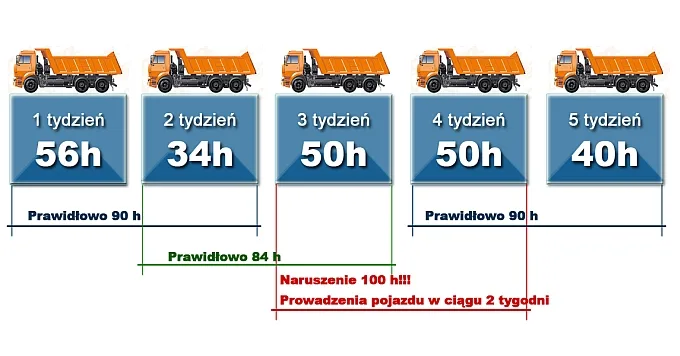
Fig. 1 Illustration showing the correct interpretation of weekly rest periods (photo: transtica.pl)
What are the norms for breaks and rest periods for professional drivers?
When analysing the measures that matter to drivers and dispatchers, attention should be paid not only to how permitted driving time is regulated. Equally important are the rules governing matters such as driver rest and the breaks they are entitled to.
Regulation (EC) No 561 also defines the parameters of the rest periods a driver must take. By definition, rest is an uninterrupted period during which the driver may freely dispose of their time. In regulating the driver's work cycle, the legislator provided for three types of breaks and rest periods. They guarantee the driver free disposal of their free time, in line with the definition taken directly from the regulation.
- 45-minute break: for every 4.5 hours of driving the driver is obliged to take a break. Together with the driving time, these two values form the driving cycle. Because the driver's work needs to be flexible in response to external conditions (such as the operation of loading terminals), the driver may take the break in split form: first a first part lasting at least 15 minutes, and then a second part lasting at least 30 minutes. Importantly, the order of the segments must be exactly as in the example. It is a mistake if the driver first takes a break of at least 30 minutes and then one of at least 15.
- Daily rest: the daily rest period, as the regulation defines it, is divided into the following types.
- Regular daily rest period: by law, this is rest, that is time the driver may freely dispose of, lasting a minimum of 11 hours,
- Reduced daily rest period: a maximum of three times between two weekly rest periods (discussed below), the driver may reduce their daily rest period to 9 hours. It is important to realise that the definition "between weekly rest periods" does not mean the same as "once per calendar week",
- Split daily rest period: another concession to the conditions prevailing in road transport. A split daily rest period gives the driver the option of taking rest in two parts, the first of which must last at least 3 hours and the second at least 9 hours. According to the generally accepted rule, daily rest ends the driver's working day. This means the driver must take the second part of the split daily rest before 24 hours have elapsed since the first activity, that is since the start of the current working day.
We now know what a professional driver's daily rest should look like. However, to carry out the task of controlling, analysing and settling drivers' working time effectively, knowledge of the rules on weekly rest periods is also essential.
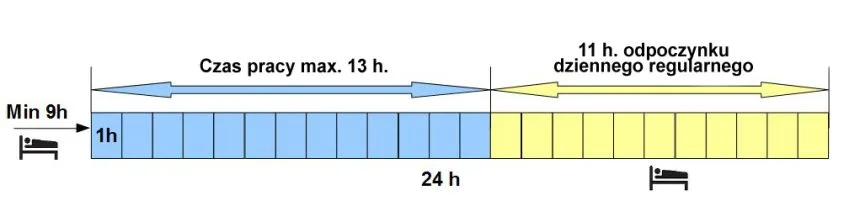
Fig. 2 Diagram of taking a regular daily rest period. (photo transtica.pl)
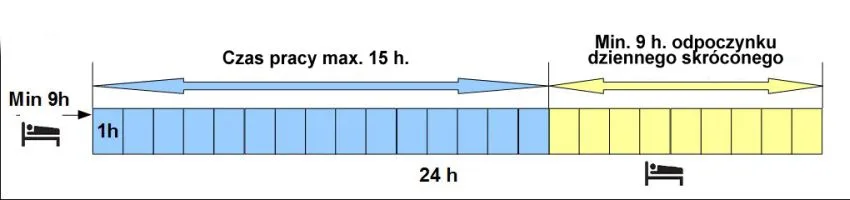
Fig. 3 Diagram of taking a reduced daily rest period. (photo: Transtica.pl)
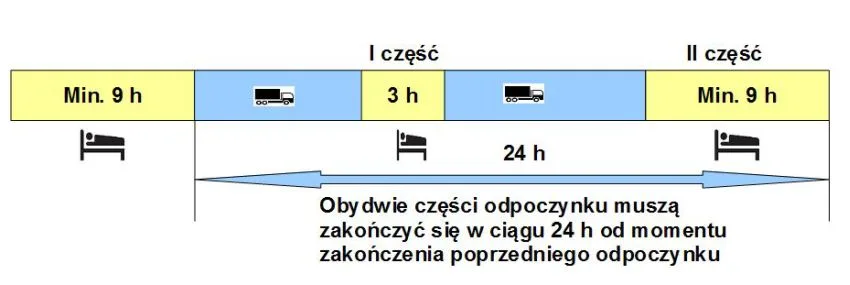
Fig. 4 Diagram of taking a split daily rest period.
A driver's weekly working time: how are rest periods regulated?
Managing driving and rest time is quite a challenge. The driver must end every working week with a weekly rest period. Interestingly, the weekly rest period ending the driver's work can be taken after just two days of driving. It should be understood here that a driver's working week is not a calendar week. We first mentioned the driver's working week in this article in connection with reduced daily rest periods. Remember that the extension of daily driving time from 9 to 10 hours may be done twice in a calendar week (that is, from Monday 00:00 to Sunday 23:59), whereas the regular daily rest period may be reduced three times between two weekly rest periods. The legislator has also defined what a weekly rest period is and, as with the previous ones, split the definition into:
- a regular weekly rest period must last an uninterrupted minimum of 45 hours, during which, in line with the earlier definition, the driver may dispose of their time without restriction,
- a reduced weekly rest period must last an uninterrupted minimum of 24 hours, but less than 45 hours.
The driver's weekly rest should begin no later than after six 24-hour periods counting from the end of the previous weekly rest period. A reduced weekly rest period must later be compensated by an equivalent period of rest. For example, if the reduced weekly rest period lasted 30 hours, 15 hours remain to be compensated, which must be taken (that is, the next regular weekly rest period must be extended by 15 hours) before the end of the third week following the week in question.
To make things easier, below is a template illustrating the driver's weekly rest in the form of a diagram of taking regular and reduced weekly rest periods.
Fig. 5 Diagram of taking regular and reduced weekly rest periods.
Driver working time control panel based on the tachograph, in line with the norms set out in working time laws and regulations
From the dispatcher's perspective, having up-to-date information on the driver's remaining working time is very important. This need has been met in part by readings from GPS tracking systems presenting the driver's driving time based on data from the vehicle's CAN bus. To know the driver's working time readings, it is necessary to use data on their activity directly from the tachograph. Modern GPS tracking systems make it possible to identify the driver by their card number and read the current driving mode. Some systems allow permitted norms to be predicted based on an analysis of a few basic parameters.
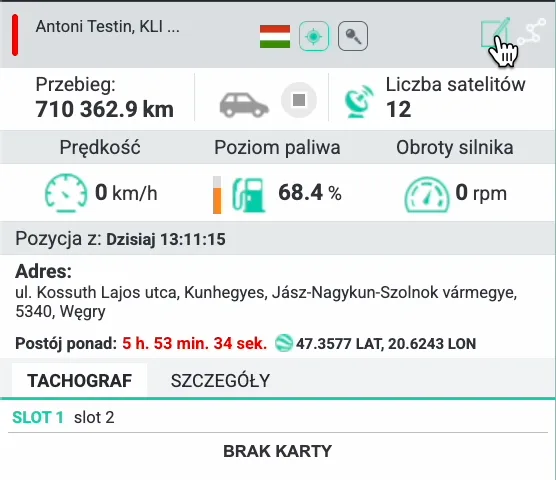
Fig. 6 Example driver working time control panel based on the tachograph in a GPS tracking system
The basic working time information presented to the dispatcher on an ongoing basis includes the name of the driver whose card is in slot 1 and slot 2 of the tachograph. Next, the systems inform the dispatcher when the driver started the current working day. This makes it easier to determine the time by which the driver must take their daily rest period. In addition to the information above, the dispatcher can also see which driver activity mode is currently active and how long it has been running without interruption. The reduced rest counter in the GPS tracking system shows how many times the driver has taken a daily rest period of more than 9 and less than 11 hours. Importantly, the data in the panel is processed according to the one-minute rule, which is described in detail in COMMISSION REGULATION (EU) No 1266/2009. To make work easier, the dispatcher can view on the panel the progress against the permitted working time norms described above.
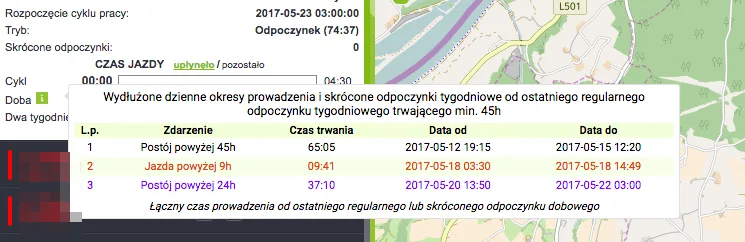
Fig. 7 Record of registered deviations from the assumed norms: reductions and extensions of driving and rest times.
Effective settlement of drivers' working time: the driver activity report in the GPS tracking system allows the driver's work to be reconstructed
A driver working time report prepared for the driver (not for the vehicle!) presents the full range of truck drivers' activities. The report contains all the information found in a report generated by DDD file analysis software. Beneath each driver activity chart there is a record of the working modes the driver performed. In addition, the Navifleet system detects which vehicle the driver was in while performing a given activity. All this makes driver working time control much easier.
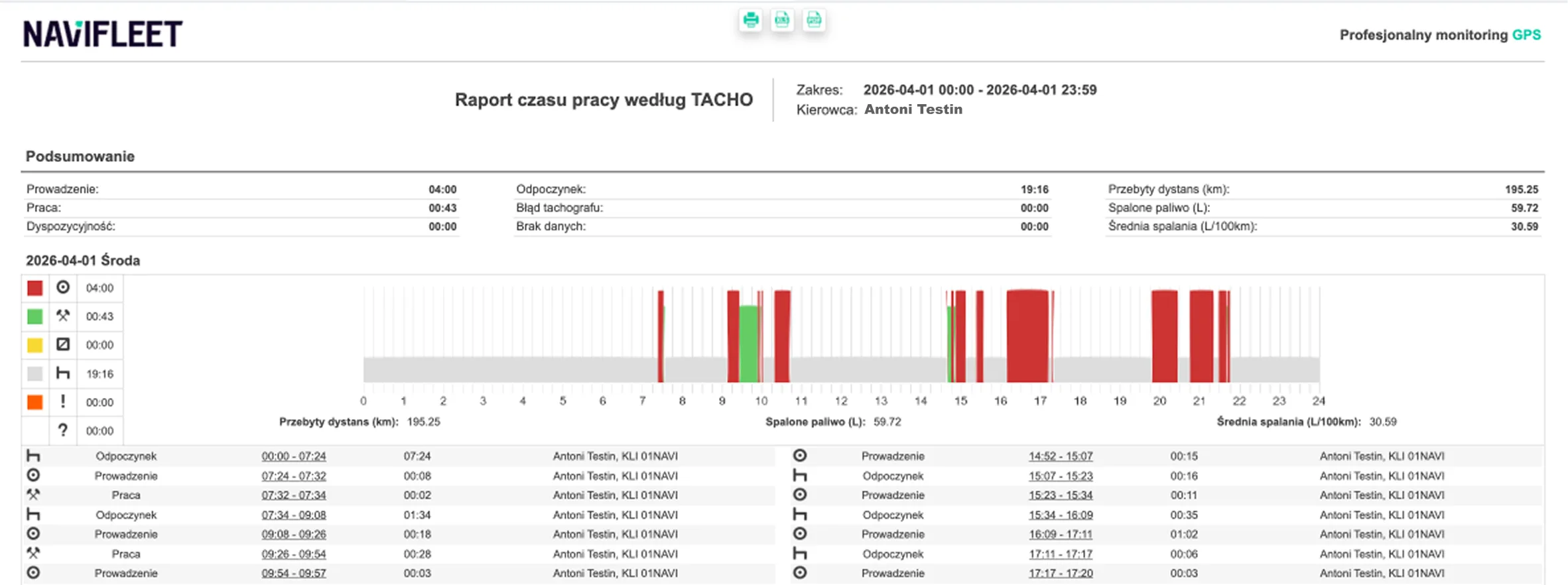
Fig. 8 Excerpt from a driver working time activity report generated from the GPS tracking system.
The Navifleet system: easier driver working time records and many other capabilities
Businesses interested in proven software for monitoring drivers' performance and activity should take a look at the Navifleet comprehensive fleet management system. It makes tasks in this area considerably easier and helps prevent breaches of the rules that could result in penalties, for example from the Road Transport Inspectorate.
The Navifleet system offers a range of features that streamline fleet management and the settlement of drivers' working time. These include:
- remote download of driver cards and tachograph memory, which is invaluable support for tasks such as driver working time analysis and control,
- e-handover reports,
- odometer reading control,
- driver identification,
- GPS tracking.
Implementing the Navifleet system, which works perfectly as software supporting the work of both the driver and the fleet manager, is an effective way to optimise fleet management in your company.
 Agata Świerczek
E-marketing Specialist
As a UX/UI design specialist I combine creativity with precise communication. I design intuitive interfaces and engaging digital content, and I write product copy and blog articles that hold attention and support business goals.