This article covers Polish regulations and market practice. The principles apply elsewhere, but check the rules in your country.
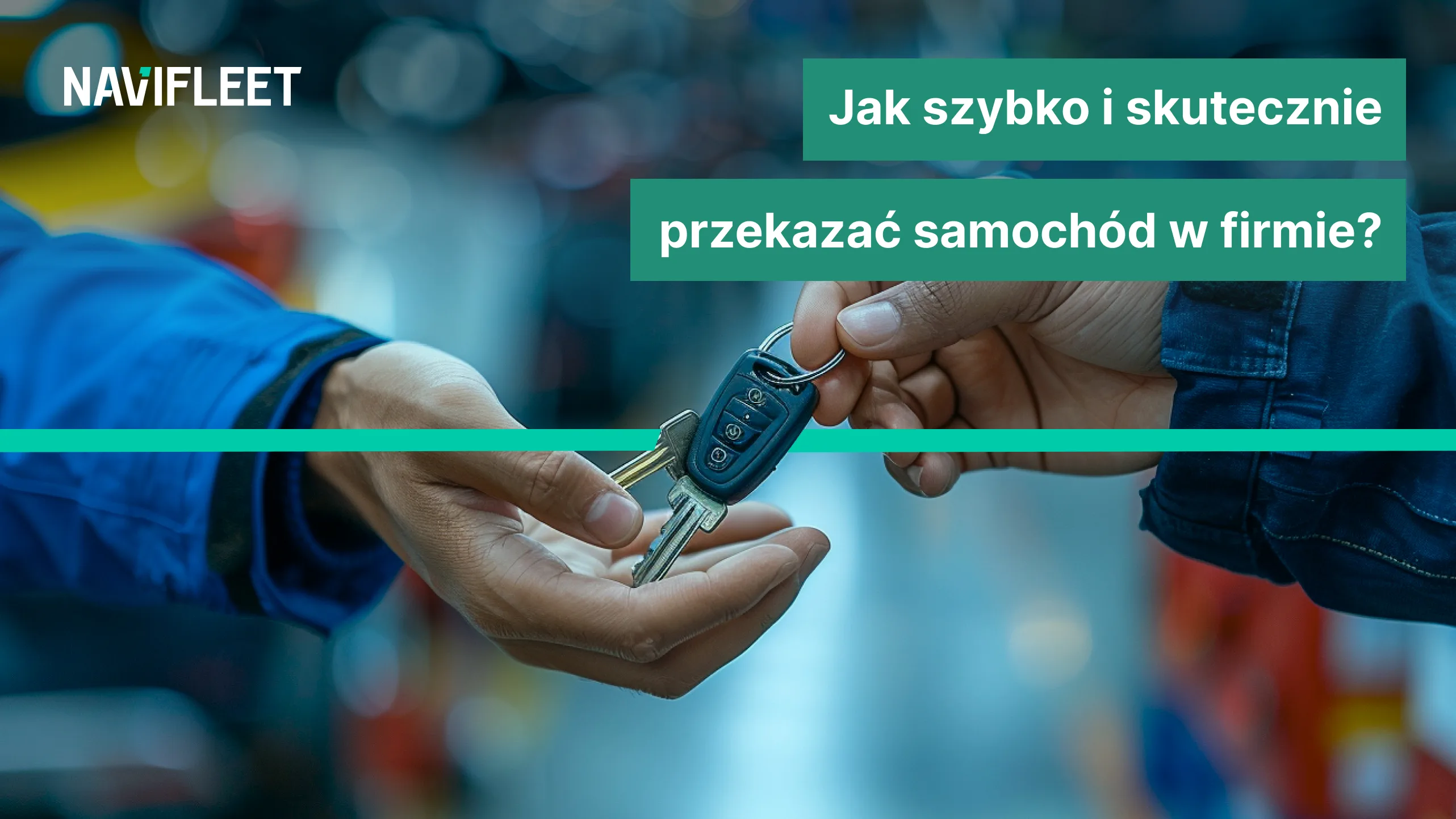
Sometimes you need to hand a car from the fleet you manage to an employee or contractor when there is little scope for the formal entrustment of property we described in our comprehensive guide (you will find it under this link). In such a situation, is it possible to act quickly and safely for the fleet owner's interests?
Of course it is. But you need to remember a few simple rules.
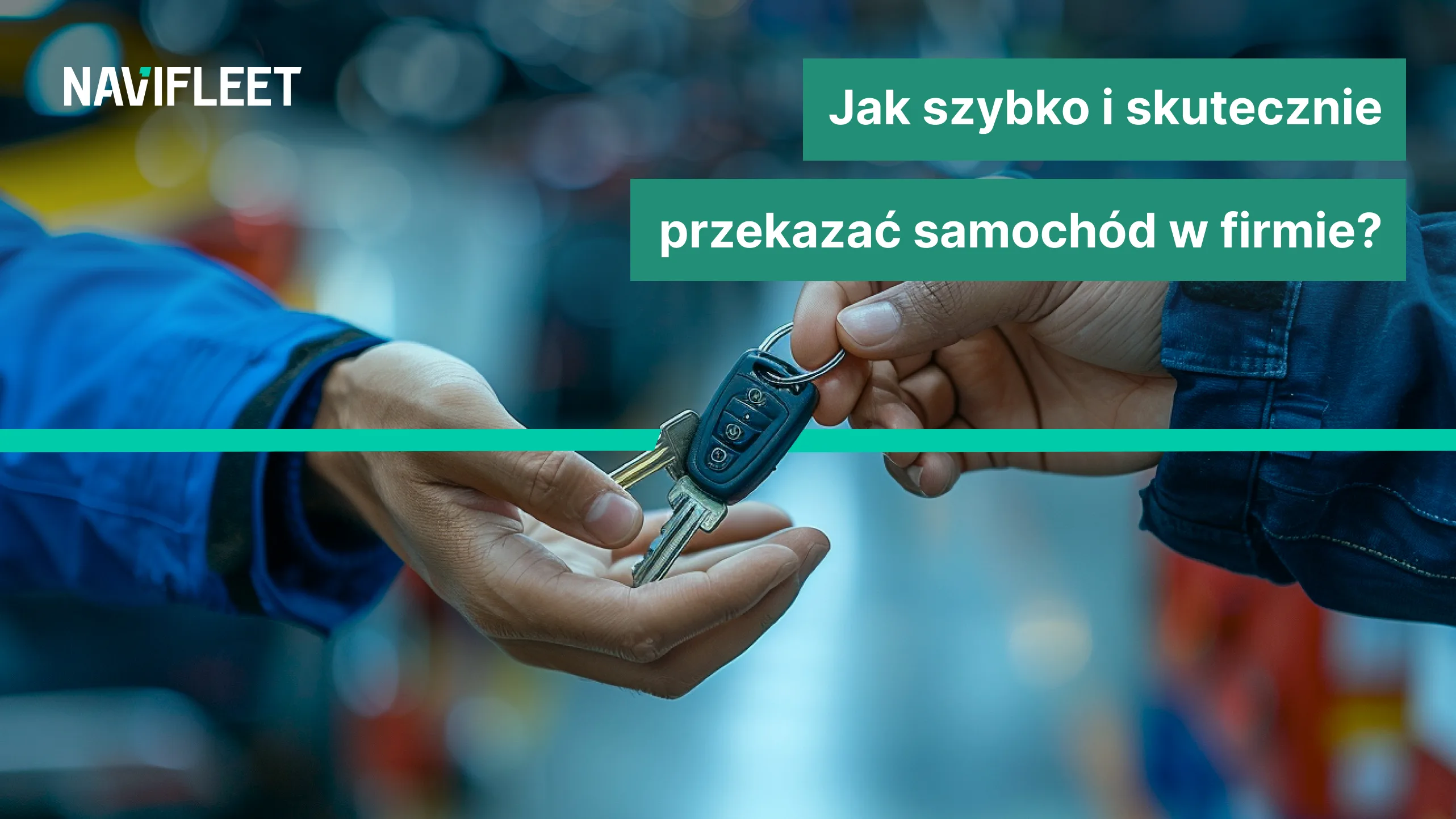
First, when you hand a company car to an employee or contractor, you must have some confirmation that the person actually received it and was able to use it for a specific period. Without this you cannot show who used your vehicle and when, which may matter, for example, in the case of traffic offences or crimes.
Second, it is commonly assumed that a car handover must always take place on the basis of a handover report. This is not true, because no provision of labour law or civil law requires such documents to be drawn up. It is simply a practice that has developed in companies for the purpose of keeping internal records.
Third, you can draw up handover reports in your company, but they can just as well be replaced by other evidence confirming receipt of the car and the specific contractual obligations associated with it. Bear in mind Article 60 of the Polish Civil Code, which states: Subject to the exceptions provided for by law, the will of a person performing a legal act may be expressed by any conduct of that person which reveals their will sufficiently, including by revealing that will in electronic form (declaration of will). This means that even conduct alone can have legal effects, as long as it is clear what the person intended to achieve by it.
The problem with such declarations of will (through specific conduct) is that later on various difficulties may arise in proving that the conduct took place and what it actually meant for both parties in the context of the contract between them.
So, to make life easier and protect your own interests, it is better not to rely on verbal arrangements but to have proof that a specific act took place. Such proof may be a handover report, but it does not have to be: sending an email, completing an electronic form or clicking to consent in an app serves the same function.
Fourth, confirmation of a car handover does not always have to be in written form (i.e. paper with handwritten signatures). Civil law provides for the use of various forms for legal acts, with the written form being only one of the options. Sometimes the law expressly stipulates that for a given contract to be valid and effective it must be drawn up in a specific form (e.g. you cannot buy a house by email; you have to go to a notary and draw up a notarial deed), but the principle remains that as long as the law does not impose a mandatory form, you can choose the most convenient of the available forms. Hence, in today's digital world, there is a growing shift away from paper towards more modern electronic solutions.
To sum up:
- it is worth having proof of handing a car to an employee or contractor, in case you need to hold the driver liable;
- a formal handover report can be drawn up for this purpose, but it is not strictly required by law;
- the written form has no advantage over other forms (documentary, electronic) in terms of evidential value, but it is often inconvenient for the parties because paper documentation has to be drawn up and stored;
- confirmation of a car handover can be anything with evidential value: an email, consent in an app, an electronic form. In the eyes of the law they serve the same function as a traditional handover report drawn up in written form.
 Monika Wycykał
Lawyer
A specialist in commercial law, in particular for the e-commerce and IT sectors. She works at the praKreacja Legal law firm, where she helps entrepreneurs face the challenges that come with running a business.