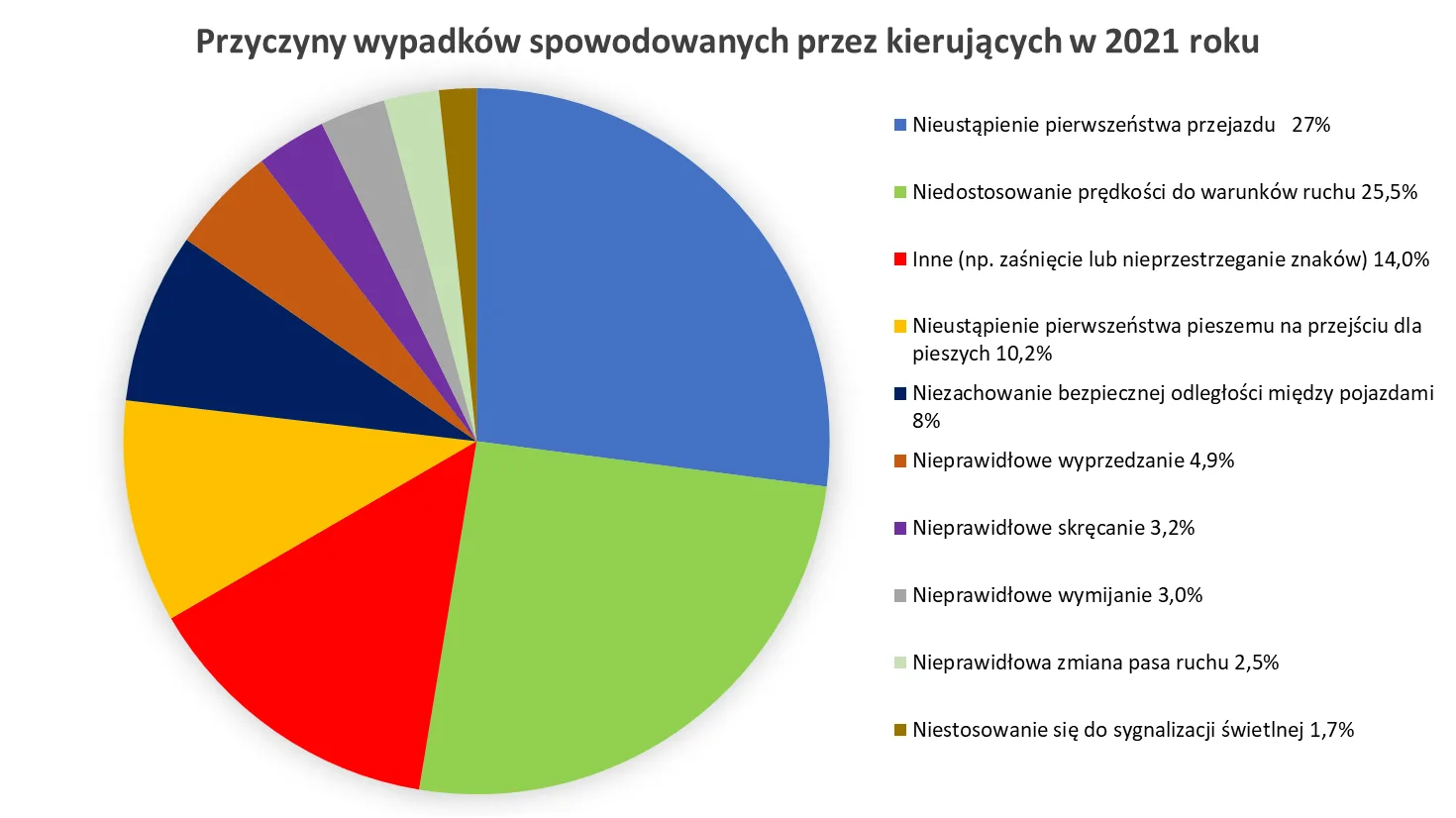
“I've always driven like this and nothing has ever happened to me.” Statements like this are often heard from experienced drivers who are reluctant to try to change bad habits. It is precisely these habits that are one of the causes of road accidents, of which there were more than 22,000 on Polish roads last year. Accidents do not have to be tragic for the fleet manager to have a tough nut to crack. A so-called minor bump is enough to complicate the whole planned fleet management process. Additional costs and organisational problems are sufficient arguments for introducing into the fleet a system that will help improve drivers' driving style and reduce the claims rate. Such a solution is the driving style analysis module. How can you reduce the claims rate of company cars using the Navifleet application?
A company car accident: consequences for the company
When developing our application, we started from the assumption that “prevention is better than cure”, and we know well that in the case of road incidents involving company vehicles, prevention is worth the effort. Such an accident is a heavy burden for the company. The fleet manager has to get involved in settling the claim, which is quite a challenge with a tight schedule. A replacement must also be found for the driver, who may go on sick leave. To maintain continuity of processes, not only a new driver but also a car is needed. This is how additional costs arise from the need to rent a replacement vehicle. In addition, you have to reckon with higher insurance premiums and a weaker position in negotiations with the insurer. If there are fatalities, the employer faces a prosecutor's investigation and verification of the health and safety measures taken. That is why reducing the fleet's claims rate is so crucial.
Health and safety in the fleet policy
How can the claims rate of company cars be reduced? The basis for all action taken to reduce the fleet's claims rate is establishing clear health and safety rules for the use of company vehicles.
Such fleet health and safety rules should have a permanent place in the fleet policy. The rules they contain should cover, among other things, who may drive a company car and how the driver should look after the technical condition of the vehicle entrusted to them.
With clearly defined rules, drivers are aware of their obligations, and the fleet manager has a tool to check how vehicles are used.
Eco-driving training and its effectiveness
Many fleet managers are aware of the consequences of accidents involving company cars and realise that they are often caused by irresponsible driver behaviour. Employees therefore take part in ad hoc safe driving training aimed at raising their competence behind the wheel. After training, drivers usually show increased engagement, motivation and willingness to use the knowledge gained on the road. Unfortunately, this state lasts a very short time; a few days after returning to daily duties, motivation wanes and the knowledge of how to reduce the fleet's claims rate and drive more safely evaporates. Drivers' bad habits return.
The effectiveness of traditional safe driving training can also be questioned for another reason. Such sessions are often attended by groups of very different drivers. Some better, some worse. Some have a problem with speeding, others with poor anticipation of situations on the road and, as a result, braking too harshly. The substantive message of such training cannot cover everyone's needs. It is not tailored to drivers' individual shortcomings.
Reducing the fleet's claims rate: telematics and gamification
For drivers to raise their competence behind the wheel permanently, it may prove necessary to introduce an element of gamification into the fleet. A telematics system that scores an employee's driving style and compares their scores with other drivers can be an excellent incentive to take lasting care of behaviour behind the wheel.
It is important that the rules of such gamification are transparent. Drivers must know which behaviours behind the wheel are scored and how the mistakes they make affect the final score.
How to reduce the fleet's claims rate: our answer
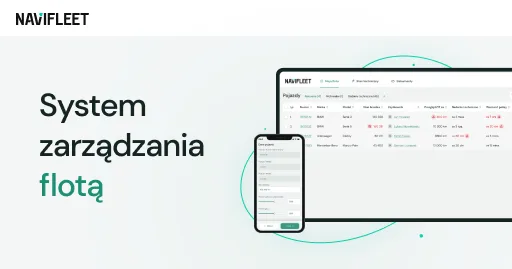
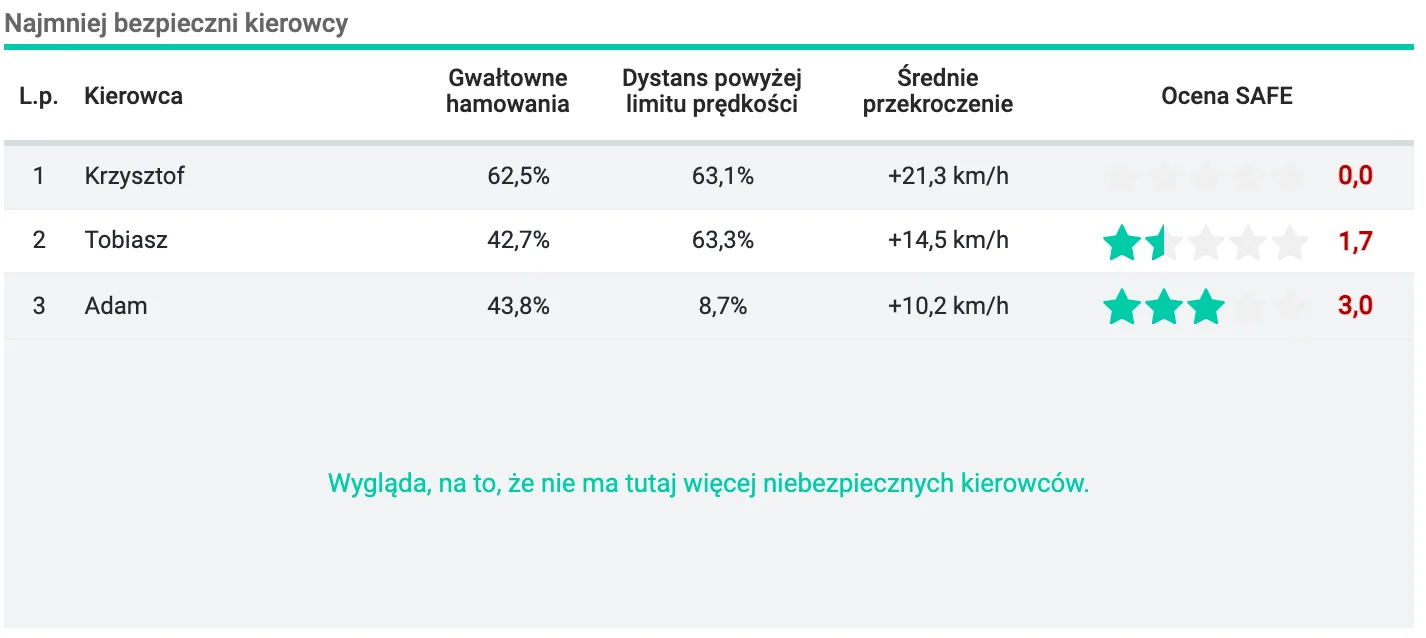
The Navifleet application with its driving style analysis module is the solution to the problems above. The system consists of a web platform for the fleet manager and the Navifleet Driver mobile app for drivers. The algorithms we have developed score behaviour behind the wheel. They are divided into categories: acceleration, speeding, braking, idling with the engine running and smoothness (accelerator-brake). In the web platform the fleet manager has access to tools that allow them to check their employees' progress. They can identify the least safe drivers using a dedicated ranking that takes into account the driver's scores in the speeding and braking categories, which are key to safe driving. You can read more about this in the article “How to identify the least safe drivers”. The fleet manager's role also includes motivating drivers. In the Navifleet application, the ability to create challenges for drivers is an excellent complement to ongoing monitoring of mistakes and checking progress.
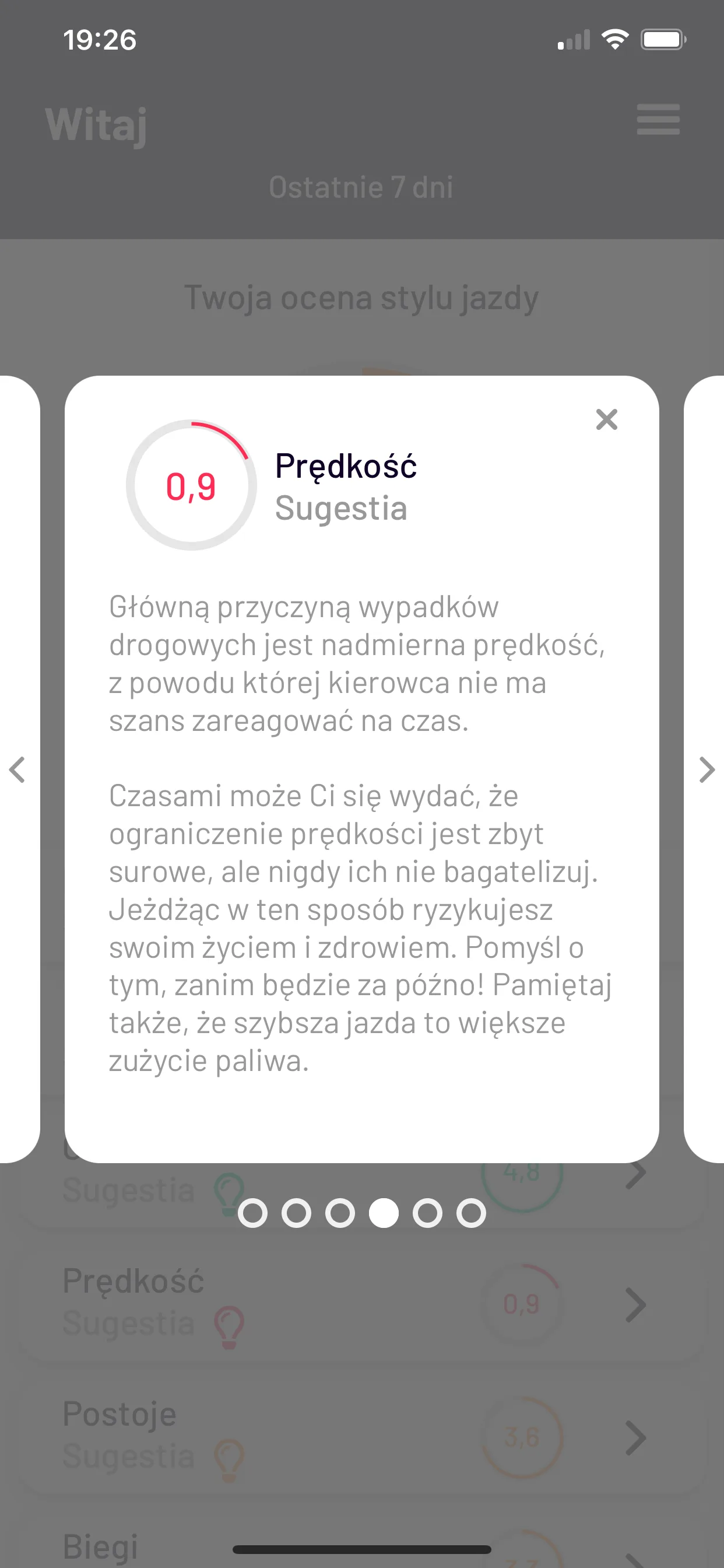
We know that improving driving style and reducing the fleet's claims rate is a continuous process, which is why we created the Navifleet Driver app to support drivers. It not only provides information about the mistakes made but also displays suggestions that help eliminate them. The tips relate directly to the given driver's poor behaviour. This way, our employees train continuously without being pulled away from their daily duties. In the Navifleet Driver app, the driver can switch to private mileage mode. The route travelled is then not visible to the fleet manager, but the driving style is still scored. This is a useful feature, especially in cases where the company car is also a benefit for the driver.
Improving driving style: a lower fleet claims rate and savings
Thanks to driving analysis technology, drivers are aware of the mistakes they make and know what to do to eliminate them, reducing the fleet's claims rate at the same time. The fleet manager controls the whole process and motivates employees with challenges as they see fit. Such an undertaking not only increases safety in the fleet but also allows fuel costs to be reduced and emissions of harmful substances into the atmosphere to be cut.
Remember that driving style analysis is just one piece of the telematics puzzle. The other features of the Navifleet application help automate most fleet management processes, streamlining the flow of information and making the fleet manager's work easier.

Get in touch with me if you want to start generating savings in your fleet.
Piotr Wójcik
New Business Manager