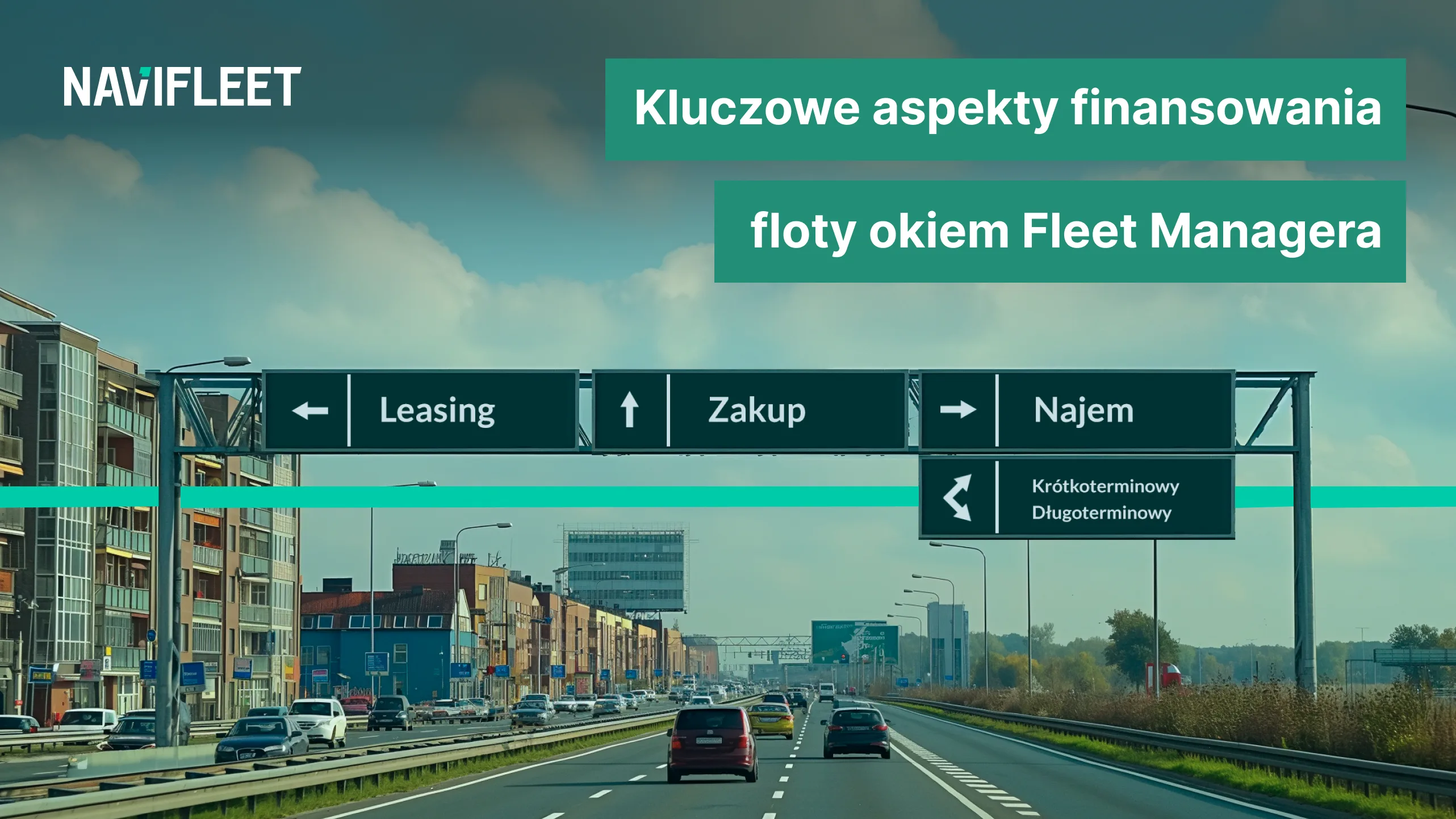
Managing a vehicle fleet is a challenge that requires not only operational action but also a financial management strategy. A Fleet Manager should have a good grasp of the various financing options that can help optimise costs and increase the company's operational efficiency, along with the related legal and tax considerations. In this article we discuss the key aspects of fleet financing, the models available and tips that will help you make informed decisions.
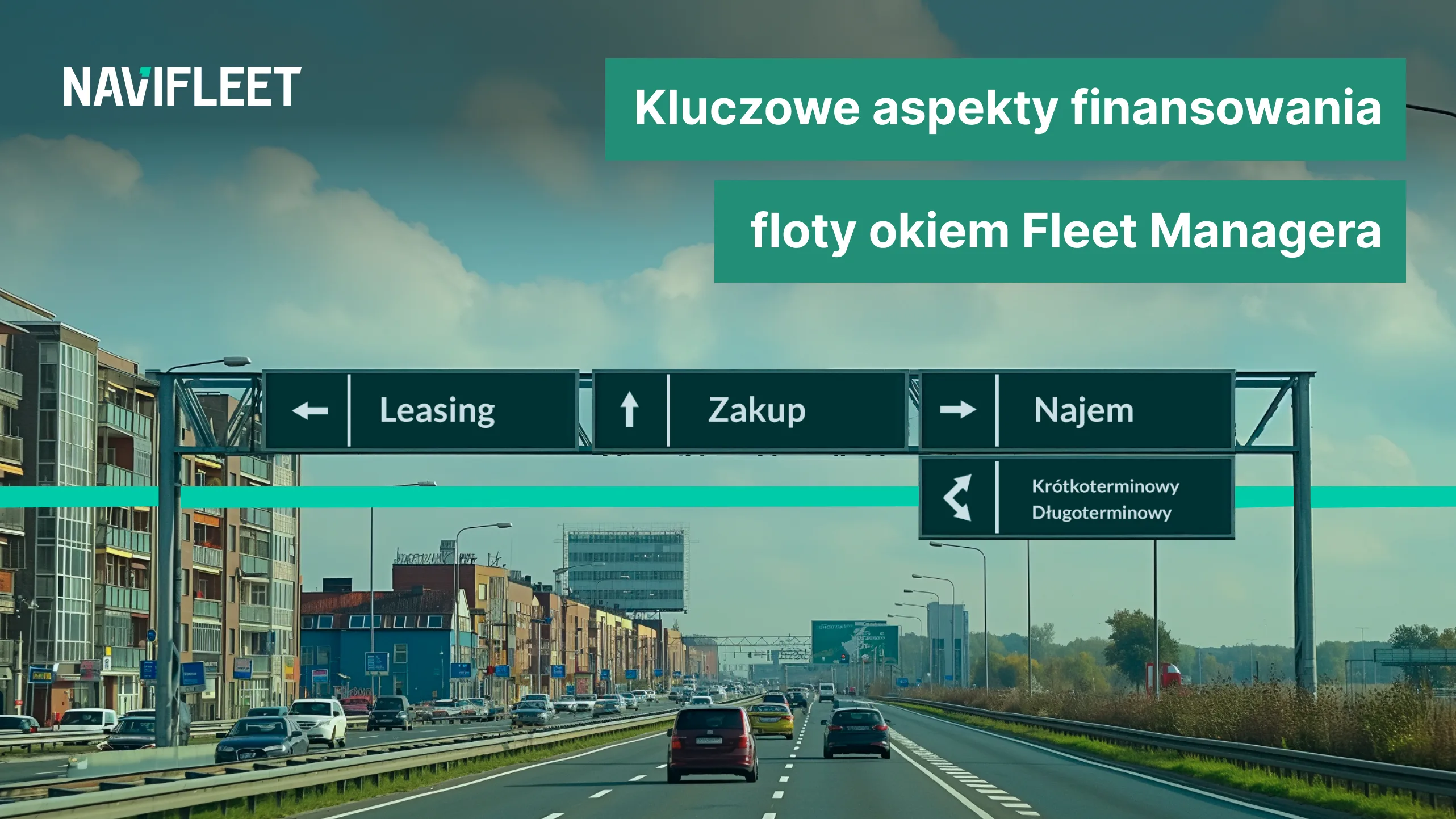
We all know: purchase, leasing, rental, CFM… but what really determines the shape of fleet financing
When considering the way or ways of financing a company's vehicle fleet, a number of starting factors need to be taken into account; they will determine the range of options available to us and influence the final shape of the optimal solution. Choosing one financing method does not rule out the others; on the contrary, there may be situations in which the optimal solution is to use several financing methods, for example purchase and rental.
The company's financial condition
The company's financial capacity can determine the choice of fleet financing model, just as it determines the choice of the vehicles themselves. It will have the greatest impact where the budget and creditworthiness are very limited.
One fleet financing method, currently not very popular, is purchase from the company's own funds. The basic condition is having sufficient financial resources. If this condition is met, it will usually be a solution worth considering for fleets that represent a small percentage of costs across the company as a whole. This factor should be considered together with the question of operational efficiency.
When deciding how to finance the fleet, the company's operational efficiency must be taken into account. In short, if the funds needed to finance the fleet, when invested in the company's operations, would generate a profit exceeding the cost of servicing a lease or rental, then those solutions should be considered in order to optimise the operational efficiency of the company as a whole. Tying up capital in cars may not be the optimal solution from the point of view of the profits generated by operations.
Fleet size
Both the absolute size of the fleet and its share of the company's overall costs will matter for the choice of financing method. With fleets of a few or a dozen or so vehicles, it will be easier to handle fleet management within your own resources and competences than with fleets of several hundred cars. Also, if the fleet's share of costs is relatively small, buying or leasing cars can be considered. On the other hand, in companies that use large fleets to run their operations, the most optimal solution will often be long-term rental with full management, i.e. CFM, which largely allows the company's own fleet management structures to be reduced to the necessary minimum. Then again, having a sufficiently large fleet may justify building appropriate fleet management structures and competences within your own organisation.
The degree of utilisation of individual vehicles in the fleet
The use of vehicles within a single company fleet can vary greatly, which will determine the choice of different financing methods. In extreme cases of ad hoc, sporadic use, it may turn out that the best solution is short-term rental, for example a prestige car for a senior manager who visits a company branch once a quarter. Conversely, for cars used by sales representatives, intensive use will make long-term rental with a full service package and mobility guarantee the optimal solution. For benefit cars, which by definition are used less intensively, a longer period of use can be assumed, covering first a lease and then a buyout and further depreciation as a fixed asset.
Competences and constraints within the organisation
When deciding on a financing method, consider which fleet management competences you have within the organisation or can build, and which additional fleet-related services you should acquire. This applies above all to fleet management itself, but also to the accounting of documents related to fleet use. For example, very limited capacity to process accounting documents may dictate the choice of rental with full CFM, which will reduce the number of invoices to an absolute minimum. Following this example, assess the internal capacity and competences in the organisation and factor this in accordingly when choosing how to acquire cars for the fleet.
Legal and tax considerations
An important duty of the Fleet Manager is to keep track of legislative work on tax rules relating to fleet financing and to respond to changes well in advance. They can significantly restrict the real choice of financing forms. Recent tax changes concerning vehicle leasing are a good example. The dynamic situation in this area requires the Fleet Manager to choose flexible financing methods that allow ongoing tax optimisation. In practice this means close cooperation with the finance department and tax advisers.
Furthermore, a flexible approach to fleet financing can include various forms of leasing or long-term rental agreements that may be more advantageous in the light of new regulations. This approach allows tax benefits to be maximised and operating costs minimised, which is key to effective vehicle fleet management.
As a result, keeping track of changes in tax regulations and the ability to adapt the financing strategy to new conditions are crucial to maintaining the company's competitiveness and profitability.
Choosing the right financing model
Choosing the right financing model depends on several key factors, such as the company's budget, the planned use of the vehicles and preferences regarding ownership and fleet management. Below are a few steps that can help you make an informed decision:
- Analysis of fleet needs: A thorough assessment of the number of vehicles, their specifications and the expected period of use. Both current needs and the company's future growth plans should be taken into account.
- Budget assessment: Analysing the available capital and the company's creditworthiness. It is important to strike a balance between financing costs and available funds.
- Cost comparison: Carrying out a detailed cost analysis for the different financing models, taking into account the total cost of ownership (TCO). Consider not only the monthly instalments but also the costs of servicing, insurance, fuel and depreciation.
- Consulting experts: Seeking advice from financial advisers or leasing specialists to get a full picture of the options available. It is also worth comparing offers from different providers and negotiating contract terms.
Benefits of optimal fleet financing
The optimal choice of fleet financing model can bring many benefits, including:
- Lower operating costs: Lower monthly instalments and other charges can free up capital that can be put towards other investments in the company.
- Increased efficiency: Modern vehicles are often more efficient in terms of fuel consumption and maintenance costs, which translates into savings.
- Flexibility: The ability to adapt the fleet to changing business needs, which increases operational flexibility.
- Better financial control: Predictable monthly costs make budget planning and financial management easier, minimising the risk of unforeseen expenses.
Summary
Financing is a key element of fleet management that requires careful analysis and informed decisions. The market offers a wide range of financing models, each with its own advantages and disadvantages. The key to success is a thorough assessment of the company's needs, budget and long-term goals, which will allow the optimal solution to be chosen.
Optimising fleet financing not only improves operational efficiency but also brings measurable financial benefits, supporting the company's growth and competitiveness in the market. Applying the right financing model allows better resource management, cost reduction and increased profitability.
 Luba Kurek
Board member of the Polish Association of Fleet Managers; Head of Administration and Fleet Manager at PHZ Baltona S.A.
Luba Kurek is an experienced fleet management specialist who has worked in the automotive industry and motorsport for many years. At PHZ Baltona S.A. she heads the Fleet Management and Administration Department and sets the direction for the fleet's development. She is the author of numerous industry articles in which she shares her knowledge and insights.