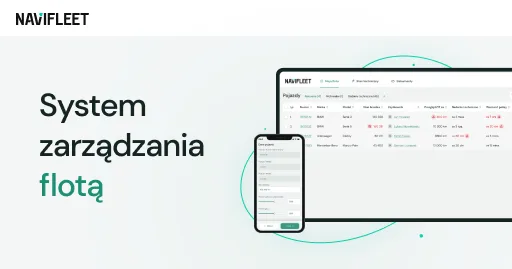
It is rarely the case that a fleet management system is implemented or replaced simply because the fleet manager decided so. The decision starts and is grounded in moments when you need analytics, need to present data, draw conclusions, simplify reminders, and so on. When starting the process, nobody ever just says: "I'll buy a program today". Often, before the decision itself, there is a long, well-trodden path to the in-house IT department asking for help and solutions. Once we have made the decision, however, and begin looking for a system, it is worth drawing on the experience of others and preparing properly.

Do I even need a program?
For many companies, especially smaller ones, managing a fleet with spreadsheets such as Excel may seem sufficient. However, as the fleet grows, so does the number of administrative tasks and the need for better vehicle monitoring, which makes Excel an inadequate tool. In that case, professional fleet management software can significantly improve the efficiency and transparency of operations.
From how many vehicles is it worth considering a program?
There is no clear-cut answer to how many vehicles justify investing in professional software. Many companies decide to do so with as few as 10 vehicles, especially if fleet management starts to take more time and becomes more complicated. Professional programs offer features and reports that can significantly simplify and streamline fleet management processes.
How and where to find a software provider?
Choosing the right fleet management software provider is a key step. There are several ways to find them:
- Recommendations from people in the industry: recommendations from other companies using such systems can be very valuable. They let you learn about users' real experiences and assess how a given system performs in practice.
- Internet search: searching the web is another effective way to find providers. It is worth reading user reviews and opinions, however, to assess which systems have the best reputation.
- Trade fairs and industry events: attending trade fairs and industry conferences lets you get to know providers' offerings first-hand, compare different systems and talk directly with company representatives.
How to prepare for a conversation with a provider?
Preparing for a conversation with a potential software provider is key to making the right choice and to ensuring the offer we receive meets our expectations. We should describe our fleet in detail. Accurate knowledge of the number and type of vehicles we have is fundamental. This will help the provider understand our needs better and propose suitable solutions.
Providers usually present ready-made solutions from their programs. Let us think about which features of the program will be essential for us and ask whether a given provider offers them.
These may include:
- A list of vehicles and drivers.
- Recording of insurance policies.
- A list of damage and repair management.
- Handover reports.
- Fleet cost summaries.
- A scheduler with notifications.
- Integrations with other providers (e.g. fuel suppliers) for easy invoice import.
We can also ask about additional services or modifications to the program to suit our needs.
An additional service may be a mobile app that gives drivers access to vehicle information, lets them report faults, manage routes and communicate with the fleet manager. Such an app, used by vehicle users on their company phones, can significantly streamline daily operations and improve fleet management efficiency.
Which formal issues matter?
Besides the program's features, attention should be paid to several key formal issues. It is very important to analyse the formal aspects carefully, because they will have a key impact on the cost of running the fleet.
- Contract term: what contract term are we dealing with? Is it a fixed-term contract or an open-ended one that can be terminated? This matters for long-term planning. Two models are most common: a contract for several years, or an open-ended contract with one month's notice.
- Software installation method: is the provider's program installed directly on the company server or does it run in the cloud? Cloud solutions offer greater flexibility, easier access from different places and devices, and lower hardware requirements on the company's side.
- Implementation costs: what are the costs of implementing the software? Do they include installation, configuration and staff training? Modern systems are intuitive to use and do not require training, implementation or workshops. These systems are usually very extensive, however, so it is worth looking at the provider's support – do we have access to a team that will help us?
- Monthly fee: what is the monthly fee for using the software? Is billing based on the number of vehicles, or are different subscription packages available? Costs should be transparent and tailored to the size of the fleet and the company's needs. It is also worth looking at the flexibility of the contract and the fee – can the fee be changed when the number of vehicles changes, especially when the fleet shrinks? With a fixed-term contract this is usually impossible.
- Additional services: are there additional services that have to be paid for? These may include training delivered by the provider's staff, technical support, software updates and integrations with other systems used in the company.
How to analyse costs?
When deciding on a fleet management system, cost is a key aspect. Costs should be compared on the basis of monthly expenditure. Such an analysis will help you understand how the new software will affect the company's budget in the short and long term. Offers can differ greatly when you analyse them over the short and long term – as with TCO (total cost of ownership) analysis, a higher cost at the outset does not necessarily mean higher costs in the long run, especially when you take the contract terms into account.
When choosing a specific system, you can be guided by economy, i.e. choosing the cheapest option. Such a choice may not meet all our expectations, but if we are willing to make certain compromises, it may be the right solution. On the other hand, investing in a more expensive system that fully meets our requirements may bring better results and greater satisfaction. It is important to take into account the company's budget and the funds available for this purpose.
Is technical support needed?
The relationship with the software provider plays just as important a role as the product itself. It is worth making sure the company offers a dedicated account manager you can turn to with any question. Constant contact with a competent representative of the provider can make the implementation process and everyday use of the system much easier. Choosing a fleet management system that is easy to use both for administrators and for the drivers using the app is a key element in building an efficient, smoothly functioning fleet. Developing a good relationship with the provider from the very beginning can make this process significantly easier.
Is it worth testing systems?
Before deciding to buy, it is worth asking whether you can test the program in a free trial version. Providers' presentations often show that the program is easy to use, but reality may turn out differently. Testing the software yourself lets you verify its intuitiveness and functionality in practice. This is a key step that can help avoid later problems and dissatisfaction.
How many systems should you test?
It is usually recommended to compare at least three providers to get a full picture of the market and be able to choose the best solution for the company's individual needs and budget. When choosing a provider, it is worth looking not only at the software's features, but also at the quality of implementation support, after-sales care and price.
Do we want to implement telematics right away?
The decision to implement telematics does not have to be made immediately. Introducing GPS and telematics systems can be a stage we implement later, once we have seen the benefits of the fleet management program itself. Implementing telematics usually requires additional software and hardware, which means additional costs. It is also important to remember that implementing telematics requires prior communication with drivers and the introduction of appropriate provisions in the company's fleet policy. Drivers must be aware that the vehicles will be monitored, which may affect their daily work.
Extending the program with telematics features usually requires buying additional devices and implementing the appropriate modules in the software. Telematics costs may include both one-off expenditure on hardware and fixed subscription fees for using advanced monitoring features.
Software providers offer various types of telematics devices:
- OBD (On-Board Diagnostics) devices: these plug into the vehicle's OBD socket. Their advantage is that they are easy to install and remove. The downside is the risk that drivers will unplug them, which may disrupt data collection.
- Devices connected to the CAN bus: permanently installed in the vehicle, which eliminates the risk of them being unplugged. They are usually more expensive and require professional installation by the provider's staff. This involves additional costs and the need to fit installation dates around the driver's work schedule.
A monthly subscription must be paid for both types of device, with OBD devices usually slightly cheaper. The difference in subscription costs between OBD and CAN bus devices is not large, but the installation cost of the latter can be significant, as it requires specialist intervention. The installation schedule for CAN bus devices must be coordinated with the availability of vehicles and drivers.
The contract is an important matter. A separate contract, or an annex to the existing contract with the operator, is concluded for the use of telematics. It is important to discuss the terms of the contract in detail, including the costs and scope of services, to avoid surprises. It is also worth discussing implementation support, which includes training drivers in using the telematics devices and the associated apps.
When installing devices, it is equally important to decide which data we need. Is basic telemetry, such as vehicle location, odometer reading and fuel level, enough? Or do we need more advanced information, such as full vehicle diagnostics, driver driving style, fuel consumption, speed, braking, acceleration, and so on?
Some providers offer the ability to separate business and private journeys, which is useful in companies where vehicles are used for both professional and personal purposes. It is also worth checking which reports the telematics system generates and whether they can be used to settle drivers' accounts.
Summary
Choosing the right fleet management system requires taking many factors into account. Above all, you should compare offers from several providers, in line with the company's purchasing policy, and build a good relationship with the chosen provider from the very beginning. It is important that the system is easy to use both for administrators and for the drivers using the app. Access to a dedicated technical account manager and support during the implementation process are key to a successful implementation. Ultimately, the choice of system should be tailored to the company's specific needs and goals, ensuring effective fleet management and improved fleet performance.