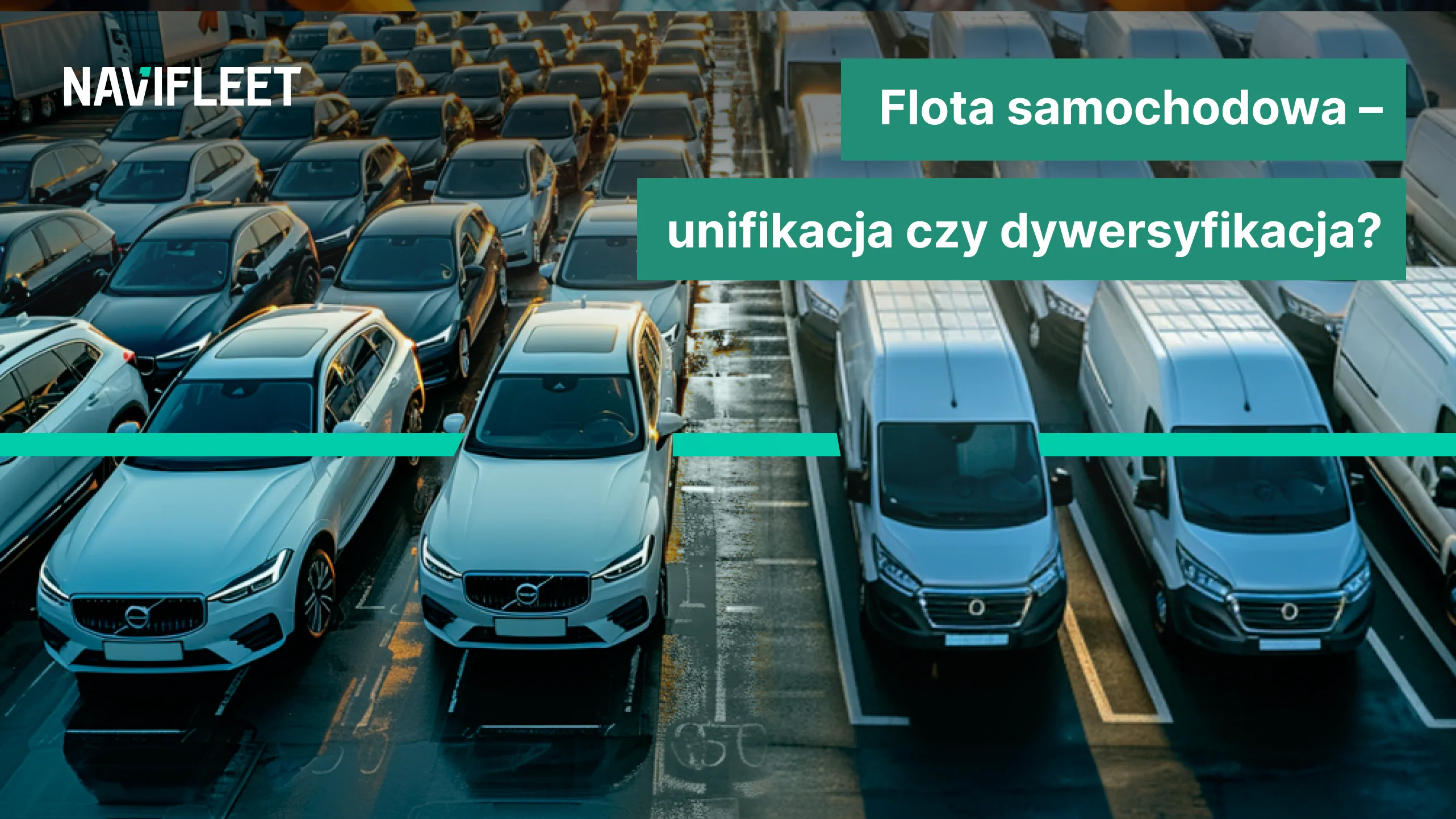
Vehicle fleet: unification or diversification?
Managing a company's vehicle fleet requires a strategic approach to working with vehicle suppliers and providers of fleet-related services. There is no universal strategy, because every fleet is different; these are solutions built around the individual needs of the company. It is nonetheless worth developing your own strategy for building a reliable fleet tailored to specific requirements.
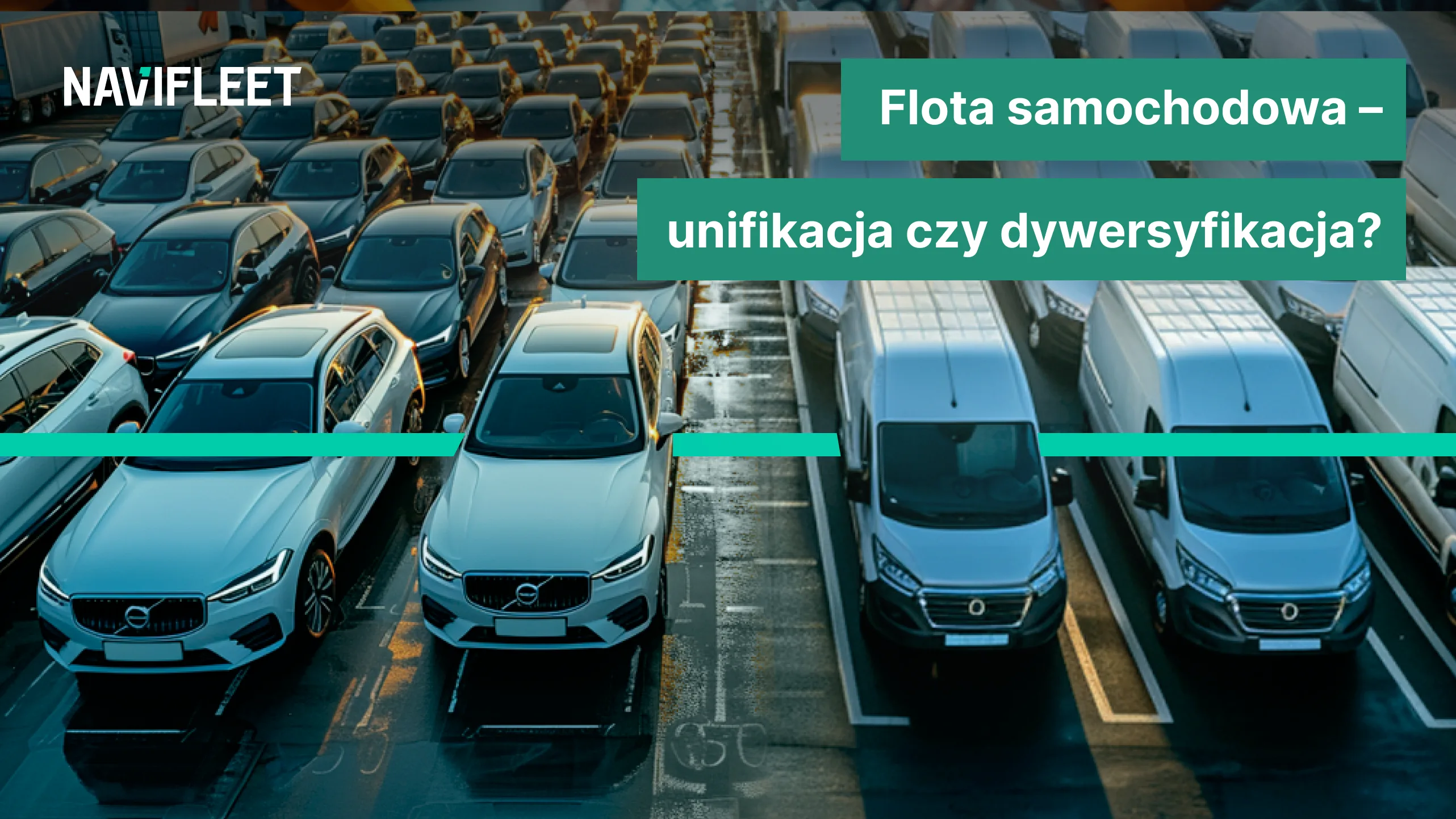
The fundamental question: should the fleet be uniform and consistent, or should you use products and services from many suppliers? There is no clear-cut answer. Below I present an analysis of the factors to consider in the context of fleet unification or diversification, along with the advantages and disadvantages of each approach.
It should be stressed that unification and diversification need to be viewed in a broader sense: not only fleet vehicles, but also servicing, financing and other fleet-related services. When opting for long-term rental and full CFM we can also decide on the diversity of the fleet; what is more, we can diversify as early as the stage of choosing the financing method.
Advantages and disadvantages of fleet unification
Fleet unification means choosing vehicles, financial services or fleet-related services from a single supplier. This strategy has many advantages:
- Simplicity of management: Standardising the make and possibly the model of vehicles simplifies the processes involved in servicing them and training drivers. Less vehicle diversity means less work and fewer duties for the fleet team arising from differences in technology and handling.
- Convenience and peace of mind for users: it is easy to swap one company car for another, and
there are no conflicts over different cars being allocated to different positions. - Operating costs: the ability to negotiate better financial terms by placing larger orders, i.e. economies of scale. Working with a single supplier often leads to lower unit prices and better servicing terms. At present we can see this factor becoming less significant.
- Operating costs: the ability to negotiate better financial terms by placing larger orders, i.e. economies of scale. Working with a single supplier often leads to lower unit prices and better servicing terms. At present we can see this factor becoming less significant.
Nevertheless, unification has certain drawbacks:
- Dependence on the supplier: Excessive dependence on a single supplier can be risky, especially in the face of problems with vehicle availability or servicing. The supplier gains a monopoly position in its relationship with the company.
- Limited flexibility: Unification can limit the ability to adapt the fleet quickly to changing market needs.
- At present, full unification of a large fleet can be a difficult process because of limited vehicle availability at many suppliers. This situation can significantly restrict the choice of potential suppliers in a way not justified by other factors.
Advantages and disadvantages of fleet diversification
Fleet diversification means using different vehicle models and services from different suppliers. This approach offers the following benefits:
- A fleet better matched to the company's needs: a variety of vehicles allows the fleet to be better adapted to varied tasks and working conditions, which increases operational efficiency. A single supplier may not have in its range the full set of vehicles and services best suited to specific needs.
- Access to the latest technology: Working with different suppliers gives access to modern technologies and solutions and allows them to be compared in practice, which translates into better-informed choices.
- Competition between suppliers: Diversification can encourage better financial terms and improved customer service. Suppliers are forced to compete with one another continuously, not only when vehicles are first chosen for the fleet but also throughout its use and the gradual replacement of vehicles.
However, diversification also brings difficulties:
- Higher management costs: Managing a diverse fleet requires more resources and effort, which can lead to higher operating costs.
- Operational complexity: Diverse vehicles require additional time to coordinate servicing, training and logistics.
The most important factors to consider
The decision to unify or diversify the fleet should be based on a thorough analysis of the company's operational needs. Important factors to take into account include: Type of business: For example, transport companies operating in different regions and over different distances may need a diversified fleet to adapt to local conditions and regulations.
Total cost of ownership: Regular TCO analysis should cover not only purchase costs but also running, servicing and insurance costs. Fleet managers should use analytical tools to assess which strategy will deliver greater savings.
Supplier flexibility: It is important that suppliers are able to respond quickly to changes in the company's needs. Flexibility of offers and quality of customer service should be key selection criteria.
Combining unification with diversification: with a sufficiently large fleet, you can opt for two or even three car makes, or several long-term rental providers, thereby introducing internal competition while unifying the car models from each supplier.
Market trends: The growing importance of electric vehicles and environmental regulations should be factored into the long-term fleet management strategy. Fleet managers should keep up with technological developments and consider introducing them into their fleet.
Conclusions and recommendations for Fleet Managers
The decision to unify or diversify the fleet is crucial to the company's operational efficiency. A well-thought-out fleet management strategy will not only improve operational efficiency but also help optimise costs and increase driver satisfaction.
- Audit the fleet: regularly assess the fleet's effectiveness by analysing the performance of individual vehicles and suppliers. Periodic evaluation of suppliers against predefined, objective and transparent criteria is essential. Creating a periodic assessment questionnaire is good practice.
- Invest in training: Investing in developing the skills of drivers and fleet management staff brings long-term benefits.
- Monitor market trends: Keep up with developments in the automotive industry and fleet technologies so that you can adapt your strategy to a changing environment.
 Luba Kurek
Board member of the Polish Association of Fleet Managers; Head of Administration and Fleet Manager at PHZ Baltona S.A.
Luba Kurek is an experienced fleet management specialist who has worked in the automotive industry and motorsport for many years. At PHZ Baltona S.A. she heads the Fleet Management and Administration Department and sets the direction for the fleet's development. She is the author of numerous industry articles in which she shares her knowledge and insights.