
Over the past year fuel prices have risen by almost 30%, and nothing suggests the rises are over. Businesses with heavy and light fleets are watching the change in vehicle running costs with concern. Action to reduce fuel consumption is no longer just an attractive option but in many cases a necessity. Reducing fuel costs has become a priority task for many fleet managers, who have to reconcile their superiors' demands with the flood of daily fleet management duties.
Our answer to fleet managers' new needs is a telematics system with the Navifleet application, equipped with modules that not only enable fuel consumption monitoring but also help reduce consumption.
Fuel consumption monitoring, an effective tool for reducing costs: how does it work?
The foundation for starting the process of reducing fuel consumption in a fleet is automating the flow of fuel consumption information. Manual records of mileage and refuelling are imprecise and prone to errors and dishonest practices by drivers. Collecting information this way is also time-consuming, which is hugely important for fleet managers.
The Navifleet application is equipped with a fuel control module. Fuel cards from any station and in any format can be imported into the application. The fleet manager can generate reports that automatically compare the detected amount of fuel added (using a dedicated fuel probe), the fuel used since the previous refuelling, and the amount on the station invoice. In addition, the application has a fuel consumption counter that lets you check consumption over any section of the route and in real time. This way the fleet manager has control over every litre of fuel burned and added, which makes it possible to catch any irregularities.
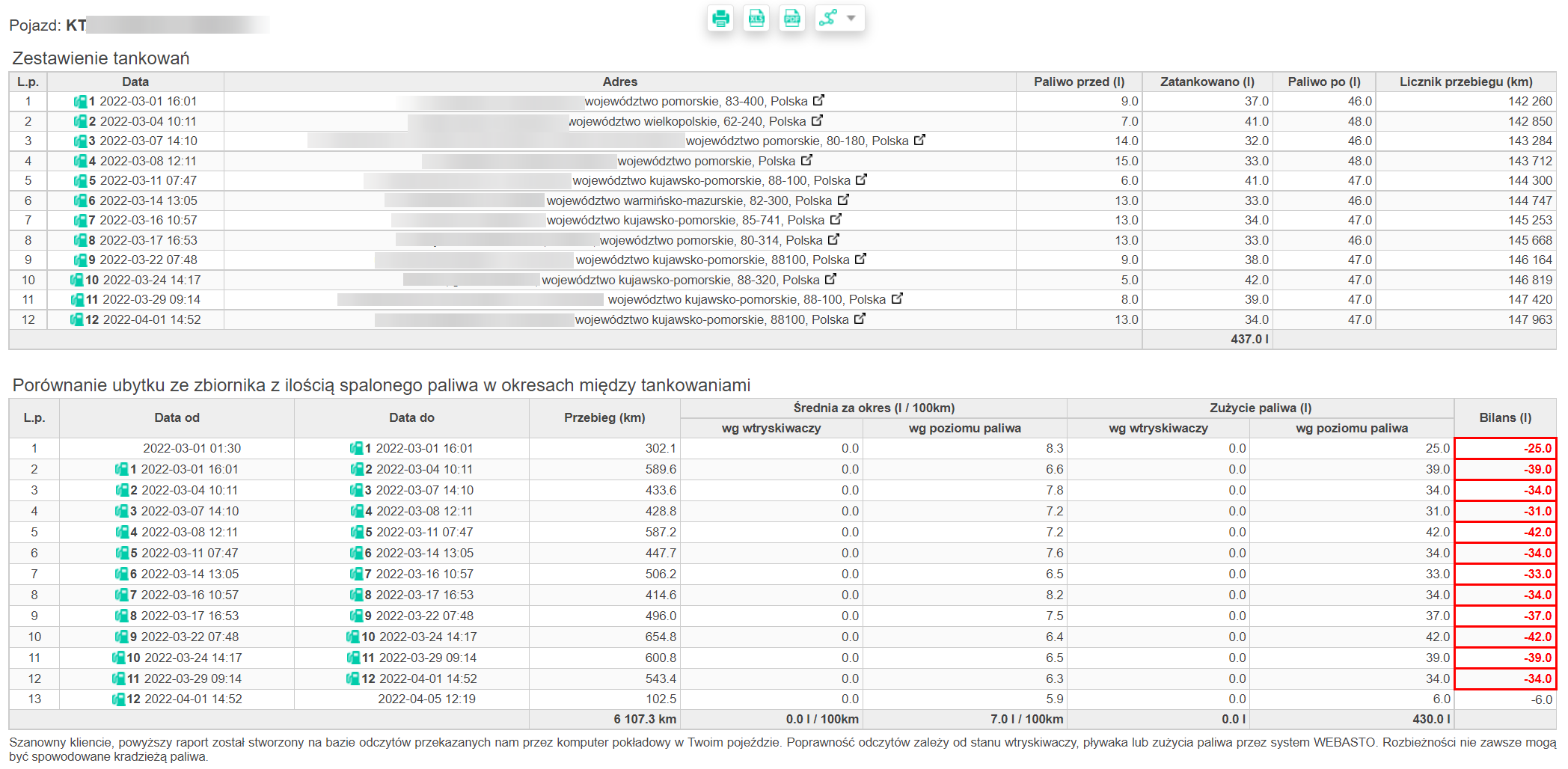
Fuel tank monitoring also serves to prevent dishonest practices by employees. A filler neck guard can be installed in the tank that prevents fuel from being siphoned. If the driver attempts to open the tank outside the permitted areas, the fleet manager receives an immediate notification.
Fuel consumption monitoring: how to do it effectively
We know that reducing fuel consumption is a challenge facing not only large transport companies but also businesses with a light fleet used daily by sales reps or service technicians. Automated fuel control is the minimum in the process of reducing consumption. The next step should be motivating and supporting drivers in improving their driving style, which has a huge impact on the amount of fuel used. How do you do that when everyone has their own habits, which are not always good?
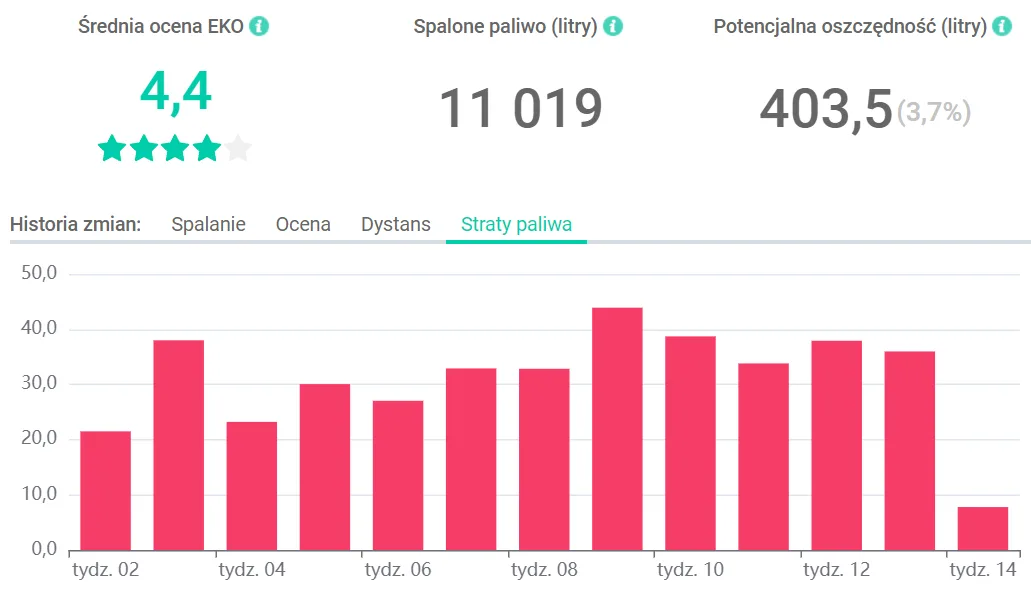
In response to this problem we have prepared a module analysing drivers' driving style. It is based on an algorithm that catches employees' mistakes behind the wheel. Behaviours such as overly dynamic acceleration and braking, speeding and unnecessary idling with the engine running generate additional fuel consumption. Every mistake is an unnecessary cost for the company. The application scores drivers' driving style this way and gives the fleet manager information about their employees' progress. This is presented in the form of rankings of the least economical drivers and charts of consumption, sources of fuel loss and potential savings (what consumption would look like if the driver avoided mistakes). An integral part of the solution is the Navifleet Driver app for drivers, which keeps them informed of the mistakes they make and gives tips to help eliminate them.
The Navifleet system gives us specific figures showing how much fuel we have saved. This can easily be converted into the money left in the company account. Savings on a single vehicle can reach more than ten per cent, which gives a satisfying result even in small fleets.
Fuel consumption monitoring: the advantages of this solution
Monitoring fuel consumption in the fleet with telematics allows not only ongoing control but also the generation of fuel consumption reports and statements for a selected period. Such fuel consumption summaries help take specific action and plan a long-term strategy.
Remember, too, that improving drivers' driving style not only saves fuel but also extends the life of wear parts. In addition, our drivers drive more safely, which results in a lower fleet claims rate and a better position when negotiating insurance rates.
By implementing GPS fuel consumption monitoring, a business can achieve its fuel consumption and emissions reduction targets at low cost, and the fleet manager gets a tool that supports them in their daily duties by automating a range of processes.



