
The term "telematics" came into common use a little over a decade ago. Since then the technology itself has grown steadily more popular, opening up new possibilities for the transport industry and for mobility in the broadest sense. Below we explain what a telematics system is and why it is worth using.
What is telematics?
You will come across various definitions of "telematics" in the literature, but they all lead to the same conclusion. Telematics is the combination of telecommunications and information technology for the efficient transmission and processing of data. This is how solutions tailored to the needs of the physical systems they serve are created.
In most cases, telematics systems handle information using wireless data transmission technology (including mobile and satellite networks).
Although telematics has a wide range of applications (in finance, medicine and public transport, among others), transport telematics is currently the most popular branch of the technology. For many people the first thing that comes to mind with "telematics" is vehicle tracking with GPS trackers. Rightly so? Well… today telematics in transport is far more than real-time vehicle tracking.
The many faces of telematics in transport
Telematics systems are usually solutions dedicated to a given industry or even to a specific company and the nature of its business. That is why telematics in the transport industry can take various forms. Even so, most of them share the same goals. The main tasks of telematics systems are: streamlining processes related to fleet management, monitoring how movement processes unfold, and improving the safety and efficiency of transport.
What does telematics consist of?
Now that you know what transport telematics is, it is time to discuss its various elements. Telematics in transport is first and foremost a GPS tracker. It may also include other data-collecting components (e.g. road cameras, accelerometers, road databases or geographic databases).
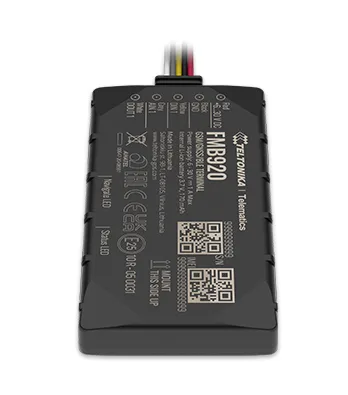
source: teltonika-gps.com
Transport telematics also has a second part. This is usually an IT solution in the form of an application that processes and presents the collected vehicle data.
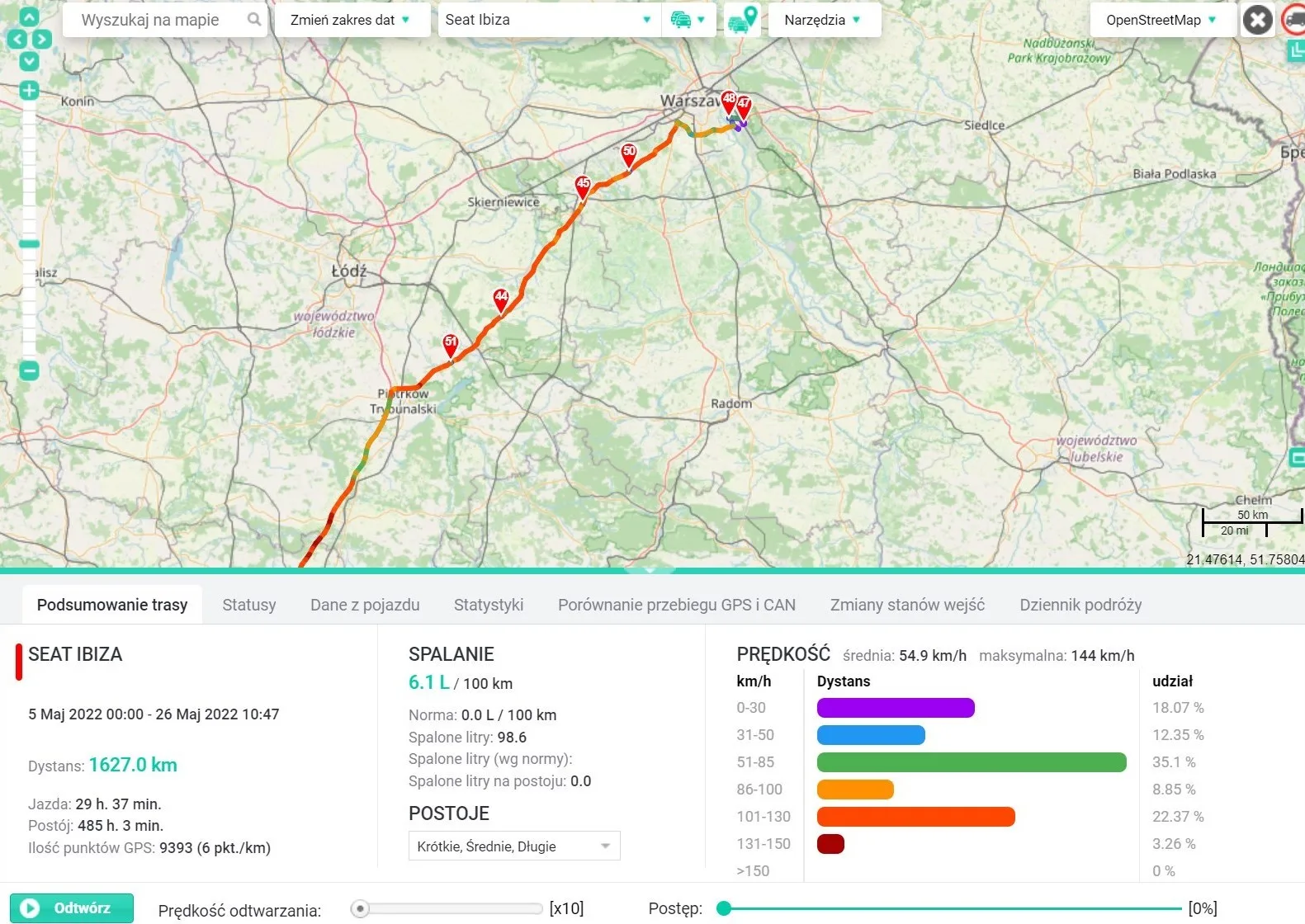
The real-time vehicle location tracking mentioned earlier is merely the foundation for the far more advanced functions a telematics system can have. To present them, it is worth focusing on the individual areas of the transport industry for which telematics applications such as Navifleet offer dedicated features.
Telematics for heavy goods vehicle fleets
Telematics solutions in the TSL sector (transport, forwarding and logistics) are currently one of the fastest-growing areas of telematics. These systems are indispensable in fleet management. Modern telematics solutions in a transport company are a tool used above all for route planning. Today this function is more than choosing point A, from which the vehicle sets off, and point B, where it is heading. A telematics application will help choose the optimal route, taking into account factors such as real-time traffic and roadworks. It will also summarise the cost of covering that route, taking into account fuel used, tolls and drivers' working time.
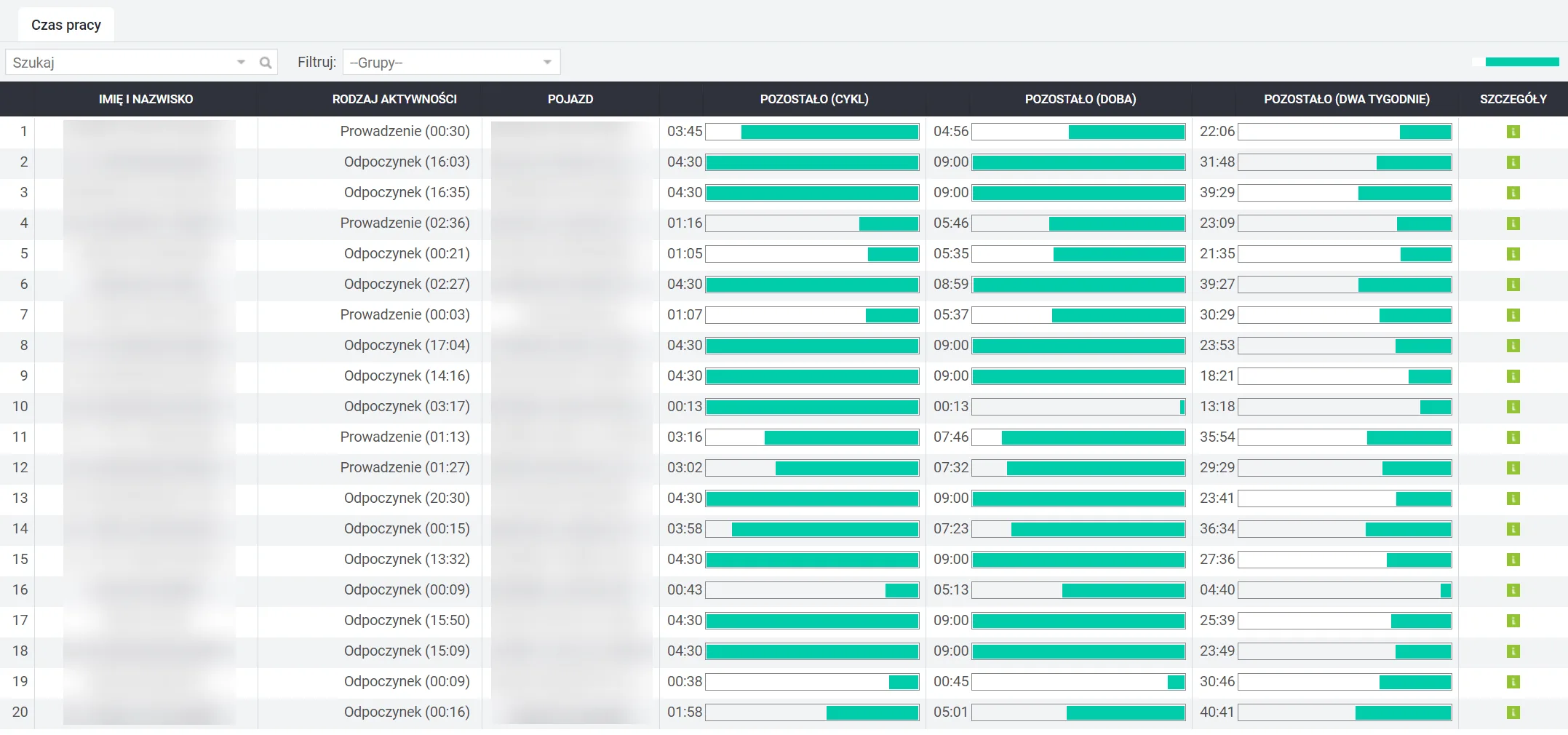
The natural next step in the transport process is checking the vehicle's position and the status of orders. Telematics gathers such data in one place, and thanks to the remote tachograph it provides information on drivers' working time and helps settle the work performed.
Fuel control itself is not only about tracking vehicle fuel consumption, but also about entering fuel cards into the system and recording refuellings. In addition, a modern telematics system responds to the industry's current needs. These certainly include making it easier to operate in line with the SENT and e-TOLL systems. Integrating telematics with these systems is important, especially given the constantly changing regulations.
Telematics systems for managing light vehicle fleets
Light fleets are different from heavy transport. Of course, it is not just about the type of vehicle. Companies with mobile assets in the form of passenger cars are not transport companies; for them, vehicles are merely a tool for performing tasks in completely different industries. Furthermore, the employees using a light fleet are not professional drivers but sales representatives, fitters or service technicians. For such companies telematics plays a slightly different role.
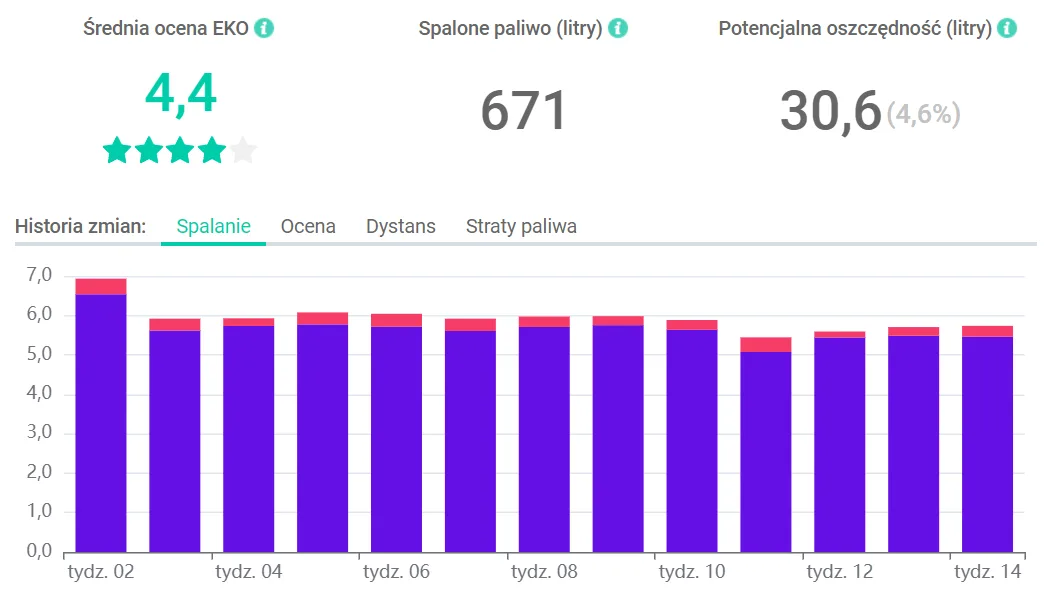
With telematics, a light fleet manager can not only check whether an employee visited the designated points, but above all can analyse drivers' driving style. Smart telematics systems give fleet managers constant access to data on the mistakes drivers make behind the wheel. Devices plugged into the OBD II sockets of cars collect parameters such as engine speed, accelerator pedal position and fuel consumption. The data is processed by the telematics application and presented to the fleet manager, who gets a full picture of how their drivers work in terms of safety and driving economy.
Telematics also helps users with administrative processes. It streamlines the flow of documents within companies (e.g. between the fleet manager and the accounts department) and supports fleet maintenance processes (e.g. it reminds you about inspections and oil changes). This functionality will certainly be useful in any company with mobile assets.
Telematics in construction
The construction industry is growing as dynamically as telematics. It was only a matter of time before the two areas came together. Telematics in construction transport is now a tool that allows general contractors to optimise costs and streamline processes in order to meet tight deadlines.
Here too the vehicle's position is the basis, but for the demanding construction industry telematics systems are more advanced. This includes the accelerometers mentioned earlier, which let the telematics system detect the position of the tipper body and provide information on the place and time of each loading and unloading.
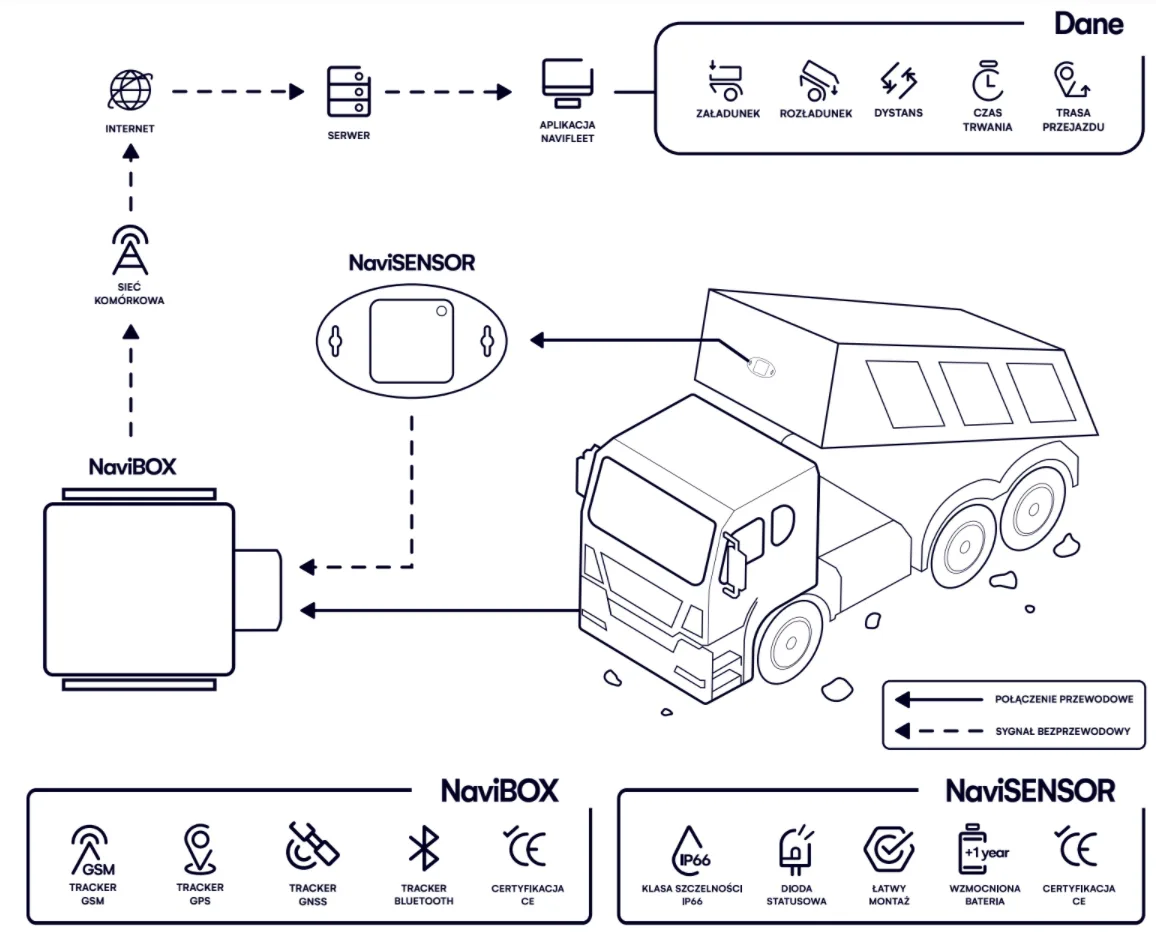
For the contractor on a construction project this is very important information, because the financial balance for the purchase and transport of building materials often does not match the estimates made before the project started, and the actual quantity of materials exceeds the assumed values.
Telematics solutions in construction, using vehicle location and data collected by other devices, solve many of the problems that affect the budget and profitability of a given project.
Telematics in transport – examples of use
As a provider of telematics solutions, we know better than anyone how varied the industries are in which telematics can work effectively and support processes. To illustrate the versatility of this technology, we will present three users of our system. Each of them used telematics for a completely different purpose.
The first user is a Polish manufacturing company. The business has a light fleet used by sales representatives and service technicians. The aim of implementing the Navifleet telematics system was to help manage the fleet and, above all, to reduce fuel consumption and vehicle maintenance costs. Working with the fleet manager, we implemented technology that analyses drivers' driving style. We saw the results within the first month of implementation. If you are curious how much was saved in 30 days, you will find the results in our post on calculating fleet savings.
The second user is one of the largest construction companies in the Czech Republic – Metrostav. It is a business that runs large construction projects across Europe. The headache for individual site managers was the lack of a tool to check the number of trips bringing building materials to the site. The employees responsible for recording trips made mistakes that hurt the profitability of a given project. It is worth noting that material costs make up a large part of a project's budget. To improve control of material transport and working time, we created a system that automatically detects the loading and unloading of a lorry and permanently tracks its location.
As a result, the general contractor receives not only accurate data on the daily number of trips, but also information on waiting times for loading and unloading, average transport time and the route taken by a given vehicle. Check out our Metrostav case study to find out how the implementation went.
The last user we would like to present is a large international football organisation. While working on a major football tournament, the organisation needed a telematics system to track the vehicles carrying players, referees and VIPs between stadiums, hotels and airports. We supplied over 100 GPS trackers along with dedicated features in the Navifleet application.
As you can see, telematics systems are a solution that reaches organisations and businesses operating in a wide variety of industries. At Navifleet we approach every case individually and try to propose dedicated products that solve a specific problem.
Why use a telematics system in the transport industry?
Such wide use of telematics systems is no accident. It is the result of the measurable benefits telematics can bring to practically any company with mobile assets. Interestingly, the beneficiaries of the solutions implemented in a business are not only the person assigned to manage the fleet.
Benefits for the light fleet manager
The range of a light fleet manager's duties is broad. The rush of daily tasks means the fleet manager's schedule is bursting at the seams. Telematics is a tool meant to make work in this role easier, not harder.
Even basic features such as notifications of an upcoming vehicle inspection take a load off the fleet manager. Where cars are also an employee benefit, telematics makes it easier to settle private and business mileage. Telematics applications also simplify the settlement of domestic and foreign business trips.
The most important benefits, however, are economic. One of the fleet manager's tasks is to optimise vehicle maintenance costs. Driving style analysis technology can reduce fuel costs, improve driver safety on the road (lower fleet accident rates) and extend the life of vehicle wear parts. All this with minimal involvement from the fleet manager, who can easily monitor the process of improving drivers' driving style and present the savings to their superiors.
Benefits for the forwarder
More than one book has been written on the use of telematics systems in heavy transport. These systems have become the main working tool of forwarders and logisticians.
Let us start with the basic functions that show where a vehicle is at a given moment. This gives the chance to react immediately to unforeseen problems (e.g. a route change due to a road accident). Telematics systems can also be integrated with freight exchanges, which, combined with an advanced route planning tool, offers great possibilities for maximising the profit from each trip and each order.
Another benefit of telematics in transport is automatic, ongoing control of drivers' working time. A system equipped with a remote tachograph provides information on how many driving hours a given driver has left and how many rest periods they have already taken. This knowledge allows orders to be planned even more effectively and profits optimised better. It also brings peace of mind with regard to Regulation 561/2006. The forwarder need not worry that drivers will inadvertently select incorrect work statuses on the tachograph or exceed the permitted driving time.
Telematics also eliminates the manual, tedious verification of fuel invoices. The fuel card import feature automates this process and reduces the risk of error.
Benefits for the driver
Technology using GPS location is a chance for the driver to develop and improve their efficiency behind the wheel. This applies above all to telematics focused on driving style.
The system catches the mistakes drivers make and tells them how to eliminate them. A virtual driving instructor is a great way for drivers to keep improving. For employees, a better driving style means not only greater safety and lower emissions of harmful substances into the atmosphere, but also enormous satisfaction.
For employees who see telematics as surveillance, smart systems provide a private mileage mode that prevents the fleet manager from checking the vehicle's location. This is particularly useful when the vehicle is used for both business and private purposes.
Benefits for the business
Many businesses today have to contend with an unstable fuel economy. Fuel costs are an ever greater challenge for small, medium and large companies. In many cases telematics may be the only solution to this problem. With technology that analyses driver behaviour, a company can generate measurable savings without huge financial outlay (unlike converting the fleet to gas or electric power).
Then there is the safety aspect. Every accident involving a company car means additional costs for the company. With telematics we can reduce the fleet's accident rate. In addition, insurers often offer more attractive rates to companies with a telematics solution.
Ever more emphasis is placed on a company's green image. Here telematics has a lot to offer. Reducing emissions by improving driving style is certainly one of the necessary steps on the road to being eco-friendly.
Let us not forget that telematics in a company is above all about process automation. An efficient flow of documents, the elimination of human error and improved employee efficiency are just some of the benefits of implementing telematics.
Transport telematics and its possibilities in a modern fleet
A modern fleet and telematics are inseparable concepts. There is no modern fleet without telematics. It does not matter whether we are talking about a light fleet, construction vehicles or heavy transport. A telematics solution is a way to achieve goals more effectively – both on the road and in business.
Want to find out how to implement telematics in your fleet? Check out our step-by-step guide.



