WoodAccept integration
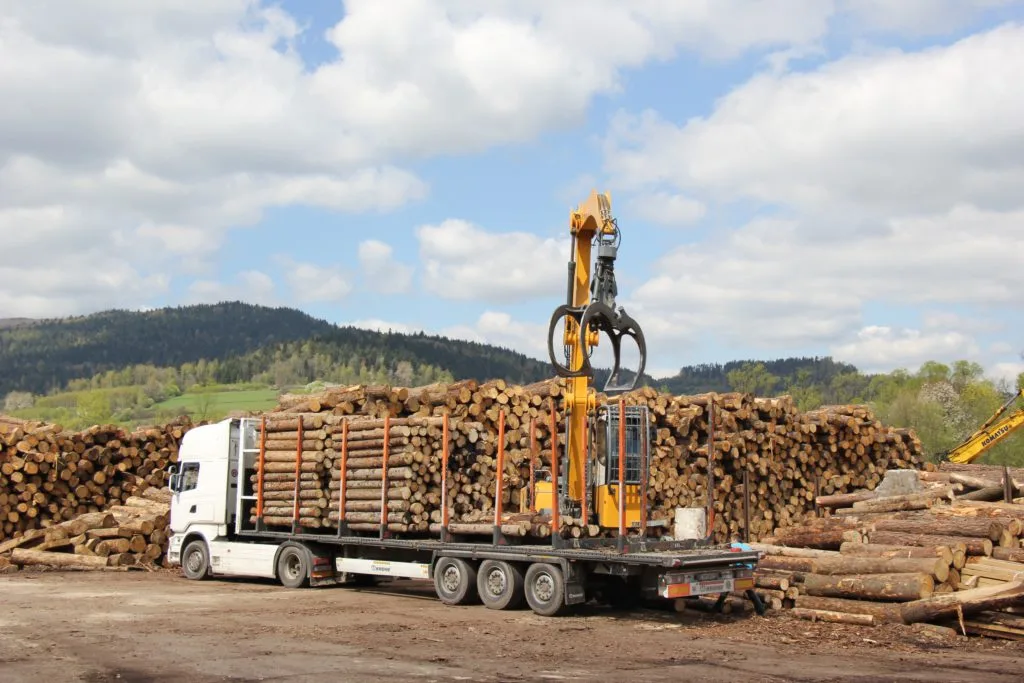
Over the centuries, the development of civilisation has led to significant degradation of forests in Poland and Europe, which is why, immediately after the Second World War, measures were taken to improve the situation. One of these methods is timber certification, which involves precise control of where timber is loaded and transported, as well as its further processing into furniture or paper products. In January 2018 we began working with the Czech timber transport control system WoodAccept, as a result of which we provide supervision of the transport of this raw material for a dozen or so of the largest timber companies in the Czech Republic.
An international timber certification organisation recommends GPS tracking
PEFC International (Programme for the Endorsement of Forest Certification Schemes) is an international non-profit, non-governmental organisation founded in 1999, whose aim is to promote sustainable forest management. One of the tools at its disposal is timber certification accepted by all member countries, including Poland. PEFC currently certifies over 300 million hectares of forest, 750,000 owners and 18,700 companies in the timber supply chain in as many as 39 countries worldwide. The greatest advantage of the PEFC system over other, competing certification systems is that it maintains a healthy balance between the local and global environment. PEFC looks after the welfare of local communities by ensuring respect for the labour rights of the local population, prohibits the use of harmful chemicals and counteracts unauthorised removal of timber from certified forests. For a label confirming certification to be placed on the end product, all businesses involved in the chain of production processes must hold a PEFC certificate, and the transport of timber from the forest to the place of processing must be precisely monitored by a GPS location system.
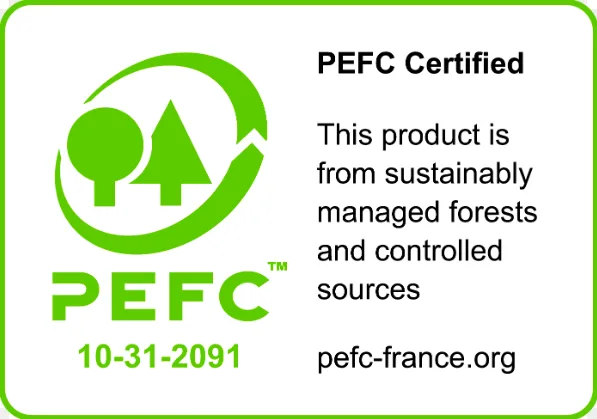
Fig. 1 Example of a PEFC label confirming that the product is certified and made from timber sourced from controlled forests.
The Navifleet platform lets carriers record their route automatically
For the project we prepared a working environment for carriers comprising a dispatcher application and a mobile app for drivers. Timber transport usually involves 2 parties – the seller and carrier in one, and the buyer (the processing company). At the timber loading point, the driver receives a delivery number from the loader, which will be used to identify the delivery at unloading. When the journey begins, the driver must enter the delivery number in the mobile app (Android, iOS, Blackberry, Windows Phone) and signal the start of transport. From that moment the system activates the collection of route data until the timber is unloaded, which the driver also signals in the app. When the journey ends, the Navifleet app calculates brief statistics on the route and automatically sends them to the Czech WoodAccept system, which acts as a management centre for all timber transports. In the WoodAccept system, the timber supplier, carrier and recipient can check the progress of the timber delivery and the payment status at any time. On the Navifleet platform, everything is overseen by the dispatcher application, in which a designated user can view the statuses of all transports performed by their company and manage them accordingly.
Benefits of using a GPS tracking system in timber transport
Contrary to popular belief, a timber transport control system based on GPS tracking generates profits at every stage of the supply chain. Firstly, thanks to access to the international WoodAccept platform, the supplier of certified timber can freely track the transport and, thanks to vehicle location, precisely document the route. After the transport is completed, information on the expected payment date appears in the IT system, and thanks to external supervision the risk of payment delays is minimised. It is also worth mentioning that timber-buying companies offer much better purchase prices for timber if its transport and loading point were monitored. From the recipient's perspective, i.e. the company processing the timber, recording the journey clearly confirms (e.g. for the purposes of PEFC verification procedures) that the timber transport is authorised at every stage. This is extremely important for the end product made from the delivered timber to retain its certification.