

A GPS tracker: where to fit it, what it is for and the functions it performs. In some cases the complexity of the installation and the risk of causing damage are high enough that the help of a qualified technician is required. Sometimes, however, installation is easy enough to do yourself. In our article you will find out how to fit a GPS tracker in a car and which elements make for a good installation. Read on!
The easiest way to fit a GPS tracker in a car: the OBD II port
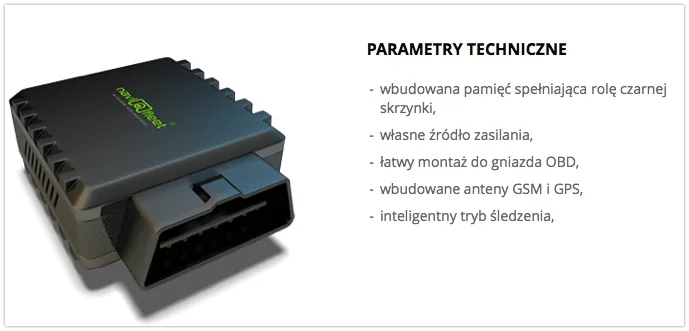
The OBD II diagnostic port (on-board diagnostics) has been mandatory equipment in all vehicles sold in the European Union since 2001, and in Poland since 2002. It is mainly used to connect vehicle diagnostic devices, which make it easier to locate the cause of a fault by reading the error code from the on-board computer. An alternative use of the OBD port is to connect a GPS tracker to it. Special GPS trackers are used for this purpose. To install one, simply plug the device into the OBD port and wait until the LEDs indicate that the GSM/GPRS and GPS modules are working. The biggest advantages of fitting a tracker to the OBD port are how little time it takes and how easy it is. The tracker can be connected to and disconnected from the vehicle at any time. Fitting a GPS tracker to the OBD port is recommended for basic solutions where devices are frequently rotated between vehicles. This type of installation will certainly not work for protecting a vehicle against theft or for advanced fleet management, because of how simply and quickly the device can be unplugged.
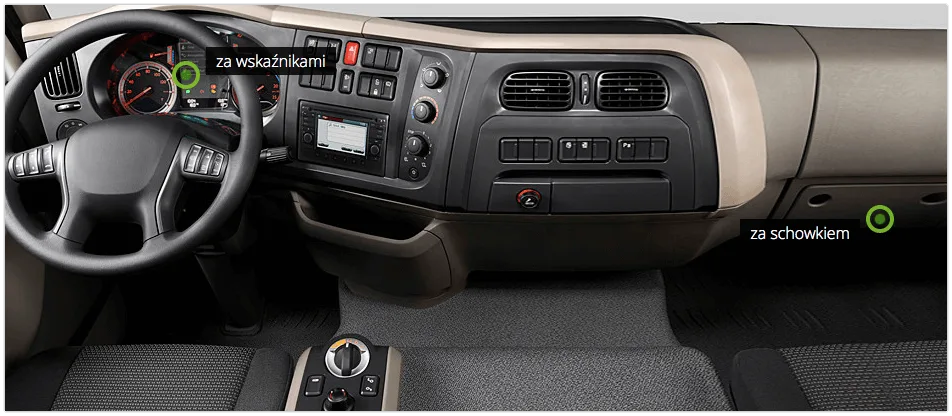
Where is a GPS tracker fitted in a truck?
Tracking the trucks in a company fleet with a GPS tracker is not just about following their position on a map; it often also involves monitoring the operation of external accessories. The most popular of these are monitoring the tachograph, reading parameters from the on-board computer and installing a communication terminal for the driver. Other external accessories are also connected in Polish company vehicles, such as a fuel probe that monitors changes in fuel level. To ensure the highest quality of system operation, a stable installation in the vehicle is recommended. The GPS tracker is most often fitted inside the vehicle cab, in a hard-to-reach place, so that removing it is as difficult as possible. The choice of installation location is determined by easy access to all the elements the tracker needs to operate, i.e. power, the CAN bus (which the device connects to) or the wiring of additional accessories (such as the tachograph).
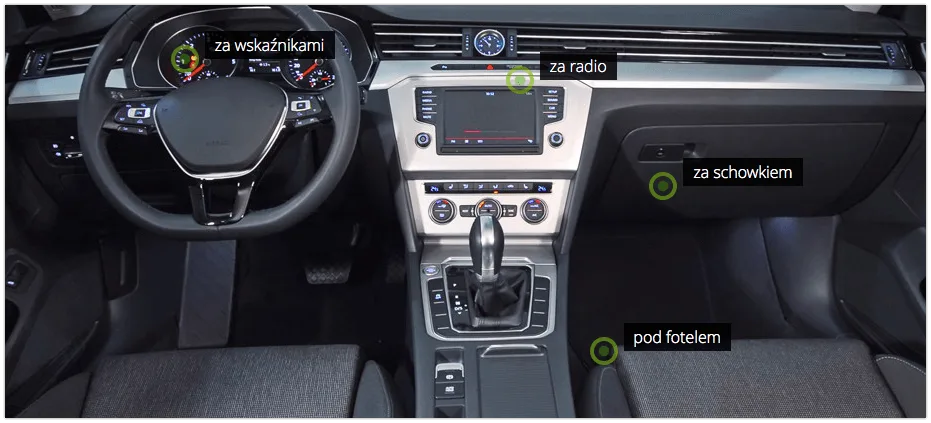
Where is a GPS tracker fitted in a passenger car and what determines the choice of location?
Tracking a fleet of passenger cars usually comes down to monitoring the vehicle's position and operating parameters, and driver identification. Where should a GPS tracker be fitted in a car? In most vehicles the CAN bus is easily accessible, and the places where GPS trackers are fitted come down to a handful of locations. The most popular places for installation are around the air vents, the glove box on the passenger side, the radio and the steering wheel. Access to these places is fairly easy in most cases. You do have to be careful not to damage the plastic trim when removing it, though. The choice of location for a GPS tracker in a passenger car is driven by low invasiveness and good access to the vehicle's electrical system.
The installation of an anti-theft GPS tracker deserves careful thought!
A GPS tracker used for vehicle anti-theft protection should definitely be installed by a qualified technician. Since the installation is often carried out in luxury vehicles, any fault carries the risk of considerable costs. Anti-theft tracking uses additional safeguards that make it harder for a thief to steal the vehicle. Installing such safeguards means interfering with the vehicle's electronics and certainly cannot be done by someone without experience. When fitting a GPS tracker, make sure that access to it is as difficult as possible and that any attempt to remove the tracker requires a great deal of time and effort. Bear in mind that a thief does not have to remove the tracker from the vehicle to stop it working. For this reason it is worth considering additional anti-theft protection with a built-in immobiliser.
What are the basic rules for fitting GPS trackers in cars and machines?
GPS trackers can perform different functions. Depending on what they are, the device must be given the best possible working conditions. The key rules on how to fit a GPS tracker in a car are:
- Stable installation – the device should be firmly attached to the vehicle's structure
- Tidy cabling – the wiring should be left in an orderly state so that the right wire can be quickly identified if necessary
- Correct antenna positioning – external antennas must not be covered by metal parts, as this can interfere with the signal reaching the device
- Insulated cable joints – cable connections must be insulated
- Verification that the device works – every installation must end with confirmation that the tracker is working correctly
- Secured plugs and sockets – device plugs and antenna sockets must be secured against coming loose on their own
How to connect a GPS tracker in a car? Summary
In some cases you can fit a GPS tracker yourself. The most popular self-installed trackers are those that plug into the OBD port or the car's cigarette lighter socket. More complex installations are better left to specialists, especially those used for anti-theft protection.
Where a GPS tracker is fitted in a vehicle should be matched to the function the device will perform, and following the basic rules will protect you from unexpected failures and ensure the tracker works trouble-free for a long time.
Want to find out more about fitting trackers in your vehicles? Contact us!



