Roads in Poland are among the most dangerous in Europe, and the number of vehicles using them keeps growing. The need for safe driving is becoming a challenge not only for drivers but above all for companies. Corporate social responsibility, ever higher costs, the risk of reputational damage, and the growing expectations of employees and customers are just some of the pieces of the puzzle that make up fleet management and risk management in a business.
The growing share of company fleet vehicles in the total number of vehicles on the road shows that an ever greater responsibility for safety rests with businesses. To match European standards, companies should keep introducing new ways of tackling the risk.

Assessing the fleet's safety level is the first stage
The aim of the assessment is to determine the level of safety in the fleet, which enables analysis of four areas of the company's operations that matter from the point of view of fleet safety management, namely:
- organisational structure,
- fleet procedures,
- detailed safety rules in practice,
- detailed safety rules in the area of prevention.
The measurement tool can be a questionnaire with a scoring key that allows each of the areas listed above to be assessed. The results obtained make it possible to identify deficit areas that increase the risk of hazards in the managed fleet. The aim of the analysis is to recommend actions that improve fleet management, such as implementing procedures and control mechanisms, developing document templates and regulations, improving the organisational structure, or organising training.
You will find an example questionnaire at the end of the article.
Analysing the results: organisational structure
It is important that the person managing the fleet is responsible, has the knowledge and experience, and takes the right ethical approach. Their reporting line is key.
Wherever the fleet manager reports directly to the CEO or CFO, companies achieve the best results in managing their vehicle fleet effectively. The fleet manager's responsibilities include preparing the budget, controlling costs, safeguarding the company's reputation, keeping individual departments, teams and employees satisfied, supporting them in achieving their goals, and ensuring the safety of property and people on the road (not only employees). Defining tasks and assigning them to qualified staff makes it possible to achieve cost savings and increase safety. Depending on the company's capabilities, these tasks can be performed by external companies on an outsourcing basis or in-house through dedicated positions. At this level it is important to define the boundaries of responsibility within the tasks performed and to grant the powers needed to carry them out.
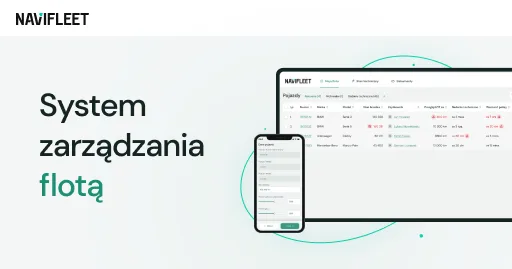
Tools that support fleet management are just as important. Companies use various methods of collecting and processing the data generated by their fleets. Analyses and reports can be produced using Excel or through non-specialist add-on modules bolted onto existing company management or financial management systems. The best option, however, is a dedicated fleet management system, which gives the user the most complete control over every aspect of the company's fleet and mobility.
Reports are also a key issue: their quality, scope and frequency. They are what allow those running the company to make decisions that are crucial from the company's point of view.
Analysing the results: regulations, documents, fleet procedures
The board of any organisation cannot be expected to be operationally involved in the detailed day-to-day administration of company cars. To fulfil its duty of care, it must create a framework for a fleet policy based on best practice and an effective risk management system. This framework must be documented and serve as the company's code of conduct.
The basis for effectively enforcing the principles of fleet management is a document containing a set of rules, procedures and required documents, known as the “Car Policy” (fleet policy). This document is the fundamental law of every fleet department. It is the company's “constitution” and contains, among other things, information on the formalities of using company cars, driver medical checks, vehicle servicing rules, the scope of responsibility of the employee and the company, the consequences that may be imposed, privileges and much more. It should also include provisions on checking whether users comply with the rules laid down. Particular attention should be paid to ensuring that the rules of responsibility are the same for everyone and contain no exceptions or exclusions. The “Car Policy” should also cover motor insurance, damage and safety issues. A lack of regulation in this area will result in costs, both financial and social.
The fleet policy should be applied consistently and without any exceptions. When certain solutions cease to meet the company's needs, the regulations and provisions should be changed first, and only then should decisions be taken and conclusions drawn. Selectiveness and turning a blind eye create an atmosphere of distrust, encourage undesirable attitudes and lead to a loss of authority. Penalties and rewards must not be discretionary.
The elements described are only some of the methods used to build a fleet policy and do not fully exhaust the possibilities offered by today's fleet management knowledge. It should be stressed, however, that every fleet policy, even the best constructed, should be backed by the full acceptance of the company's board, and the rules introduced should be strictly observed by all vehicle users, regardless of their position.
Analysing the results: safety rules in practice
Safety management is a process built into every well-run business. This area covers not only issues related to the fleet, road traffic or drivers' working conditions. It is a broad field for which all employees are responsible, with particular emphasis on the company's top management.
Both the employee and the employer bear the consequences of failing to comply with safety rules. For the employee these are usually: injury, risk to life, a reprimand, a financial penalty, or summary dismissal. From the employer's point of view, we are talking about criminal liability, financial loss, damage to the company's reputation, interruption of the production chain, and consequences in terms of corporate social responsibility.
Risk management is a continuous process that begins the moment a business starts operating. From management's perspective, this process starts as early as the recruitment stage and covers all of the employee's professional activity on behalf of the company. Risk in the area of vehicle operation is special. On the one hand, a significant asset in the form of a company fixed asset (the vehicle) is entrusted to the employee; on the other, the employee is exposed to hazards arising from situations on the road. The employer bears the same responsibility for both of these aspects.
Analysing the results: preventive measures
Even the best-described processes and procedures mean nothing without comprehensive training and prevention programmes and adaptation to a changing environment. Prevention is nothing other than a safe future. A future that is friendly to companies and employees. Decidedly cheaper than the cost of settling any claims across all areas of the company's operations.
The claims rate of fleet vehicles in Poland has remained high for years. The growing cost of physical claims settlement is a significant element of every fleet budget. If you add the expenses resulting from employee absence from work, compensation for personal injury and property damage, the drop in vehicles' residual values and reputational damage, prevention should appear as a principle permanently written into the company's strategy.
It is worth remembering that preventive measures can be carried out on many levels. Training is an important element of prevention. A wide range of training allows the company's employees to improve their skills. The key element of training is continuity. That is why creating a multi-stage, multi-year training programme is a priority.
Remember that training activities and the standards of behaviour developed and accepted by the workforce create a broadly understood safety culture in the company.
At the same time, preventive measures aimed at increasing safety in the company can serve to optimise costs. Defensive driving with elements of eco-driving is not only about anticipating events on the road, caution, smooth driving, protecting the environment and the safety of yourself and other road users. It also means savings on fuel, consumables and wear of individual vehicle components.
A prevention policy should not forget about supporting tools and devices. Telematics will determine a driver's profile and direct them to training dedicated to their driving style, while GPS tracking will catch traffic violations. In today's world, where technology can support fleet managers in creating preventive measures, it should no longer be seen as a cost but treated as a necessary investment that brings measurable, quantifiable benefits.
Summary and recommendations
A fleet safety audit is a key process that makes it possible to identify potential hazards, evaluate procedures and implement effective preventive measures. Carrying out audits regularly not only increases the safety of drivers and vehicles but also optimises operating costs.
A fleet safety audit makes it possible to detect gaps in procedures and implement effective preventive measures. Regular analysis of the safety policy, monitoring drivers' driving style and looking after the technical condition of vehicles are the key elements that increase fleet safety.
 Piotr Litwin
Head of Logistics & Lean Coordinator at OCEANIC
For more than 20 years he has combined logistics management with fleet operations. He started with truck fleets of over 100 vehicles delivering food products, and in later years successfully led the transition from owned fleets to fleets managed under long-term leases.