Effective fleet utilisation and efficient monitoring of the vehicles in it are challenges faced by businesses in many industries. What do you need to take care of to meet them? The key to success here is efficient fleet management.
What does that mean? Vehicle fleet management is a set of processes and practices covering the purchase, use, maintenance and monitoring of company vehicles in a fleet. Professional fleet administration aims to ensure vehicles are used efficiently and to reduce the cost of running the fleet.
Managing a company's vehicles effectively requires cost control and full visibility of fleet operations. Every fleet is different because of its size, use and the specifics of the industry it operates in. That is why fleet administration is often done using spreadsheets and, quite simply, paper.
At some point many companies begin to consider how to manage their vehicle fleet more effectively. As in some other areas of life, the solution turns out to be the right technology. To streamline vehicle fleet management, save time and make better decisions, systems that provide real-time data are used, such as GPS tracking systems or telematics.
Specialist fleet management software will help you automate fleet operations and keep your vehicles and equipment running smoothly. But the benefits of investing in such a system go further. Discover what your company stands to gain by choosing a proven fleet management system.
Why does vehicle fleet management matter to companies?
A vehicle fleet is a group of vehicles used by a business as part of its operations. It plays an important role not only for transport companies but also for businesses in other service or manufacturing industries. A fleet can include passenger cars as well as vans, trucks and construction machinery. Optimal use of the fleet is possible only when vehicle management in the company is well organised.
There are many reasons why efficient fleet administration matters so much from the company's perspective. Modern fleet management brings many benefits and is important for, among other things:
- increasing the efficiency of fleet utilisation,
- optimising its total cost of ownership (TCO),
- improving driver safety,
- building a positive company image.
Effective transport fleet management provides control over, among other things:
- the various operating costs associated with the fleet, such as fuel spending,
- fleet maintenance matters, including:
- the technical condition of vehicles,
- servicing,
- repairs of breakdowns and faults,
- insurance.
Equally important, skilful vehicle management in the company maximises fleet utilisation by optimising the number of kilometres driven.
Optimising fleet management: how to make it more effective?
The person responsible for fleet administration has an extensive range of duties. It stretches from purchasing and choosing vehicle financing, through maintenance, managing staff (drivers) and fuel, to ensuring regulatory compliance and looking after fleet safety.
When the pool of company vehicles is small, fleet records and efficient management using spreadsheets and paper documentation may prove feasible. But as the fleet grows to include more and more vehicles over time, the situation changes. Fleet managers wonder how to manage the vehicle fleet even more efficiently and start looking for solutions that will help them save time.
Time plays a key role here, because fleet management in a company is an area in which many activities are repetitive. A seemingly small change, automating these repetitive activities, can bring enormous time savings.
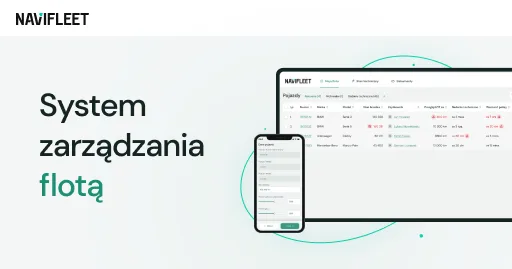
Specialists responsible for managing a fleet of machines, especially as the fleet grows, often reach for systems that simplify and automate their duties. The Navifleet fleet management system, as a simple alternative to spreadsheets, paper and outdated software, is one of these tools.
If you want to find out more about IT solutions that streamline fleet administration, read our article: TOP 5: The best fleet management tools.
Fleet management system: what is it?
Fleet management software is increasingly becoming a tool used by businesses interested in improving fleet performance and reducing the cost of maintaining their vehicles. Solutions of this kind are a proven way to optimise the fleet management process in companies.
A vehicle fleet management system is a tool that helps monitor, control and manage all aspects of the fleet. The features offered by such systems vary widely, since vehicle fleet management covers a very broad range of processes and practices. Every fleet is also different, with its own specific needs, so one fleet will need support with cost management and another with monitoring vehicles in terms of the number of kilometres driven (including those driven privately).
Systems for effective fleet management: example features
Fleet management systems for companies offer users a range of useful features. Below we present some of them using the Navifleet system as an example.
- Real-time vehicle monitoring and location
GPS tracking is a feature that lets you keep track of routes, drivers' working time and the places they visit that matter to your business.
- Analysis of drivers' driving style on the road, without infringing their privacy
Driving style analysis is a feature that helps improve driver safety and reduce fleet-related costs.
- Private and business mileage
Private mileage is a feature that lets you keep track of your cars without infringing drivers' privacy, for example when you allow drivers to use vehicles outside working hours.
- Fuel control
Another feature worth looking at when analysing a transport fleet management system is fuel control. It lets you keep track of the flow of fuel in your fleet. The system automatically compares the vehicle's actual consumption with the pump reading and detects any abuse.
- Driver identification
A valuable feature of a fleet management system is driver identification. It lets you reliably verify the drivers of individual vehicles (especially when one vehicle is used by more than one driver), while generating detailed statistics on their work behind the wheel.
- Real-time trailer monitoring
With TrailerBox trailer tracking you can precisely monitor the location of trailers, with no worries about tracker failures or complicated installation.
- e-Toll
This feature lets you manage e-Toll road charges with no manual input, without worrying about fines for missing tickets, piles of invoices or settling journeys by hand.
- Create electronic vehicle handover reports
E-handover reports are a feature that lets you create, fill in, edit, sign electronically and send handover reports wherever you are.
See how the solution works in practice: https://www.navifleet.pl/case-study/klient-agravis
There are many modules and features in a system for effective fleet management. Choosing the right system depends on the specific needs of your organisation. You can find out more in our article: How to choose a fleet management system? Practical advice.
Write to us if you have questions about the Navifleet fleet management system, at: https://www.navifleet.pl/kontakt
Is it worth buying a fleet management system, and when?
Fleet management systems are a tool for fleet managers, enabling effective management and cost optimisation. Planning the introduction of a new fleet management system usually stems from the need to solve specific operational problems, not from a whim of the person managing the fleet. The decision to change systems is usually preceded by a thorough analysis that takes into account both implementation costs and the expected benefits, such as the ability to analyse claims more precisely, which makes it possible to introduce preventive measures.
When opting for a new system, fleet managers have to convince the board of its value, arguing that the investment will bring savings or other business benefits that offset the initial outlay. It should also be borne in mind that merely having an advanced system to help manage a vehicle fleet in a transport company or a business in another industry does not guarantee automatic savings. The system's effectiveness depends on how it is used in daily work, and on whether managers can make sound business decisions based on the data collected.
A good fleet management system should therefore be a supporting tool, not an end in itself. That is why it is important, before deciding to implement a new system, to carefully analyse the company's needs, the capabilities the system offers and its potential impact on fleet operations.
How does a system for effective fleet management work?
Fleet management systems use a variety of technologies and methods to enable effective monitoring and management of fleet operations. The way such systems work can be divided into telematics-based solutions and those that do not require telematics.
Telematics-based solutions (using GPS, for example)
Telematics is the integration of telecommunications and IT, used in fleet management to collect, transmit and analyse vehicle data in real time. A telematics system uses GPS and other sensors fitted in vehicles to monitor their location, speed, technical condition, fuel consumption data and many other parameters. This exceptional usefulness is why comprehensive telematics solutions for medium and large fleets attract great interest from companies.
In the Navifleet system, the data you can have at your disposal includes:
- location data: current and historical position, speed, length of stops, and the reports that can be generated from this data,
- data retrieved from the vehicle: odometer reading, fuel level, dashboard warning lights, engine revs, error information,
- driving style data: an assessment of the smoothness and safety of driving, set against the fuel actually consumed.
The CAN-click module makes non-invasive reading of data from the CAN bus possible. The module addresses one of the most common concerns about using telematics in vehicles: the need to connect sensors to the vehicle, which meant interfering with the vehicle's wiring. This concern is particularly important for new vehicles, where interfering with the wiring can void the warranty.
Want to find out more about telematics and its role in fleet management? Read our article: What is a telematics system and why is it worth using in a company?
Solutions that do not require device installation
Fleet management software that does not use telematics relies mainly on automating repetitive tasks and digitising documentation. Without improvements in these areas, it is hard to imagine modern fleet management. Thanks to the modules and features in solutions of this type, the fleet manager can, for example:
- monitor inspection and insurance deadlines,
- provide quick access to up-to-date document scans,
- analyse information on the state of the fleet,
- keep a history of vehicle use,
- create reports by chosen criteria,
- manage recurring vehicle inspection reports,
- check the condition of a vehicle before it is returned,
- simplify the organisation of fleet condition inspections,
- introduce seasonal fleet checks.
Better fleet utilisation and other benefits: what does a vehicle management system give you?
Using a fleet management system such as Navifleet or a similar one brings a range of benefits that significantly improve the efficiency, transparency and control of fleet operations.
Automation of repetitive tasks. Do you pore over fuel card refuelling statements every month to check for possible driver abuse? Let the system do it for you, along with a range of other tasks you perform regularly.
Verify private and business mileage. A fleet management system allows the driver to mark business and private journeys. At the end of the month you receive a report with the exact number of private kilometres for each driver individually. In addition to private kilometres, the report also includes the amount of fuel consumed in this mode.
Up-to-date odometer readings without involving drivers. Effective fleet management requires optimising the time spent on individual tasks. Our fleet management software lets you quickly verify the current odometer reading and how mileage has changed in individual vehicles. This eliminates the time-consuming and tedious process of collecting this information from drivers, and the data is exactly as shown in the car's dashboard.
Automatic notifications. In the Navifleet system you can create automatic notifications, for example about the mileage limit in a contract or about services at specific mileages. With our solution you will always have control over the current fleet scheduler.
All vehicle data available from anywhere. Forget paper documents and complicated forms. All information on vehicle use, handover reports, e-documents and fleet condition history can be found in one place.
Reliable reports for the board and key directors. A fleet management system allows fleet operating data to be shared with superiors quickly and conveniently. Creating a report covering the whole fleet, including a full breakdown of kilometres driven and fuel consumed, takes less than a minute. What is more, you can be sure that the data you provide to the board is accurate and can be used as a basis for further decisions.
Summary
Effective fleet management is a key element affecting the efficiency, safety and profitability of any company with company vehicles. Modern fleet management systems such as Navifleet offer advanced tools and features that make it easier to monitor, analyse and optimise fleet operations. With these systems, fleet managers can not only reduce costs and make fleet utilisation more efficient, but also help improve driver safety and reduce environmental impact.
However, the decision to implement a new fleet management system should be preceded by a thorough analysis of the company's needs and capabilities, to make sure the investment delivers the expected benefits. Remember that success in fleet administration does not depend on technology alone. An appropriate fleet management strategy plays an equally important role: a comprehensive approach that takes into account people, processes and data.
If you are interested in an intuitive fleet management system and are wondering what Navifleet can offer you and at what price, take a look at the page presenting our transparent pricing of services and features.
We also encourage you to read other interesting articles published on our blog:
- Vehicle fleet management: how to do it effectively
- Vehicle mileage records: what should you know about them?
- The 5 most common methods of fuel theft in a fleet
- GPS in a company car: is it legal?
- How to check whether an employee holds a driving licence and minimise the risk of losing it?